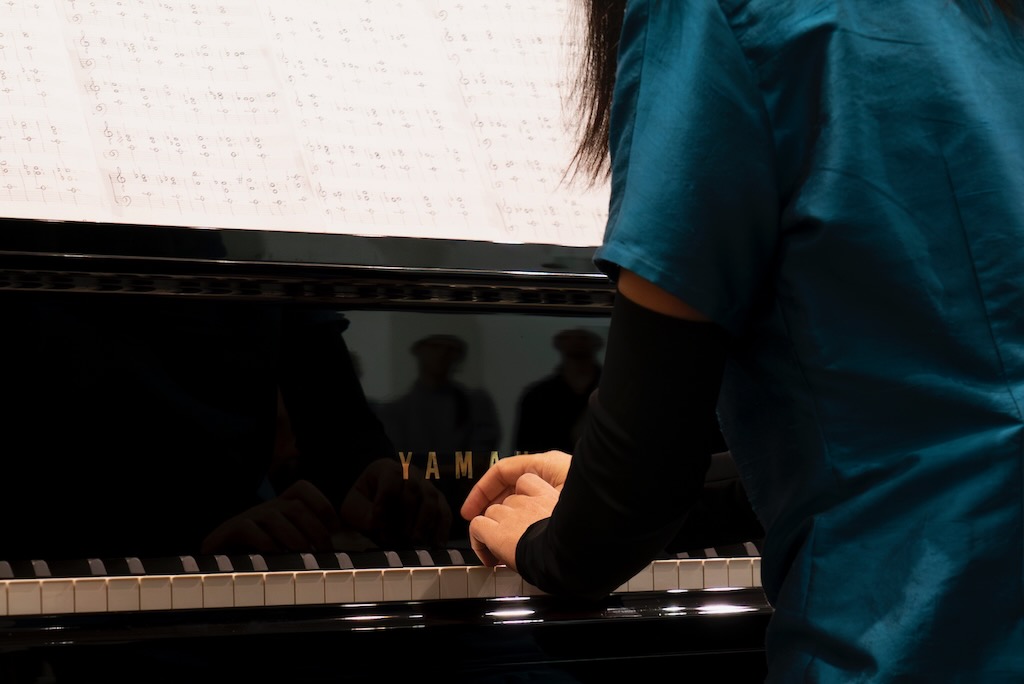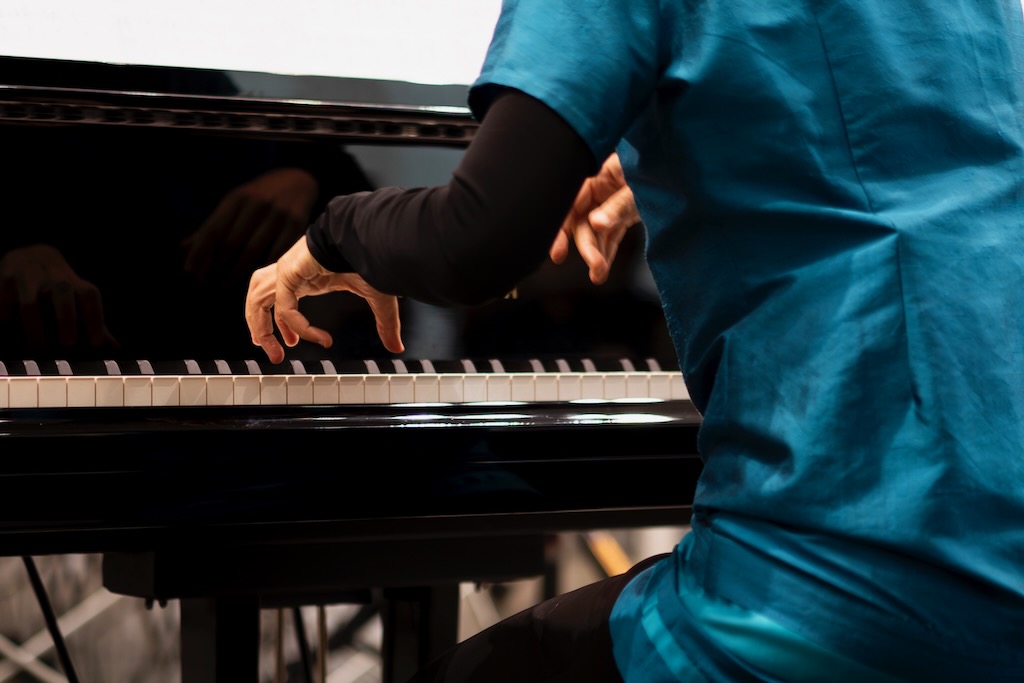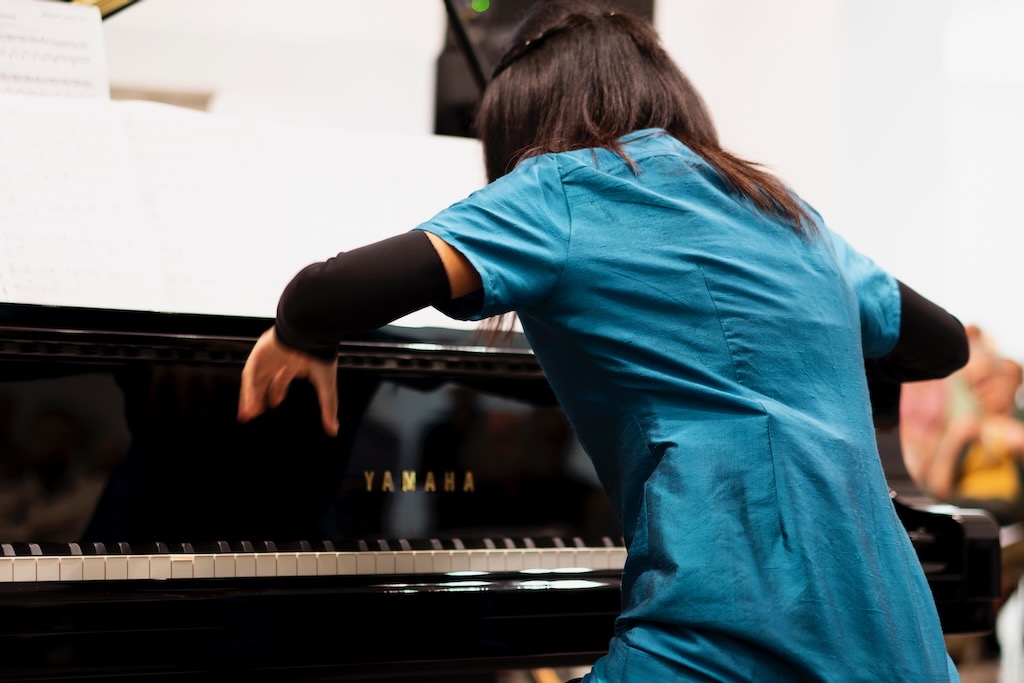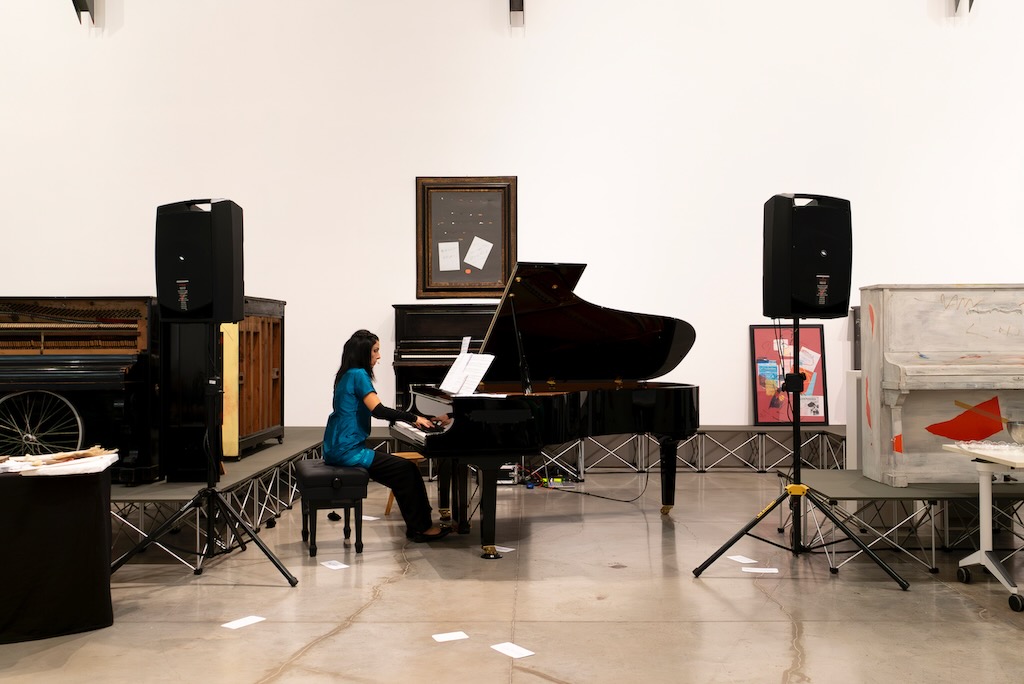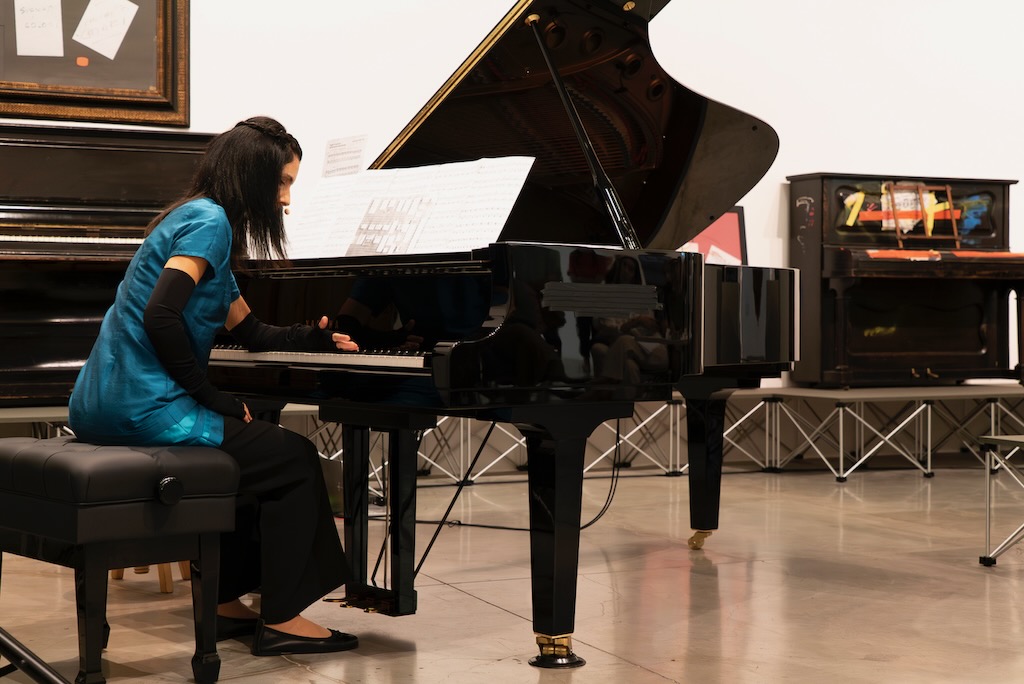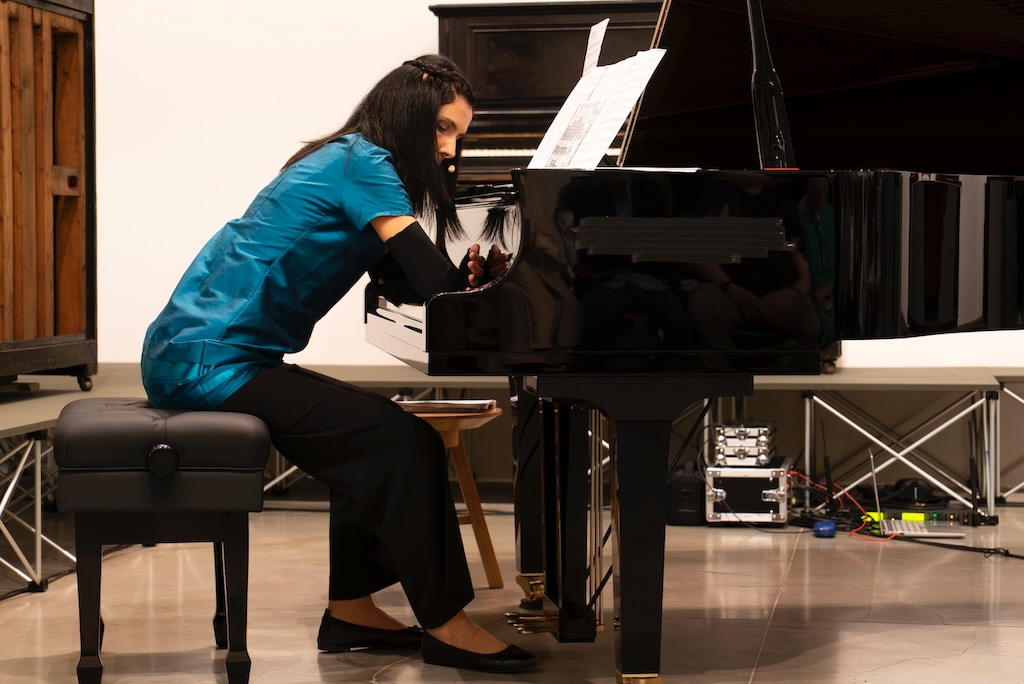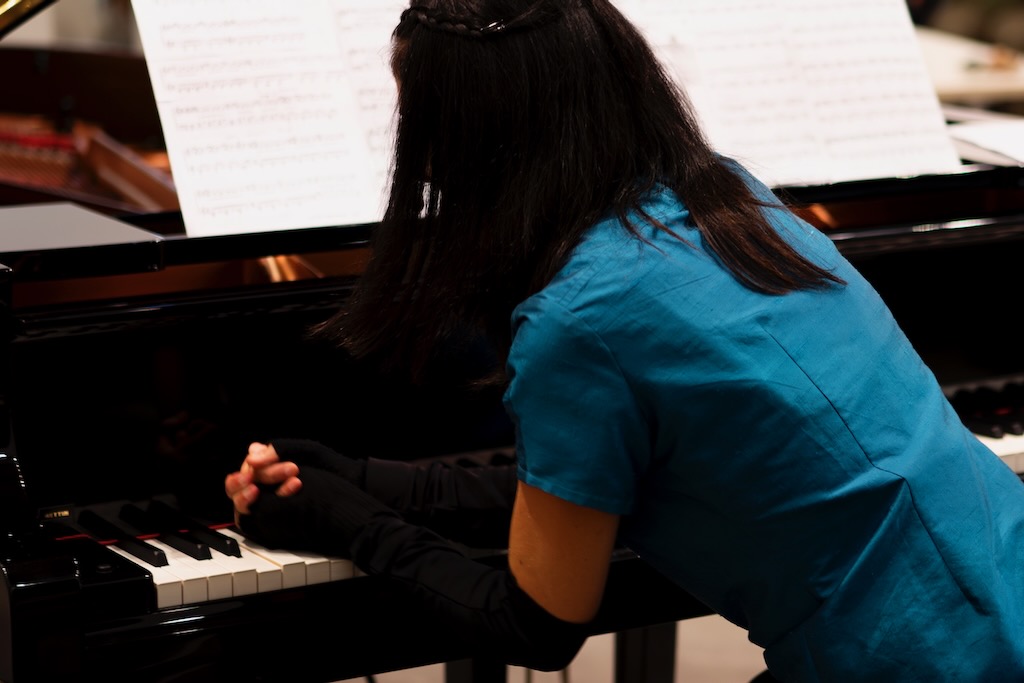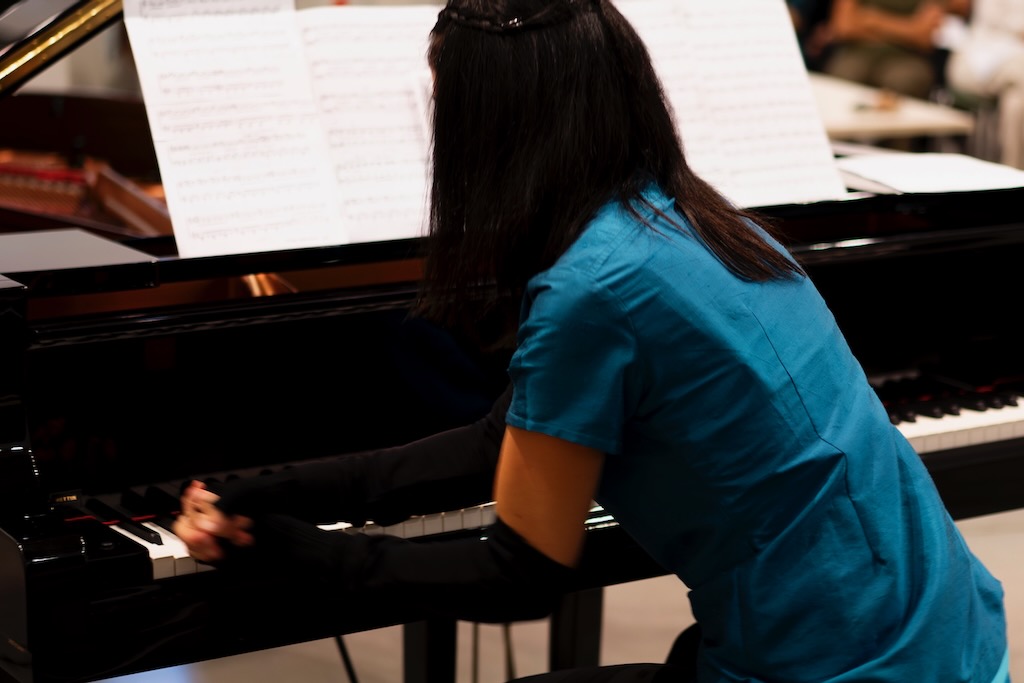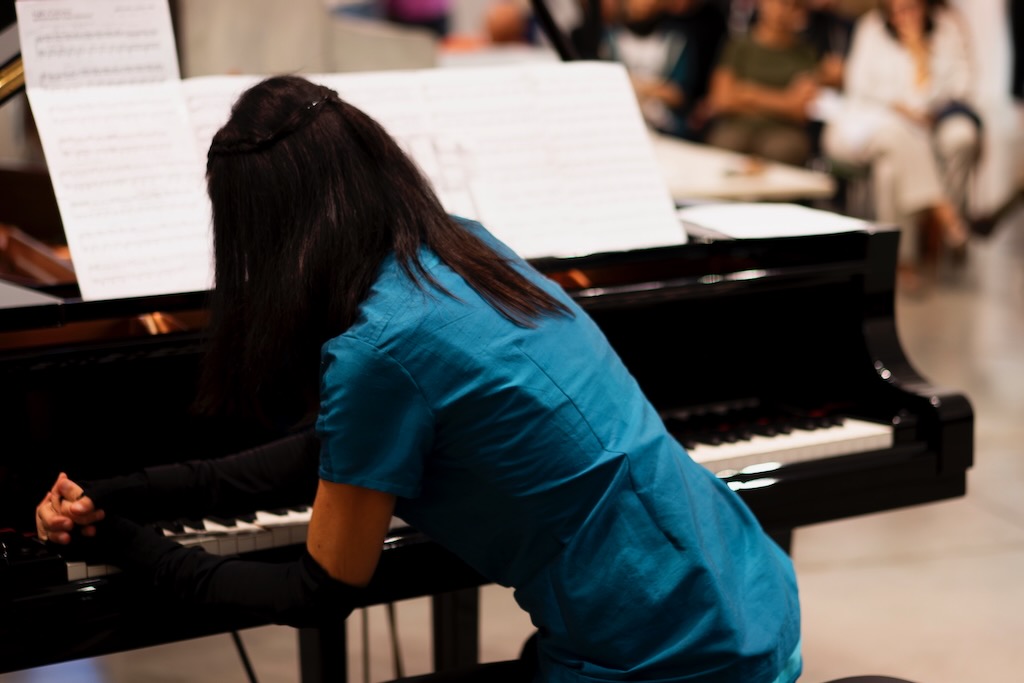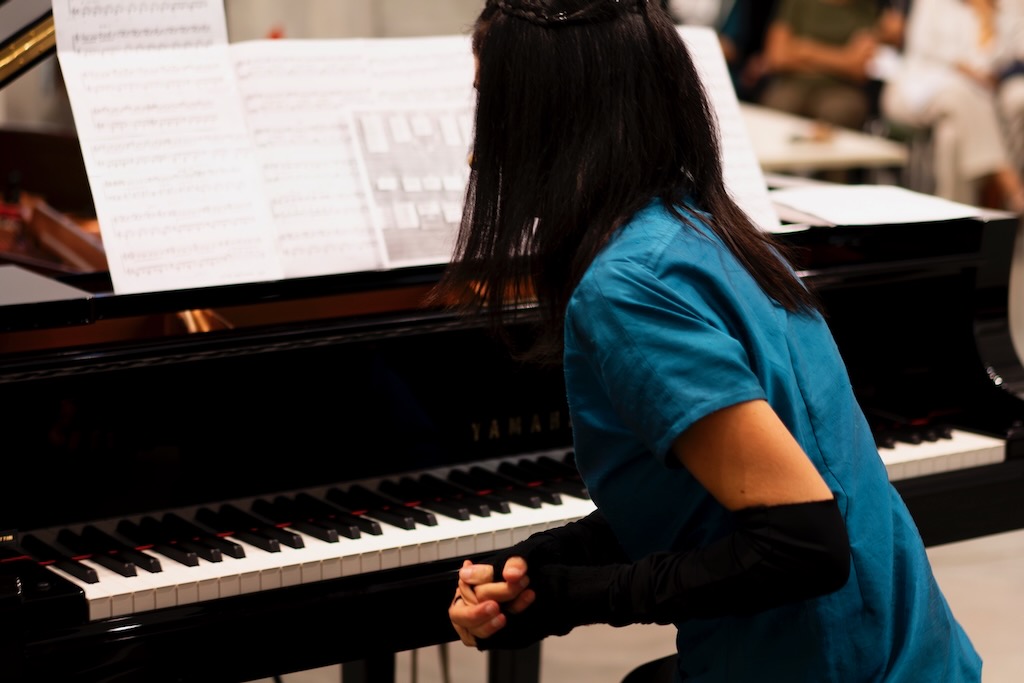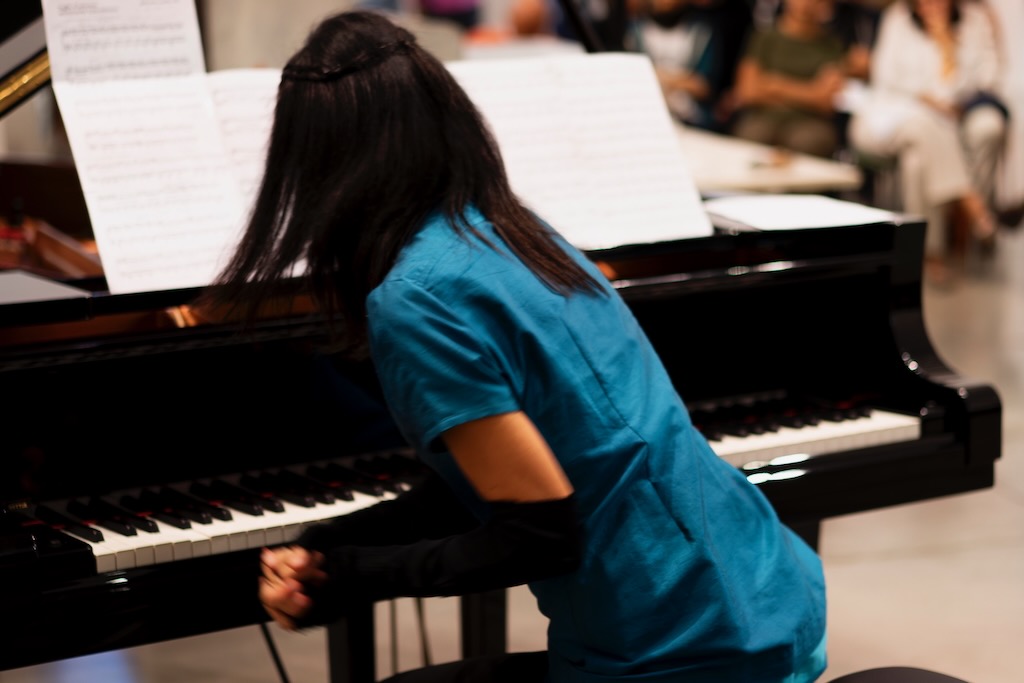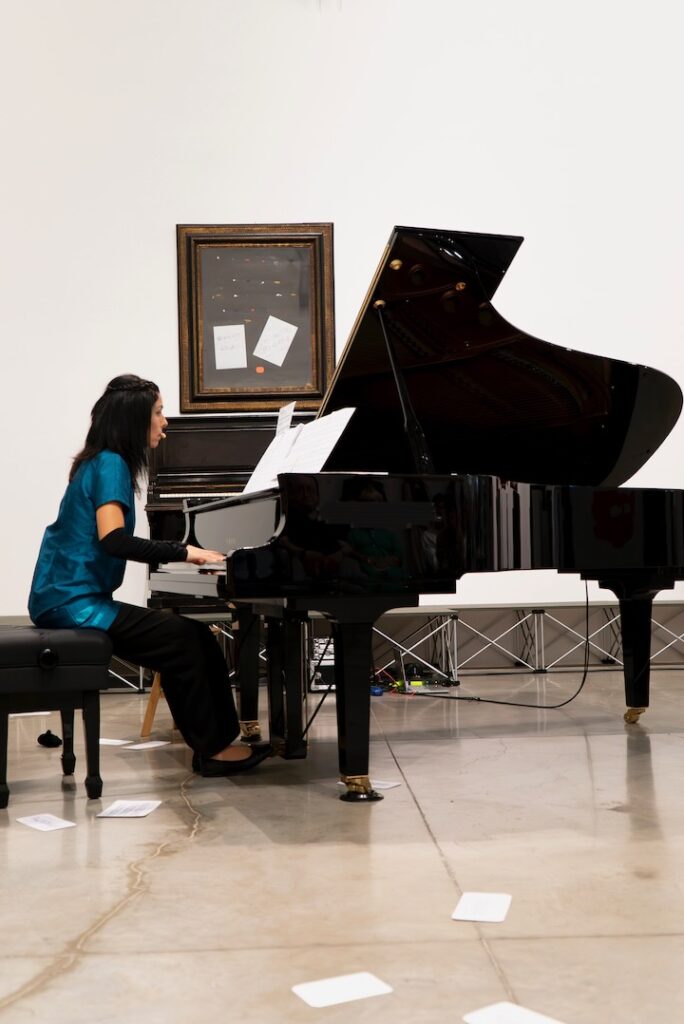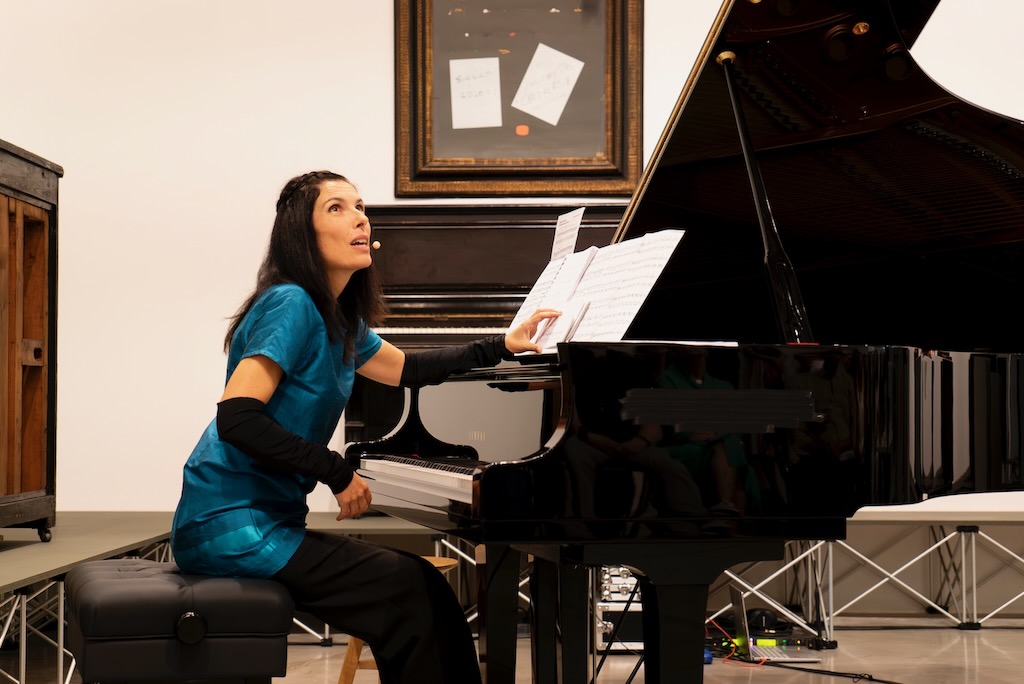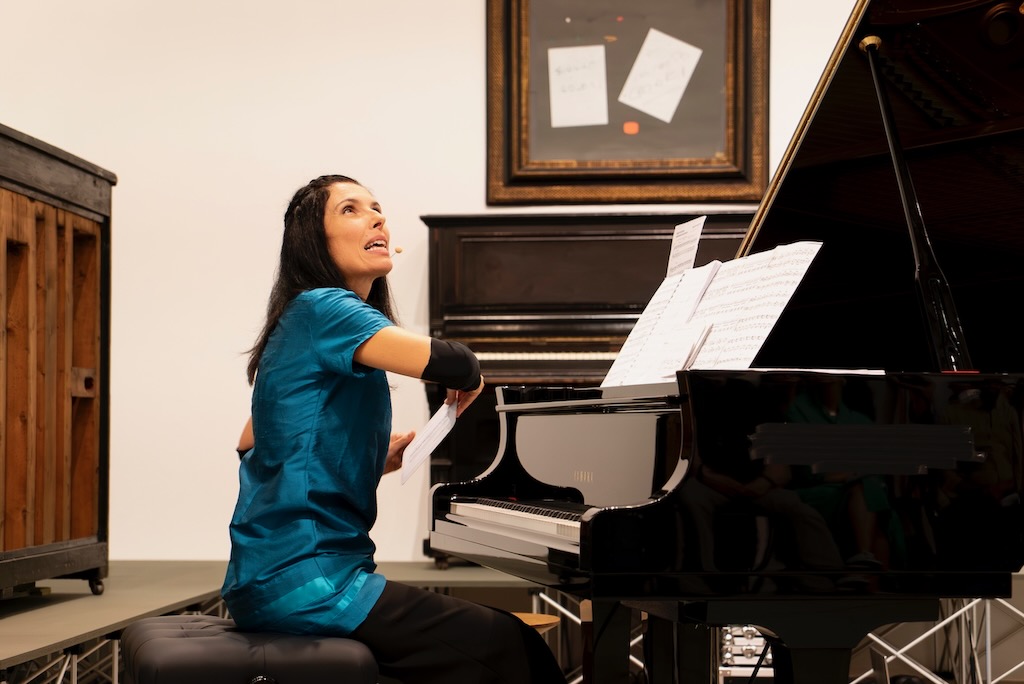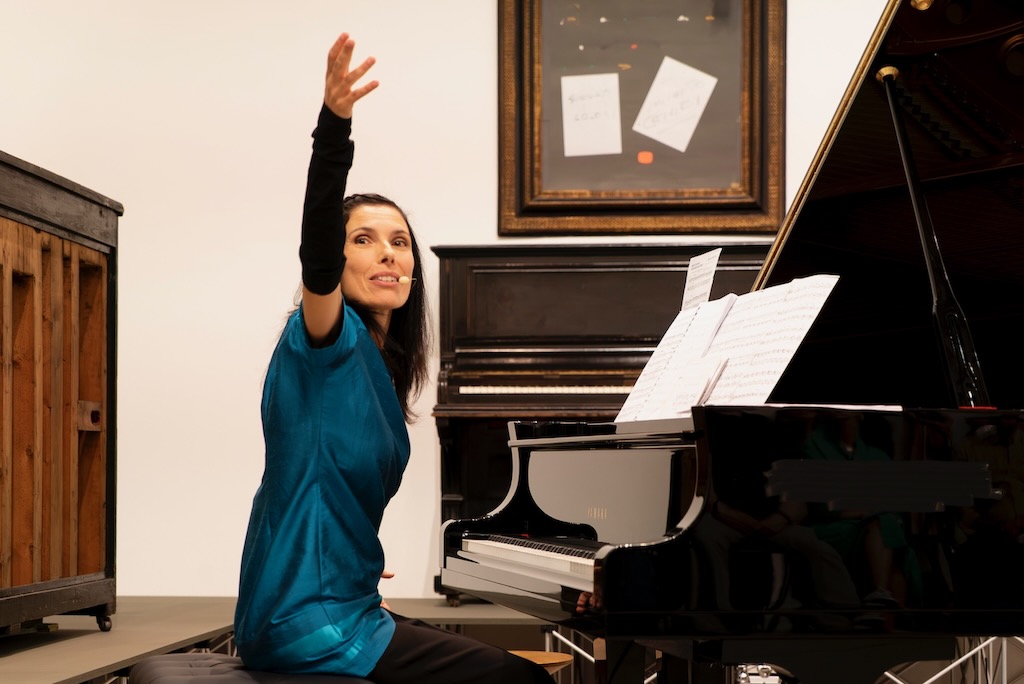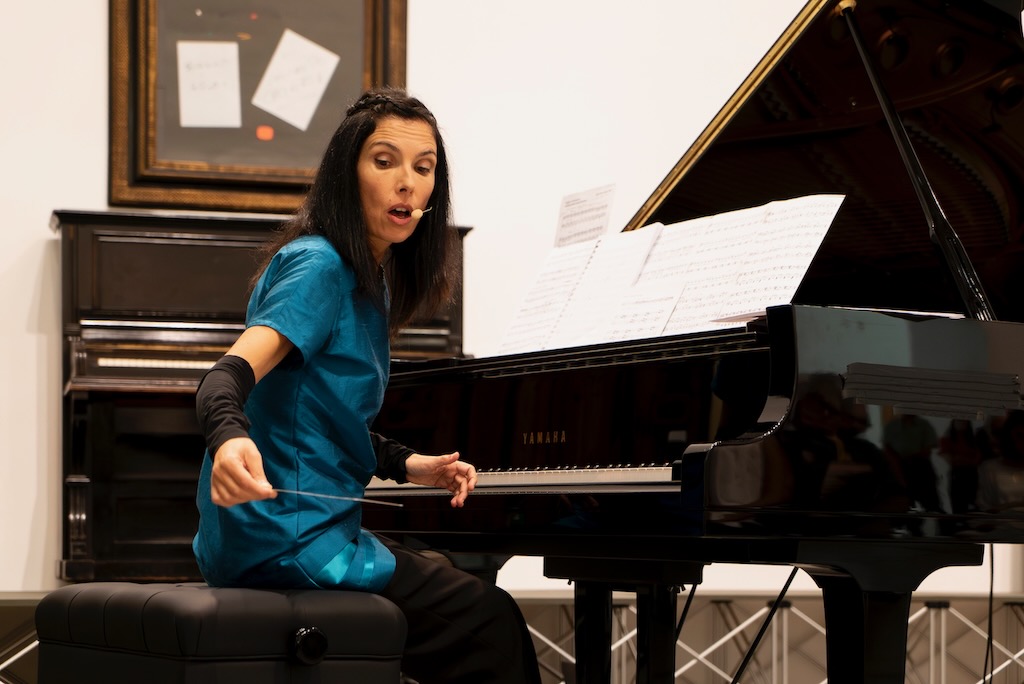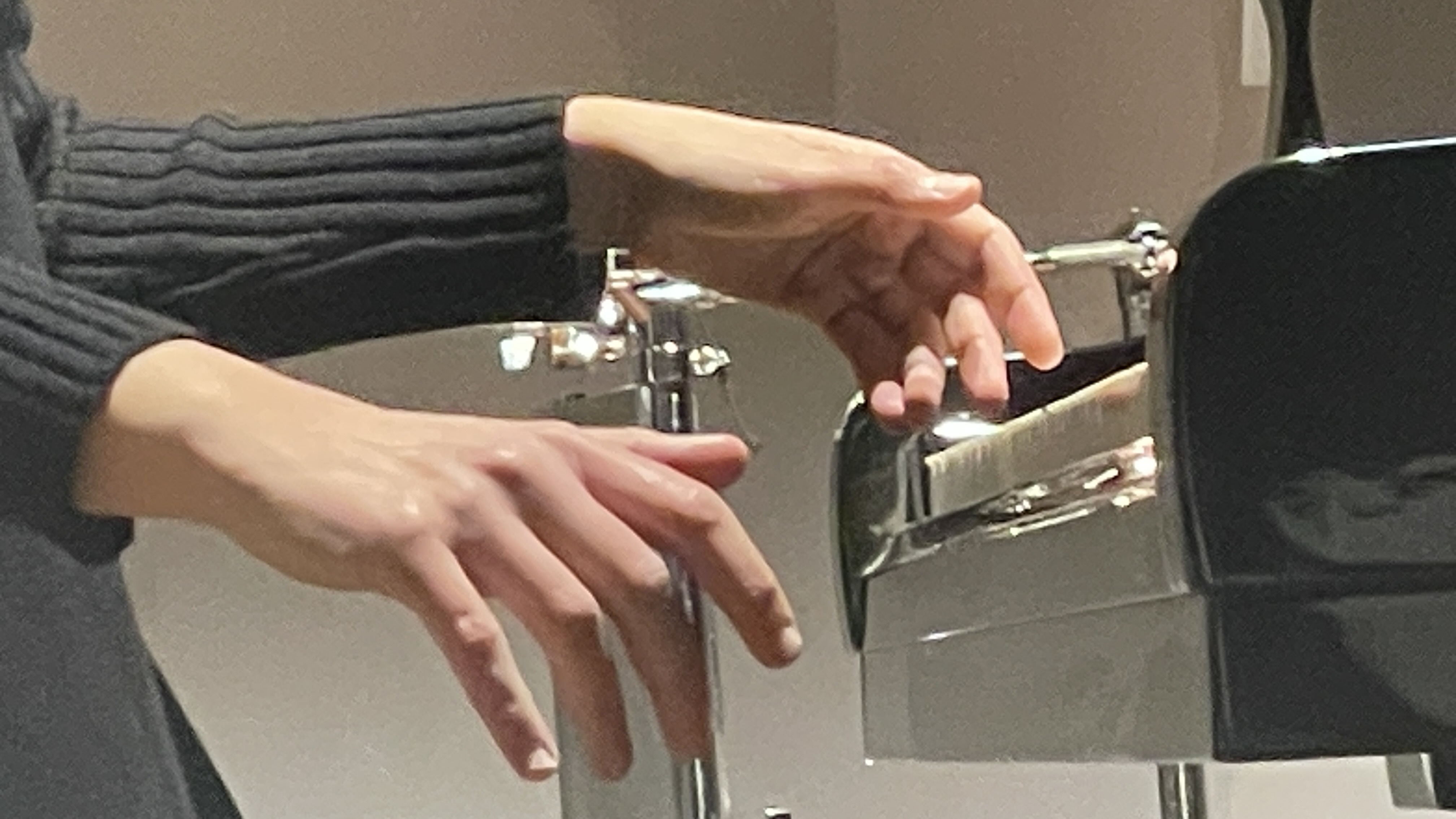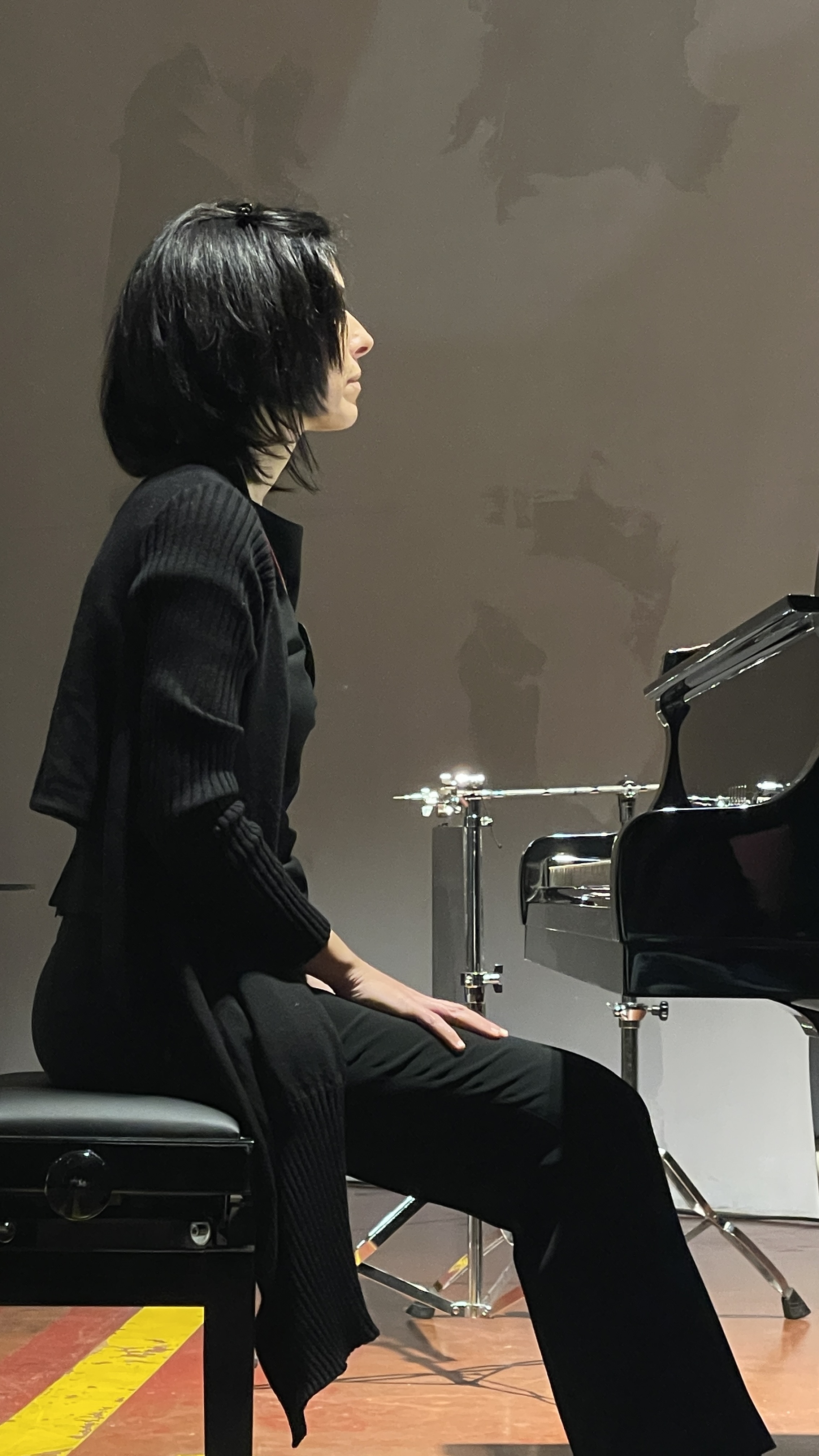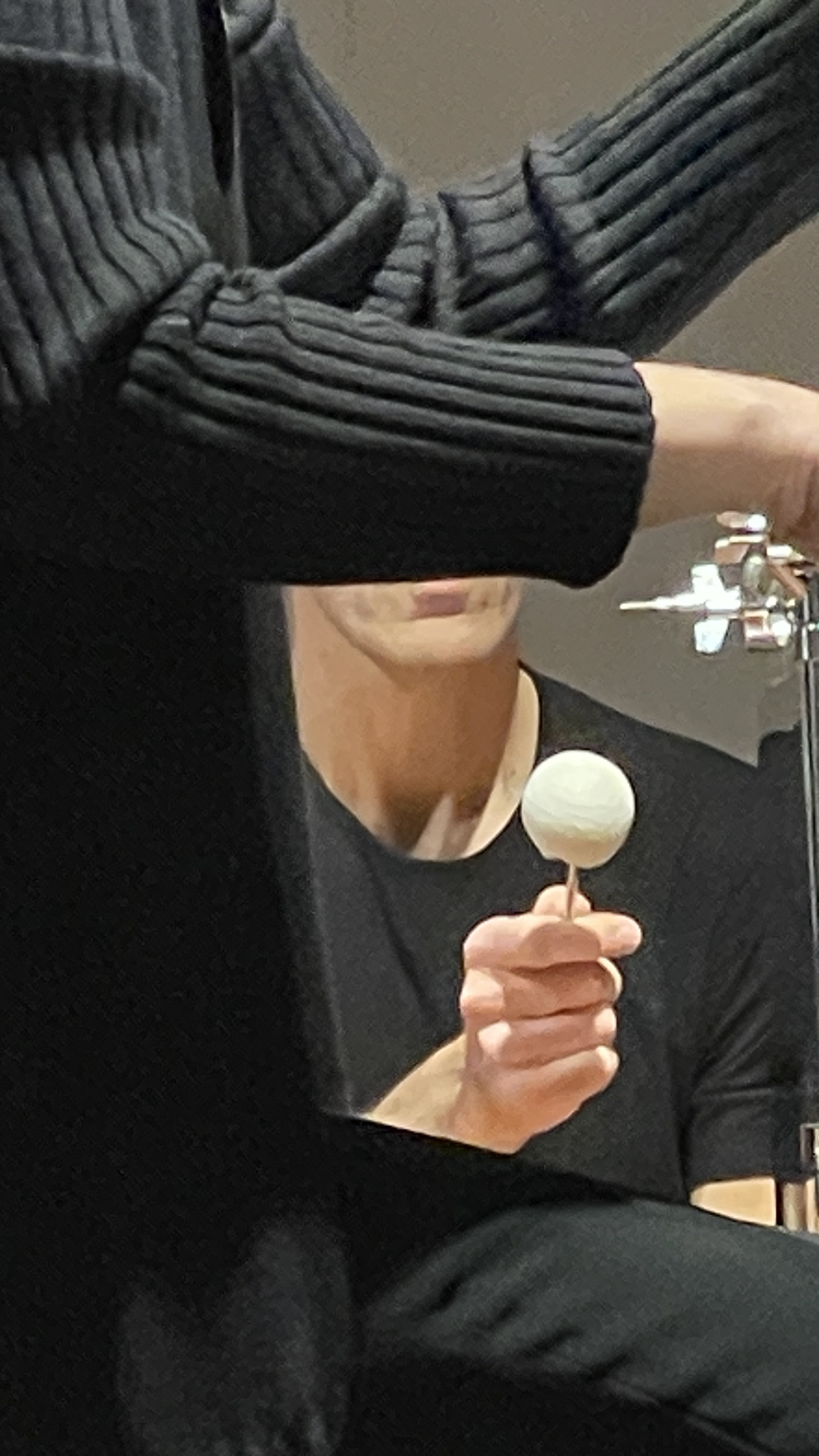
Here it is the list of the upcoming concerts – very much looking forward!
° 24th August 2026 – London, Cafe OTO in collaboration with The Hotel: Agnese Toniutti plays Philip Corner, music by Philip Corner Info Bookings
° 26th September 2026 – Bologna, MAMBo Museum of Modern Art Bologna in collaboration with Angelica: Fluxus Cardboards for Giuseppe Chiari, music by Giuseppe Chiari, Philip Corner, Giancarlo Cardini, Mieko Shiomi Info Bookings
° 17th October 2026 – Reggio Emilia, Festival Aperto: Open Cage, music by John Cage, Tan Dun Info Bookings
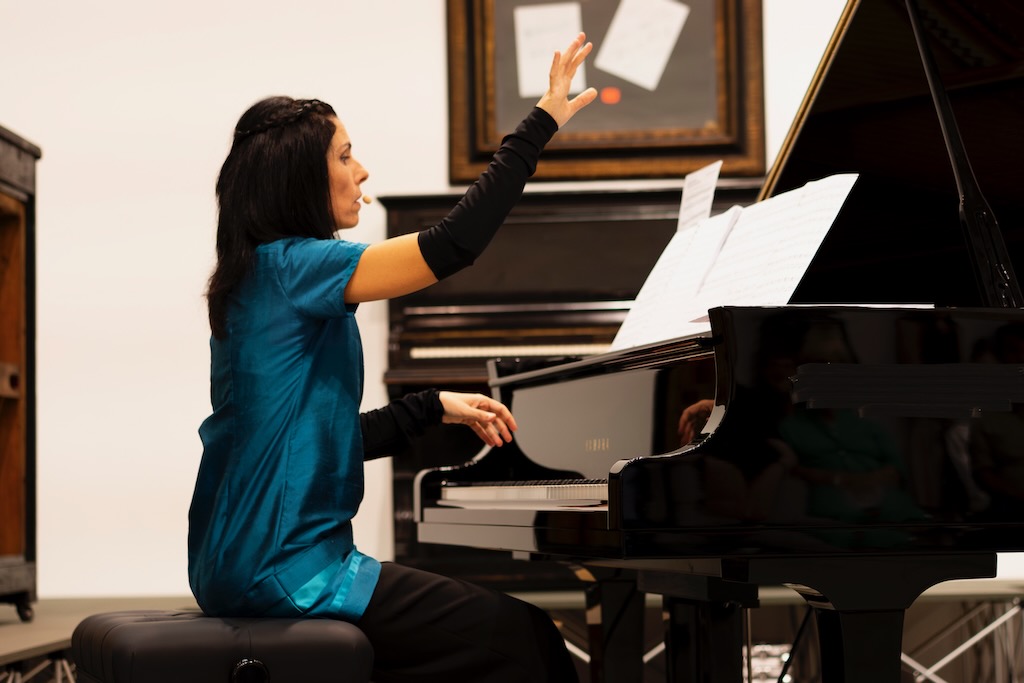
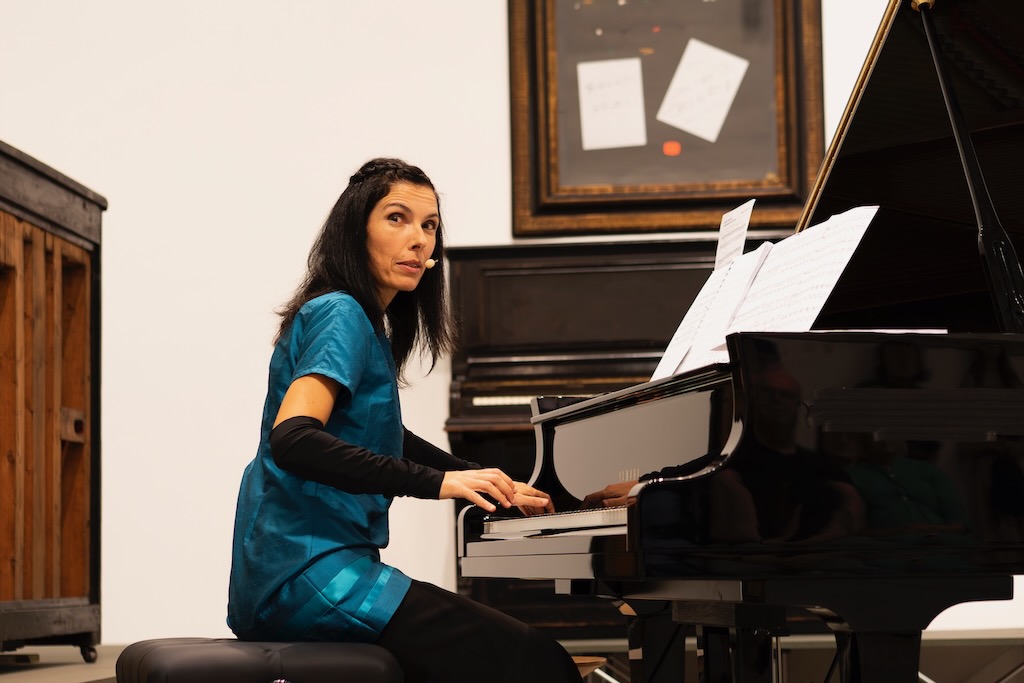
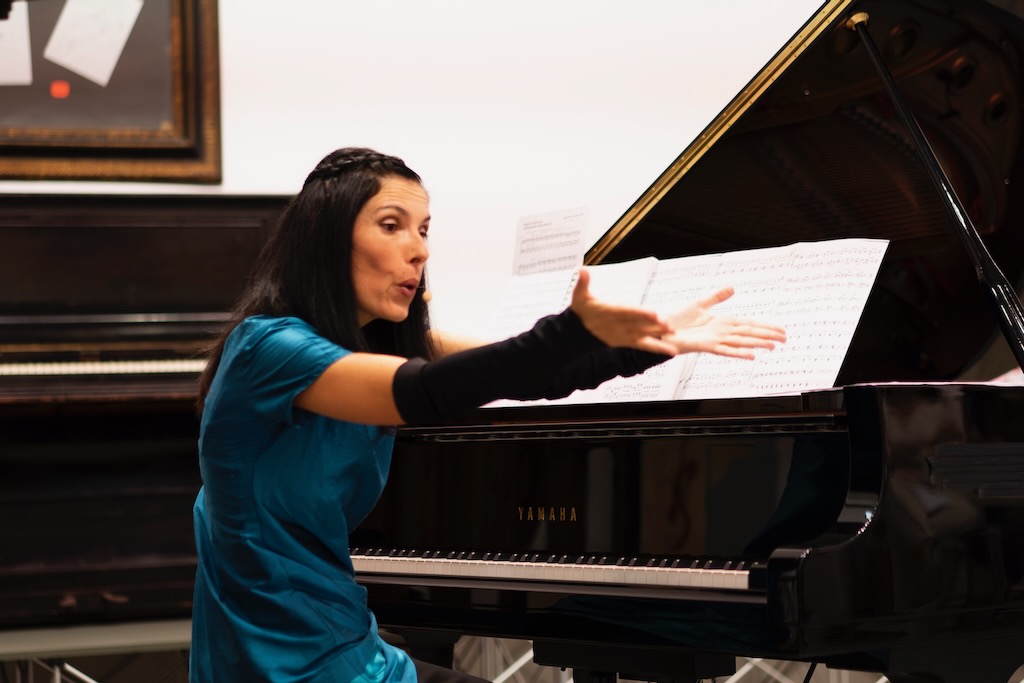
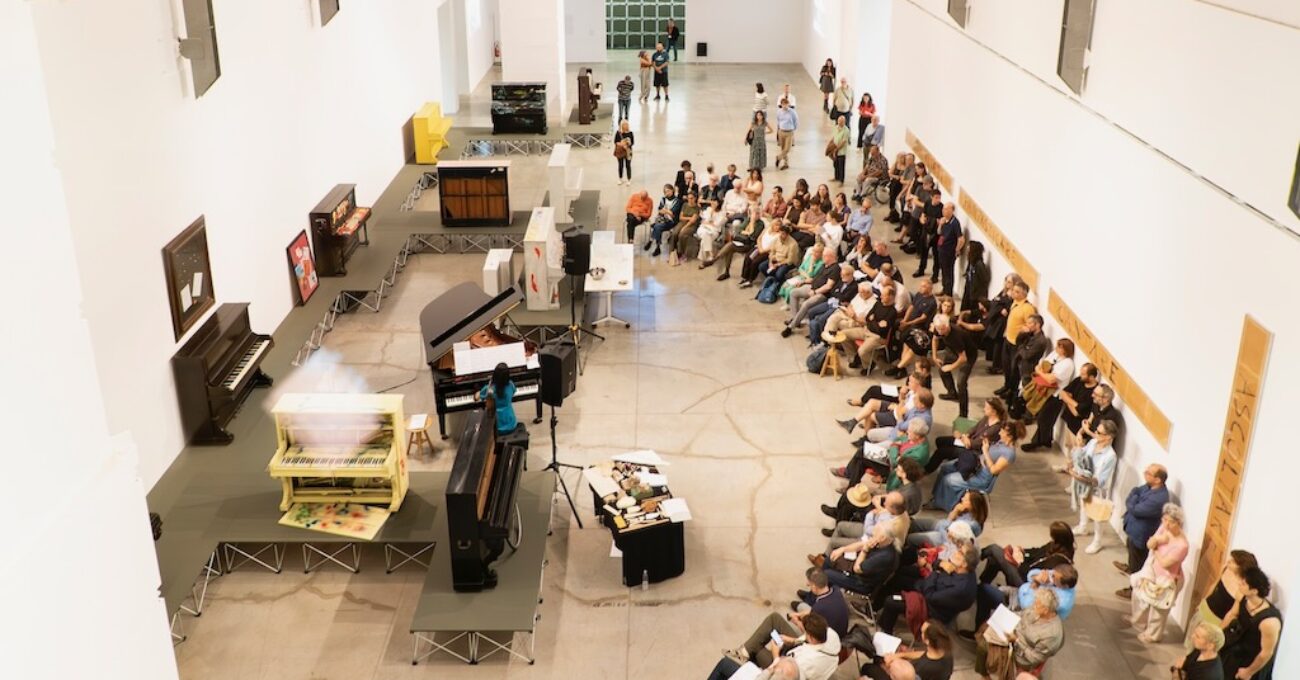
In September 26th, date of birth of the composer, I will perform in Bologna at MAMBo – Museo d’Arte Moderna di Bologna a recital dedicated to Giuseppe Chiari. MAMBo offers in fact the first complete retrospective exhibit of the work of Chiari in occasion of his centennial.
My musical contribution, Fluxus Cardboards for Giuseppe Chiari, will revolve around his long-date relationship with Fluxus group members and shared attitude. Besides Chiari’s compositions from different creative periods – before, during and after the crucial Gesti sul piano – there will be pieces by Philip Corner (inspired by Chiari), Giancarlo Cardini (friend, interpreter and creative fellow of him) and Mieko Shiomi, whose composition represents the performative and poetic side of Fluxus attitude. More soon!
Thanks to the invitation of Mario Chiari, the son of the artist, and of MAMBo – Museo d’Arte Moderna di Bologna, I have the worderful opportunity to immerse myself in the work of Giuseppe Chiari.
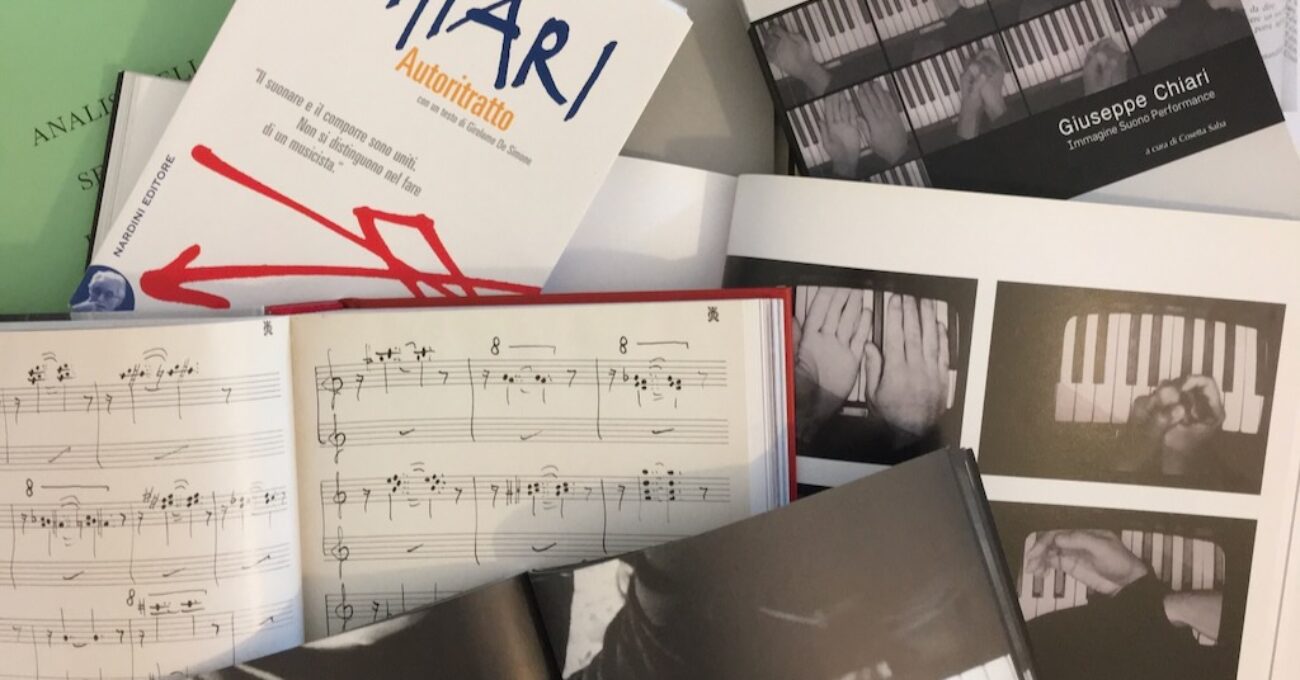
I already knew Gesti sul Piano, his most famous and experimental work on the keyboard. Watching the video artworks of his hands, dialoguing as individual characters with the piano and with each other, left me enchanted and moved at the same time. I also had the feeling that this was the poetic output of a rigorous critical reflection, though. It was correct; now I’m diving into critical essays, conceptual art statements, art books, photographic series of his performances, videos, recordings and finally, yes, scores (in standard, verbal, graphic notation) of this prolific composer, performer, artist welcomed by the Fluxus movement as well as by the conceptual art milieu.
In the occasion of his centennial (Chiari was born in Florence in 1926) several detailed books about him have been published, precious maps to navigate into his constantly-in-progress work.
This is the case with Gesti sul Piano, whose first score was written in 1962 and undergone many transformations, following the creativity of his author who became soon the performer of the piece (before him the dedicatee, Frederic Rzewski, and Giancarlo Cardini). From paper – verbal and graphic scores – to pictures and videos, from open composition to performance and improvisation, the life of this work left many different traces. Collecting them makes me feel as in a kind of treasure hunt – I’ll write more about this later.
And now it comes the funniest part: playing “with” Gesti sul piano. A playfully serious way of opening doors… what will be on the other side?
“The man is unaware that the keys exist to him / the keyboard is just a long white strip he realized however that his hands and arms can leave an imprint on the keyboard just as they would on sand he realized that his anger his anxiety his tension his rigidity his apathy his tenderness would leave for a moment a furious tender imprint on the white keys…
he has never seen anyone play the piano he cannot conceive that a single finger is meant for a single key“ Giuseppe Chiari, 1969
Playing with Giuseppe Chiari’s Gesti sul Piano
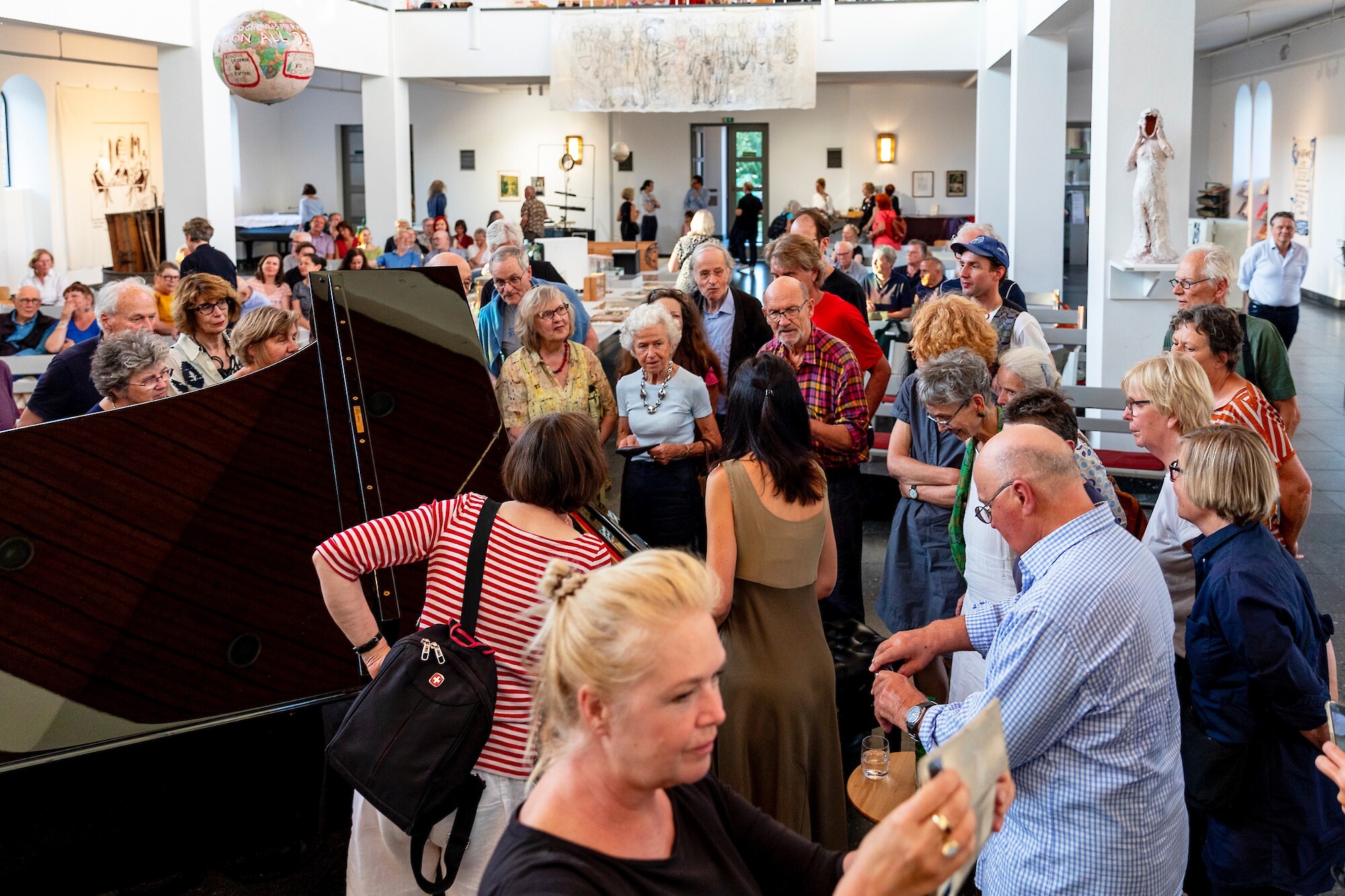
Front image: Photo from the exhibition “Party Chiari & Amicizie Fluxus” at Galleria Susanna Orlando – Pietrasanta, 2026
While I was in USA a copy of Cardini live – Quaderni di Octandre n.29, new publication by Agenda Produzioni in Bologna (IT), was delivered at my address. I contributed with an essay on Giancarlo Cardini’s piano pieces – the ones I performed on stage and / or recorded in Lento trascolorare (Da Vinci Classics, 2020). The titles of Cardini’s pieces are often poetic and suggestive. I quote one of them in the title of my writing: Paesaggio marino al tramonto, con barca e grande nuvola nera (the translation sounds as “Sea landscape at sunset, with boat and big dark cloud”): a glance on piano compositions by Giancarlo Cardini. In fact the deep poetic inspiration that pervades Cardini’s music can be also found in the titles of his pieces and in his writings – a good sample of this is his artist book Soap bubbles – Bolle di sapone. In the essay I try to find some recurrent aesthetic traits of Cardini’s creativity and root them in the analysis of the scores composed for his elective instrument, the piano. “Divagazioni intorno a tre canti dell’Euridice di Peri” (2013), “Paesaggio marino al tramonto con barca e nuvola nera” (1998), “Via del Fico, Firenze. Una piccola strada disadorna, silenziosa, quasi immota, arida e bella” (2011), “Tre momenti di sessualità infantile” (2007), “Terza Fantasia, ad Agnese Toniutti” (2018), “Foglie d’autunno lentamente trascolorano” (1983, rev. 2018), “Rituals for the Ryoanji Garden” (2012) and “Una notte d’inverno” are all mentioned and scrutinized. The list of contributors to Cardini live, curated by musicologist Renzo Cresti, includes musicians, scholars and writers that worked and studied with Giancarlo Cardini; I am looking forward to read each essay, a way of celebrating him through words, music and heartfelt memories.
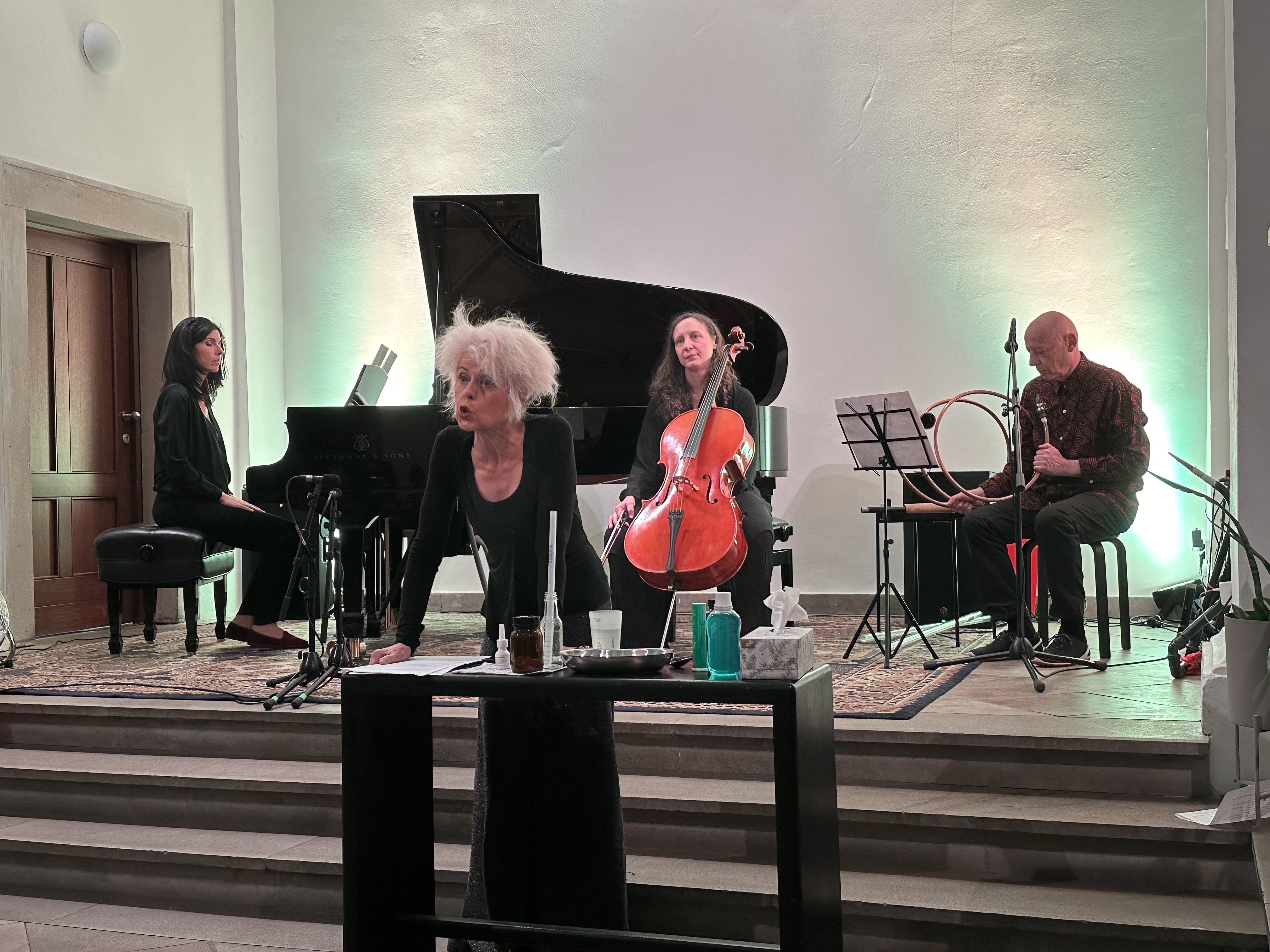
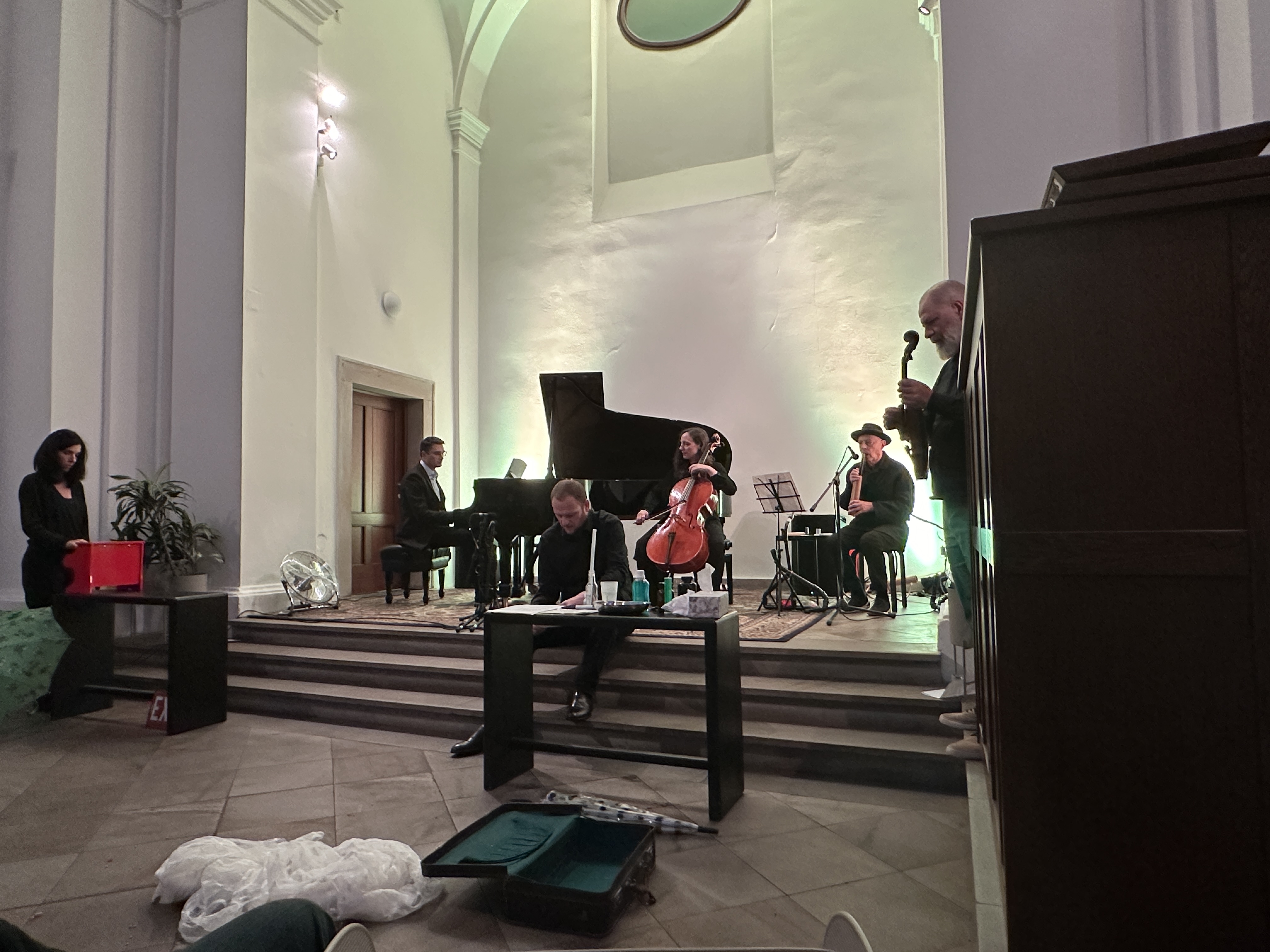
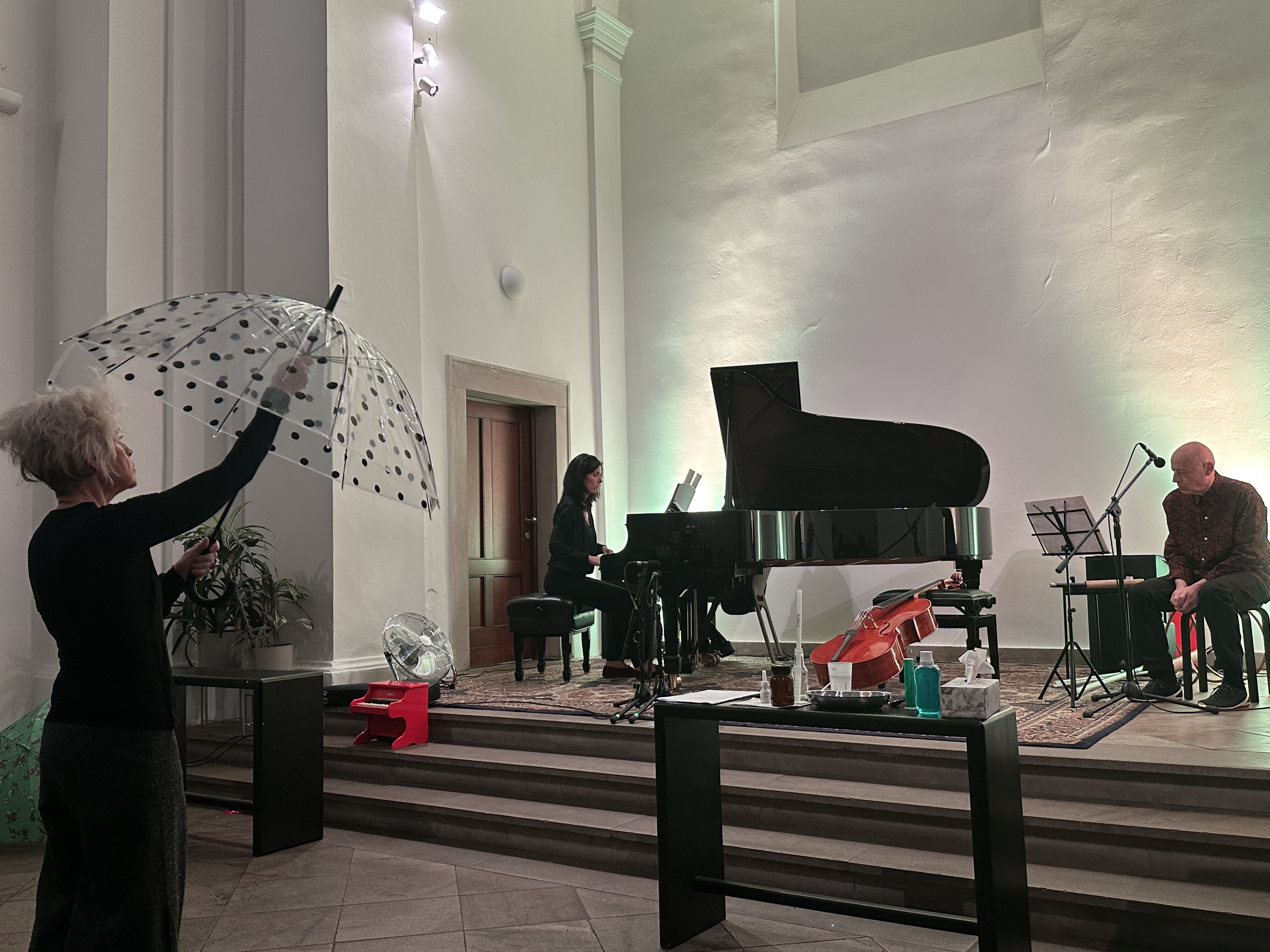
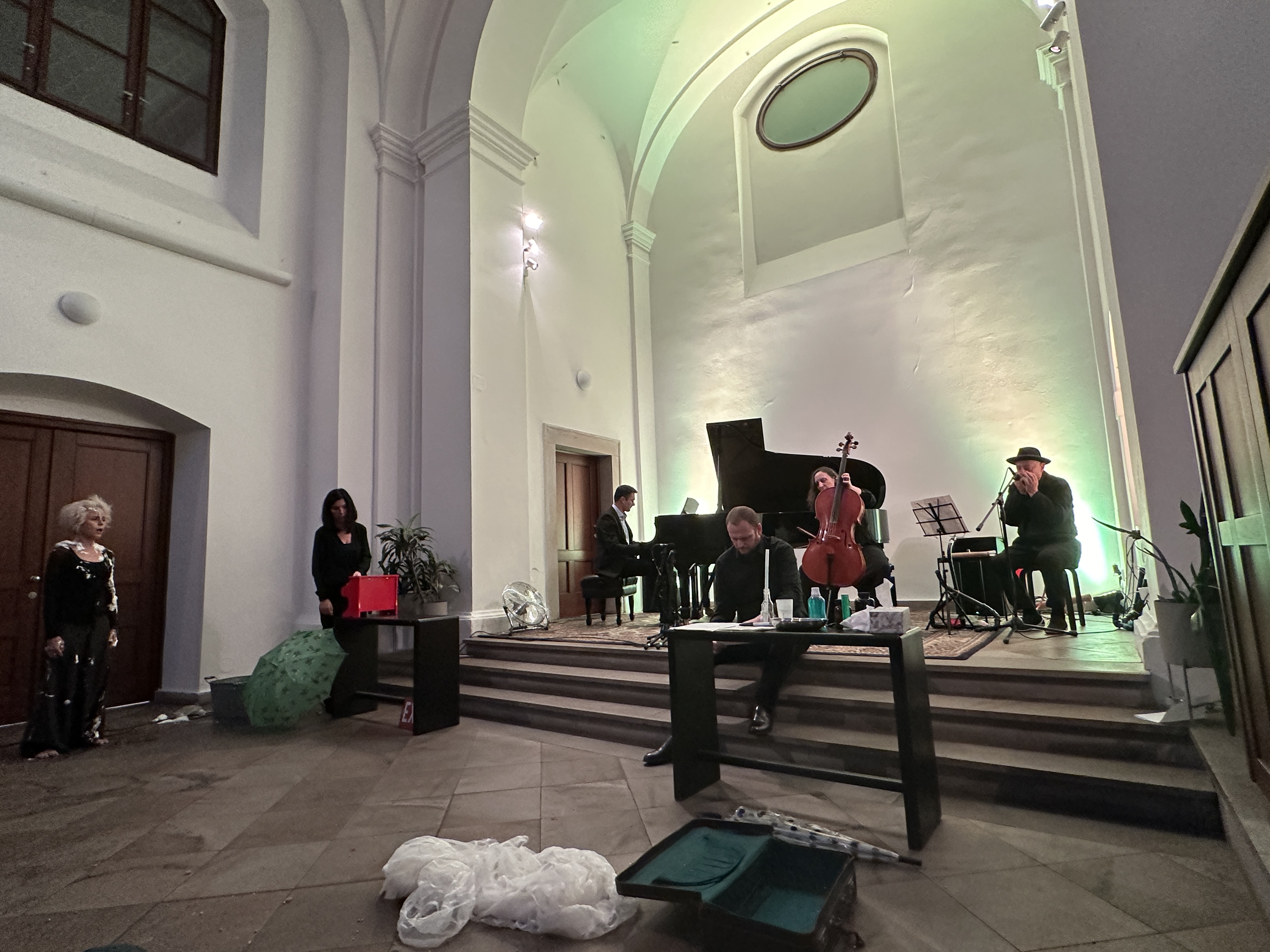
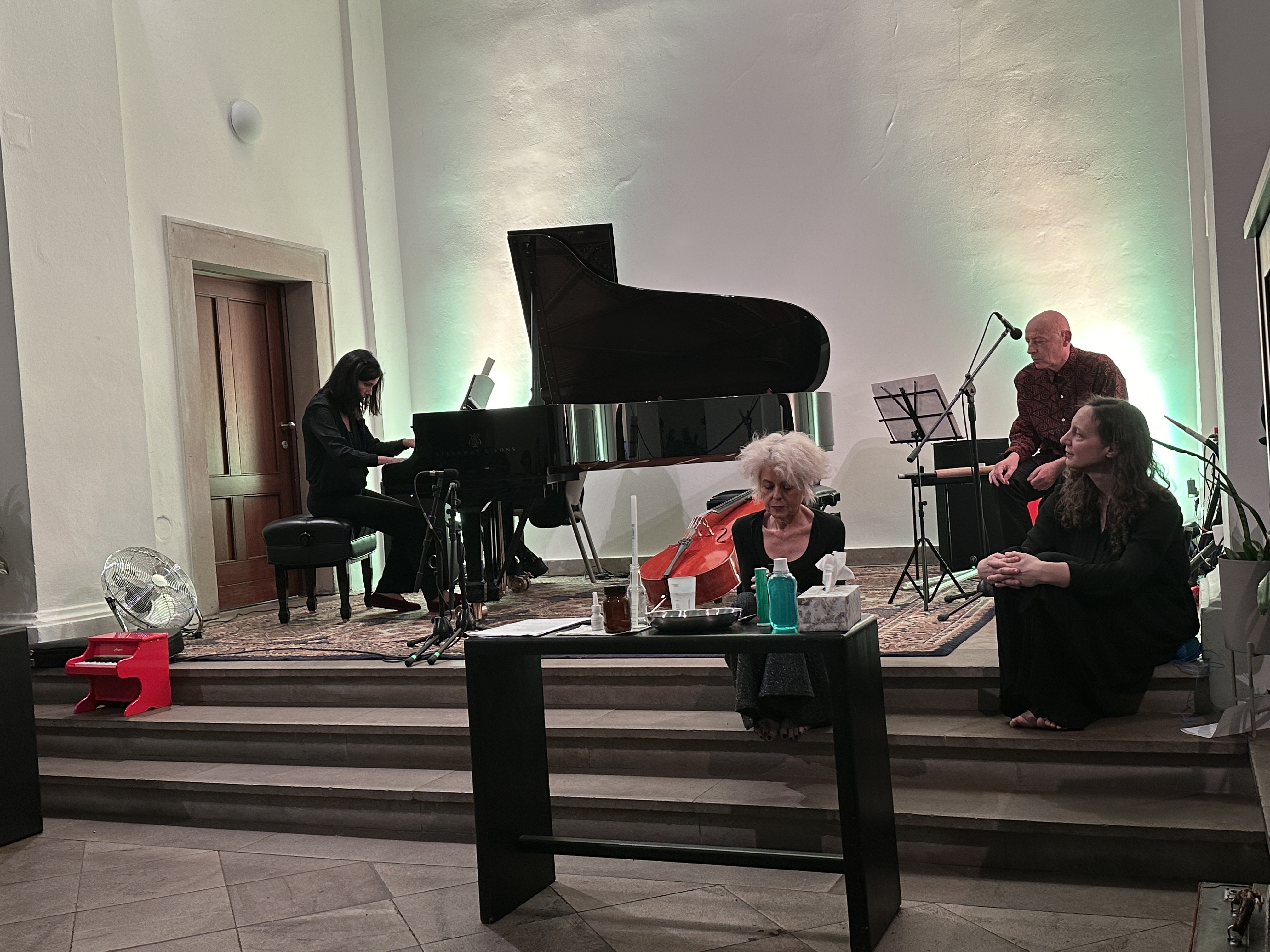
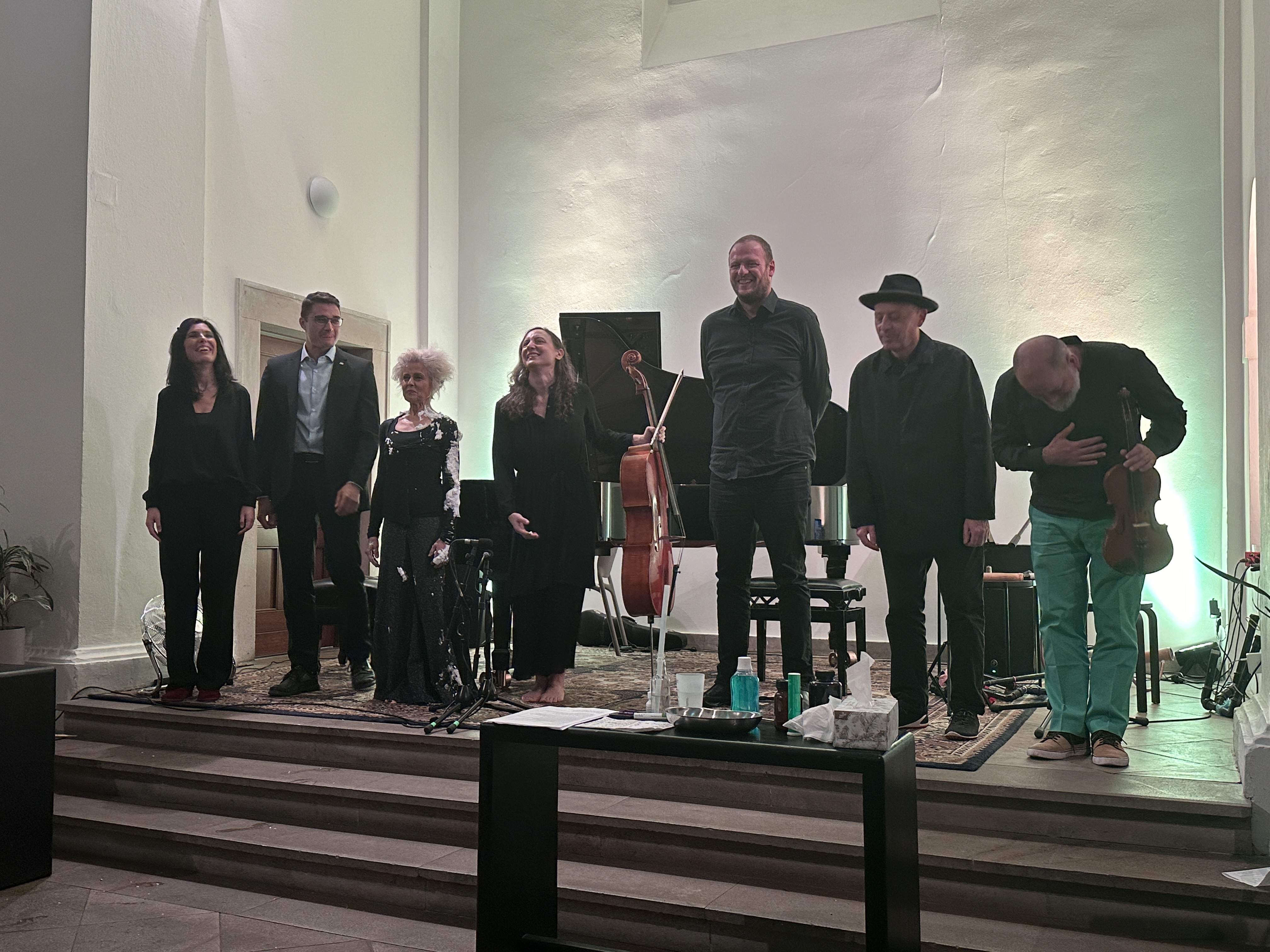
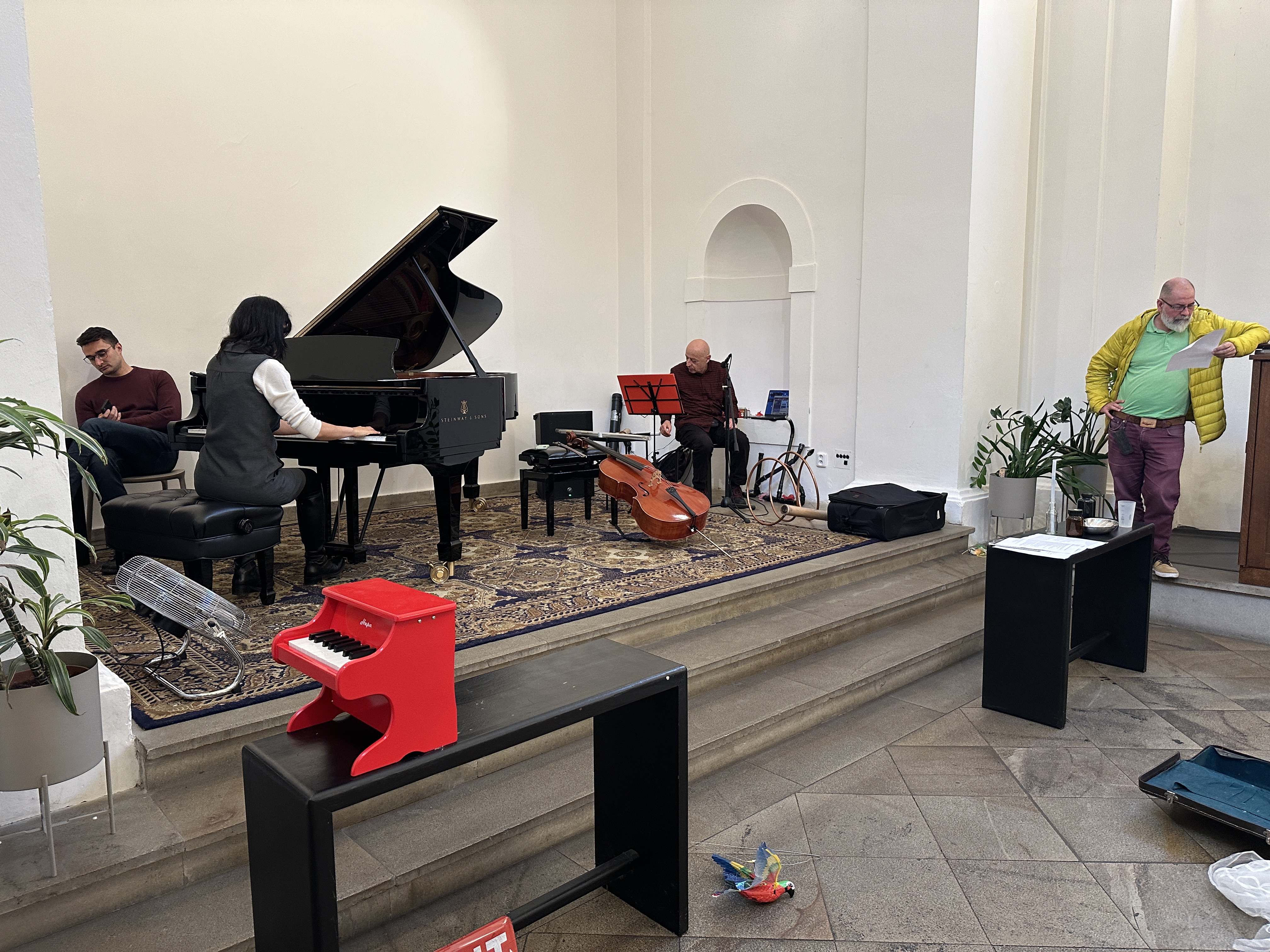
Ready to fly to Prague next week at Žižkov Atrium for LUXURY OF MIND = FLUXUS.
On the 28th November at 19.30
Anna Clementi (Germany, voice), Deborah Walker (Italy, cello), Luciano Chessa (Italy, Dan Bau, violin, organ), Werner Durand (Germany, wind instruments), Miroslav Beinhauer (Czechia, piano), Petr Bakla (Czechia, piano), Petr Ferenc (Czechia, spoken word) and me
will be ready to perform a quite unusual happening/concert with music by
John Cage, Milan Knizák, Henning Christiansen, Philip Corner, George Maciunas, Geoffrey Hendricks, Yoko Ono, Giuseppe Chiari, Terry Riley, Eric Andersen, Dieter Schnebel, Bengt af Klintberg, Mieko Shiomi, Ovvind Fahlström, Sten Hanson, Nam June Paik, La Monte Young.
I bet it will be fun!
All started from an idea by Petr Studený and Opening Performance Orchestra in Prague, that led to the release of Stolen Symphony, the first volume of Fluxus&NeoFluxus collection, and now, brand new, to the second and final part, Keep together (Sub Rosa label, 2024). As the previous one, it’s a limited edition (400 copies) of double LP or double CD, with a very rich booklet with many texts and essays about Fluxus. But differently from the first, which is sold out, there are still copies available! I played a La Monte Young-inspired piece, and re-released music by Philip Corner and Giancarlo Cardini (also in Neuma Records and Da Vinci Classics). Very happy to be part of this second edition with all the musicians I will soon meet in Prague and many others.
Some photos of the evening – almost three hours of music and performance! – and the rehearsals. Thanks to Petr Studený for the pics.
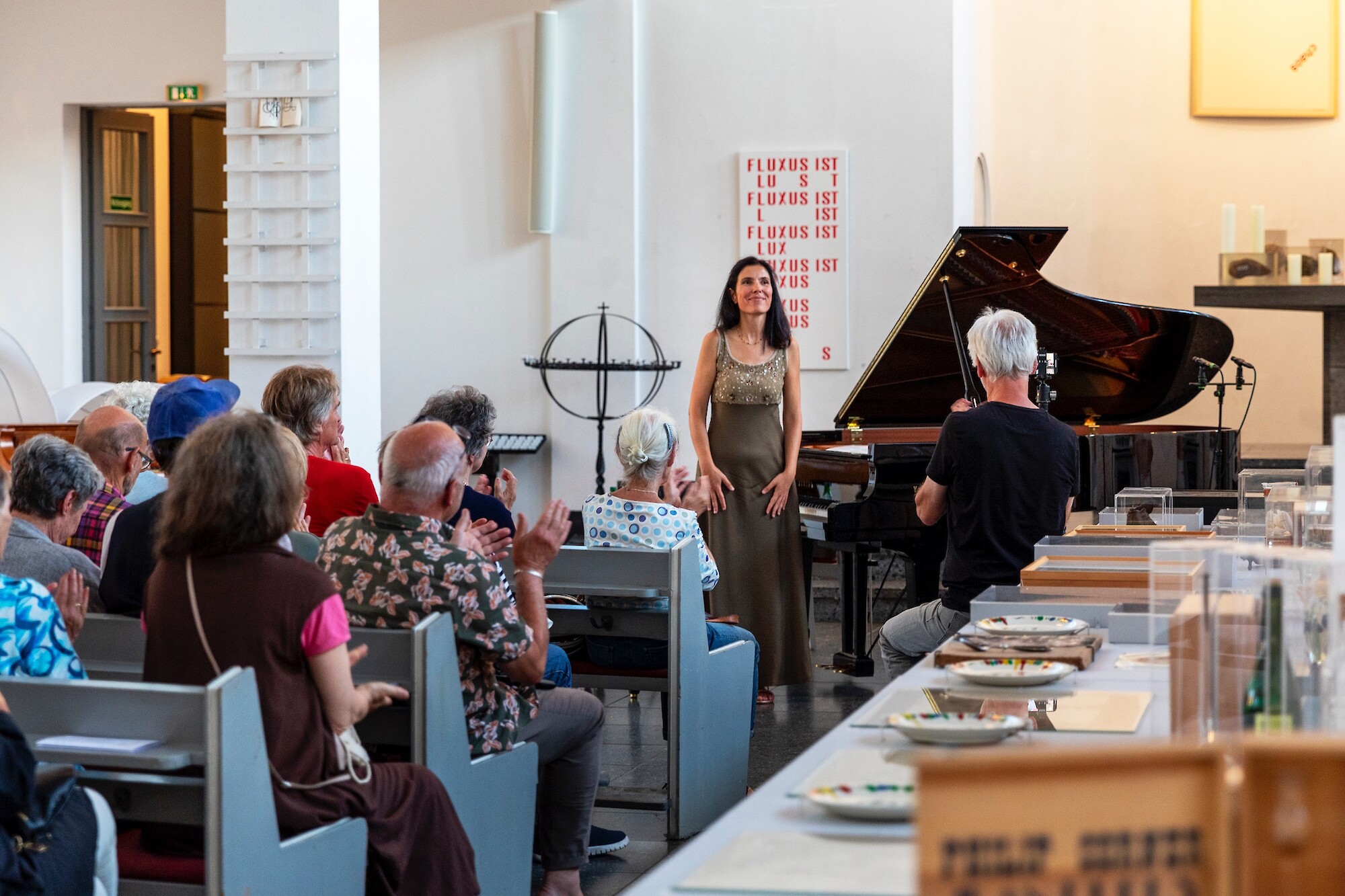
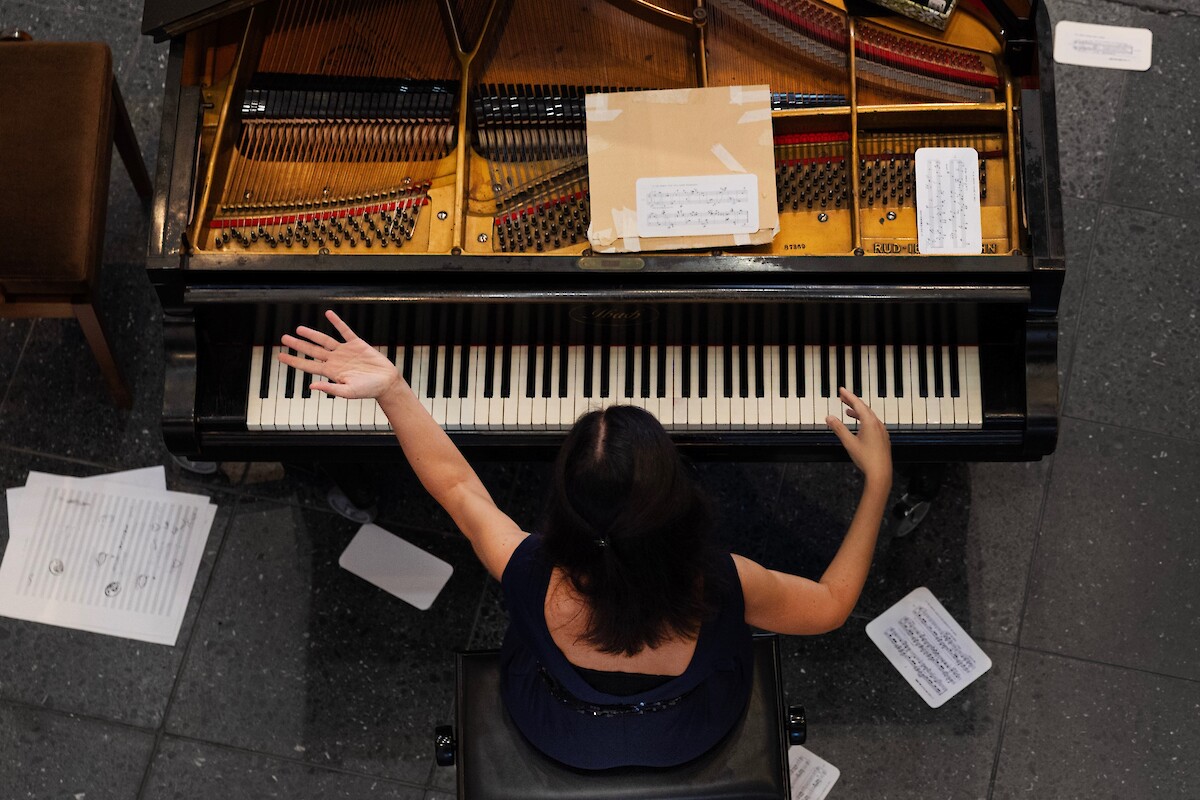
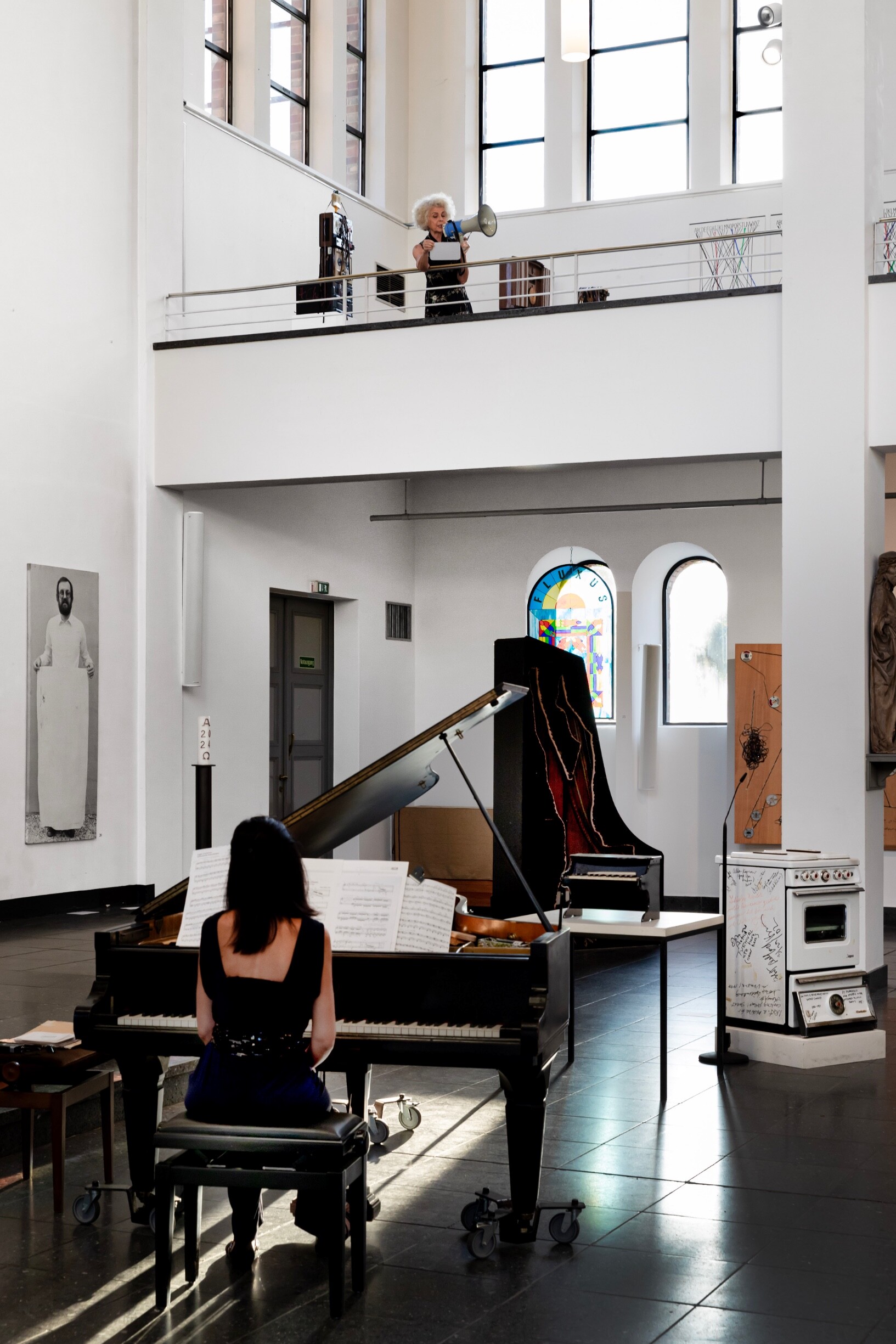
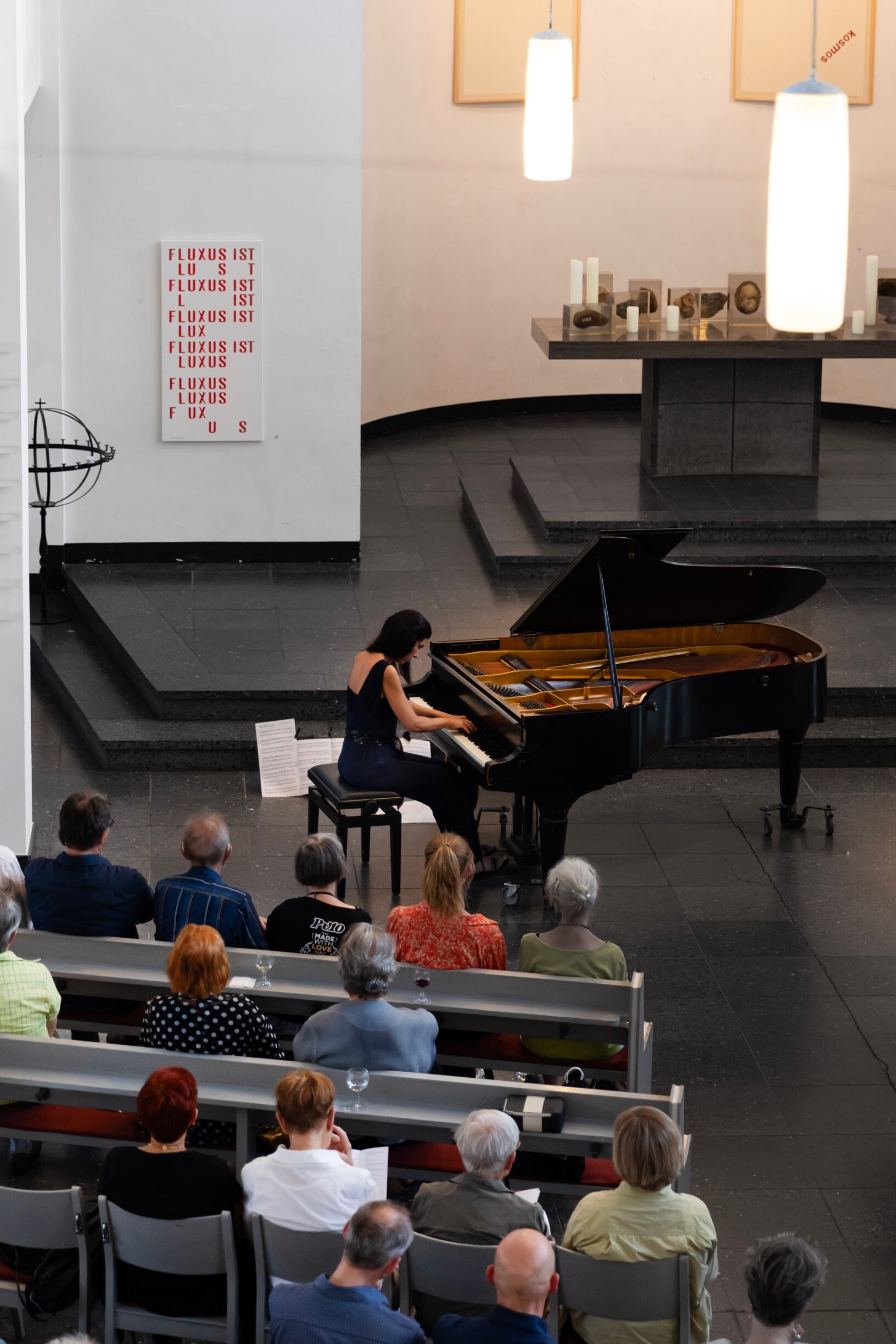
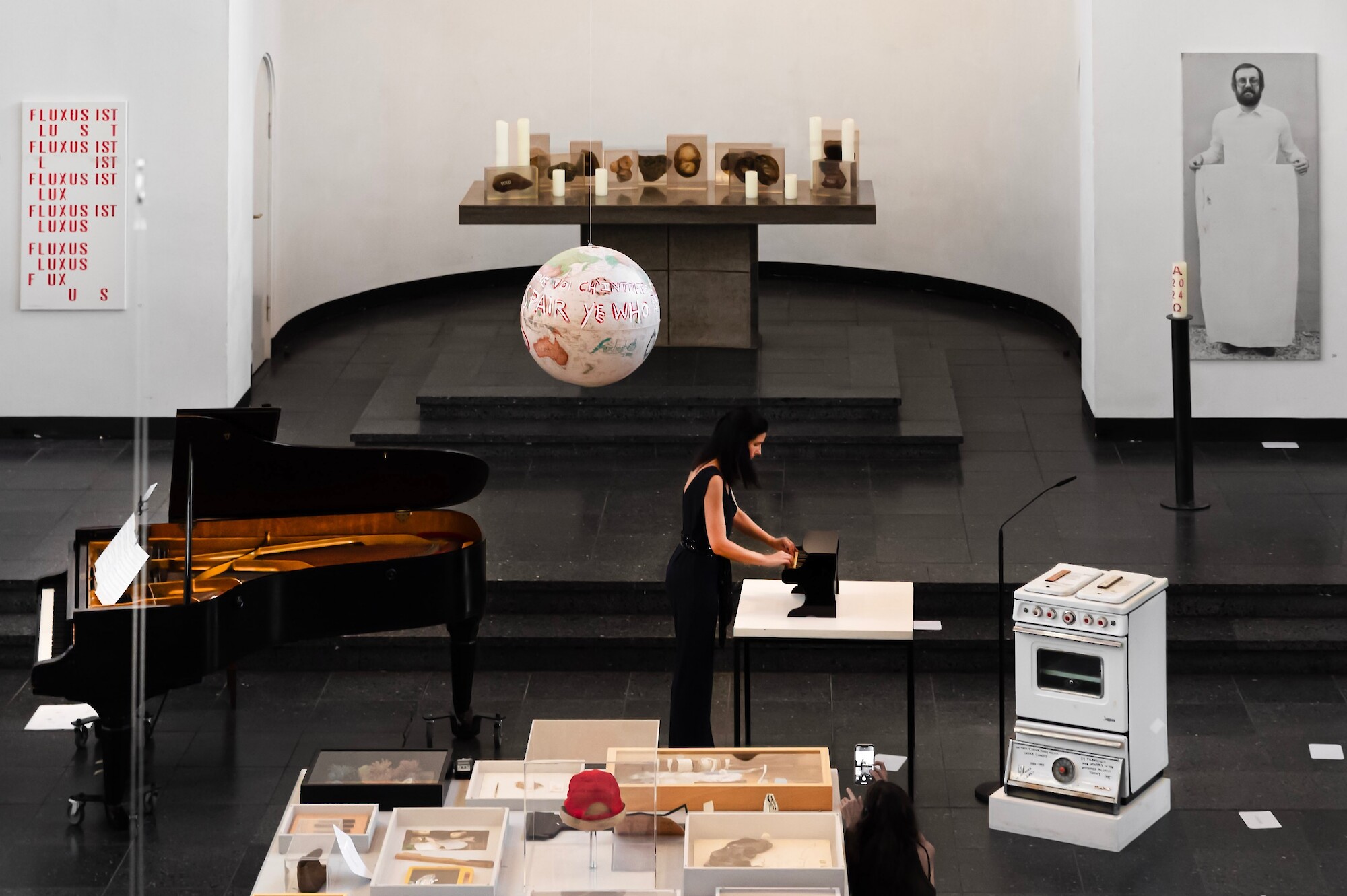
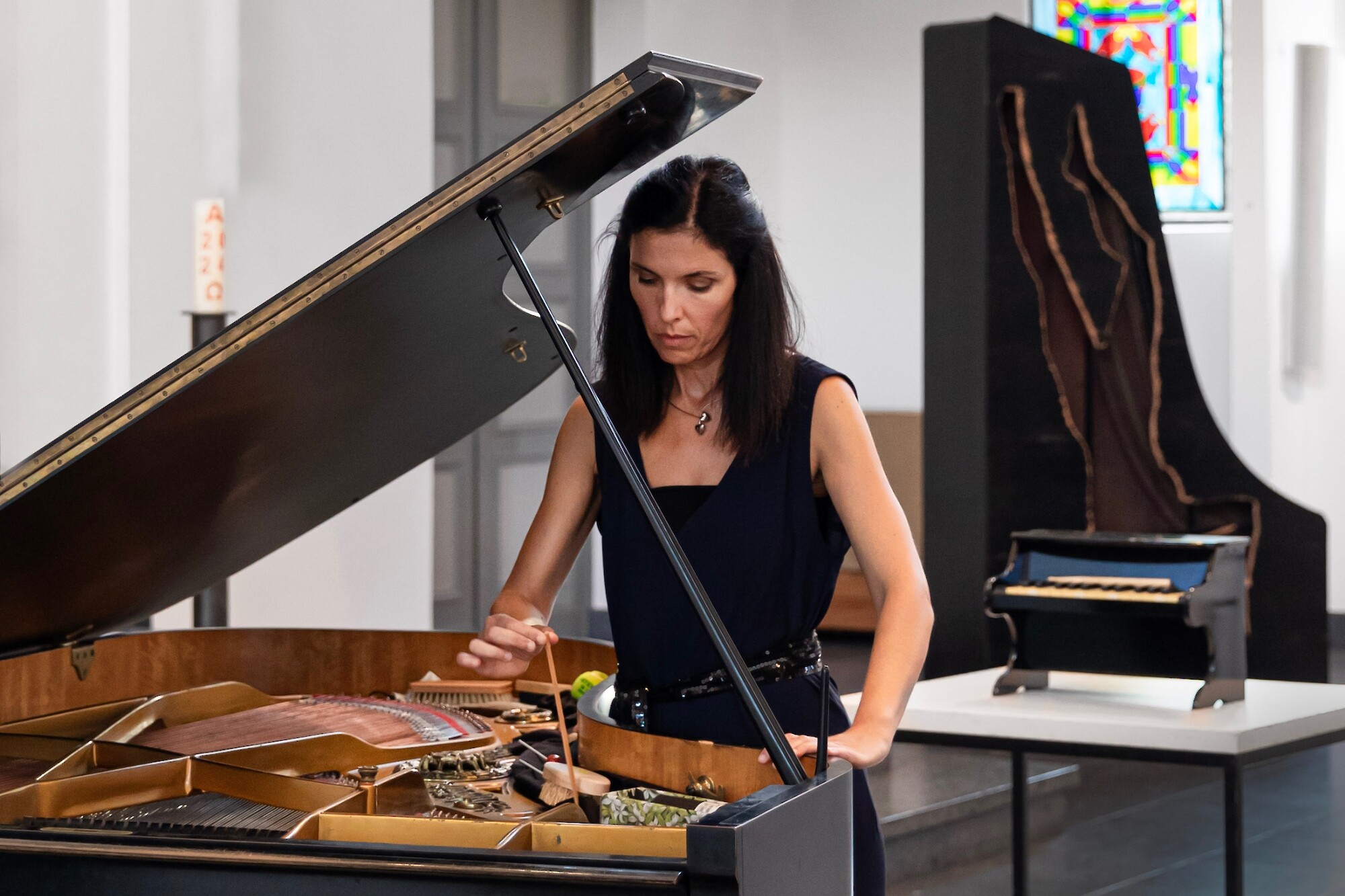
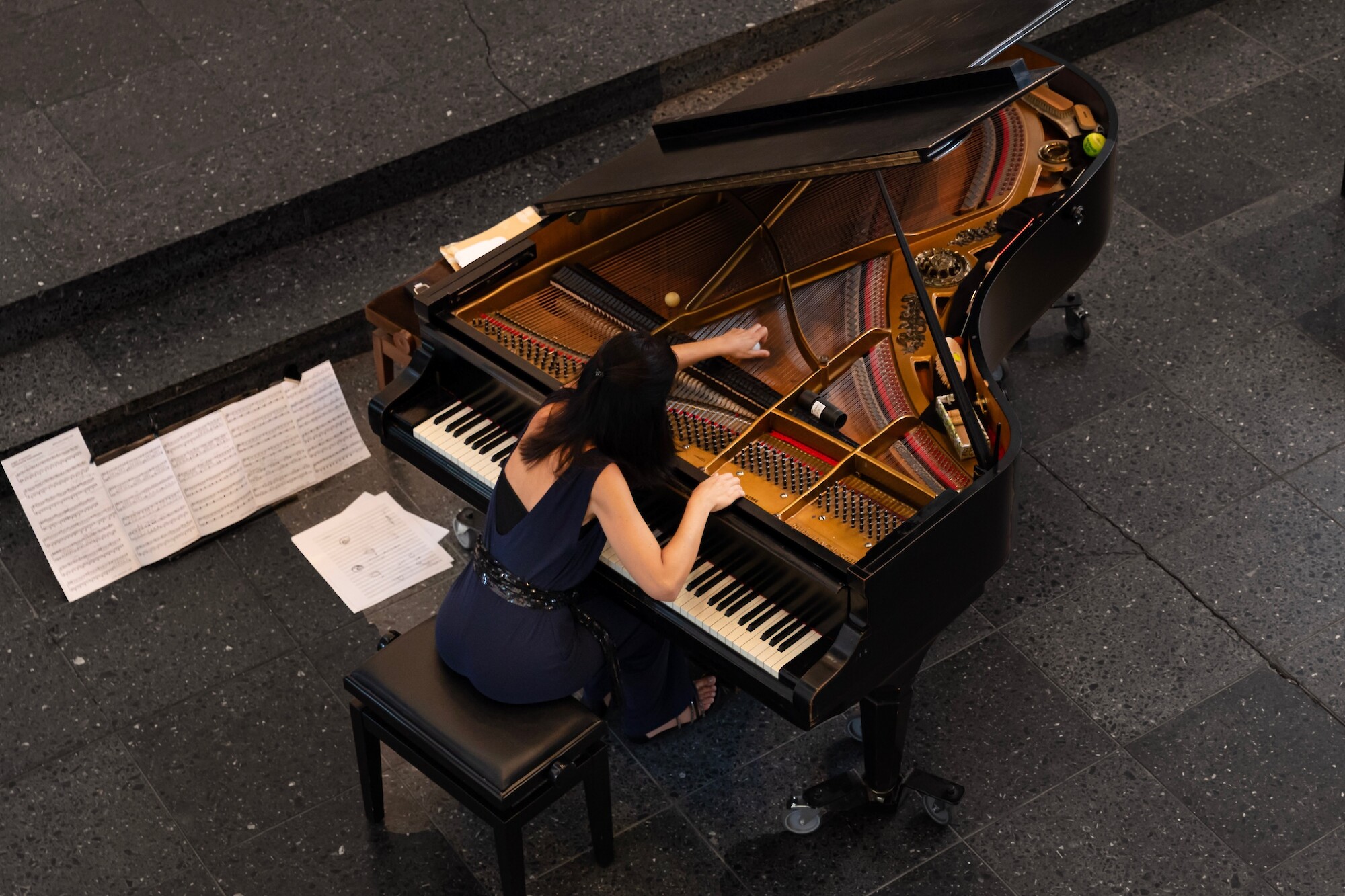
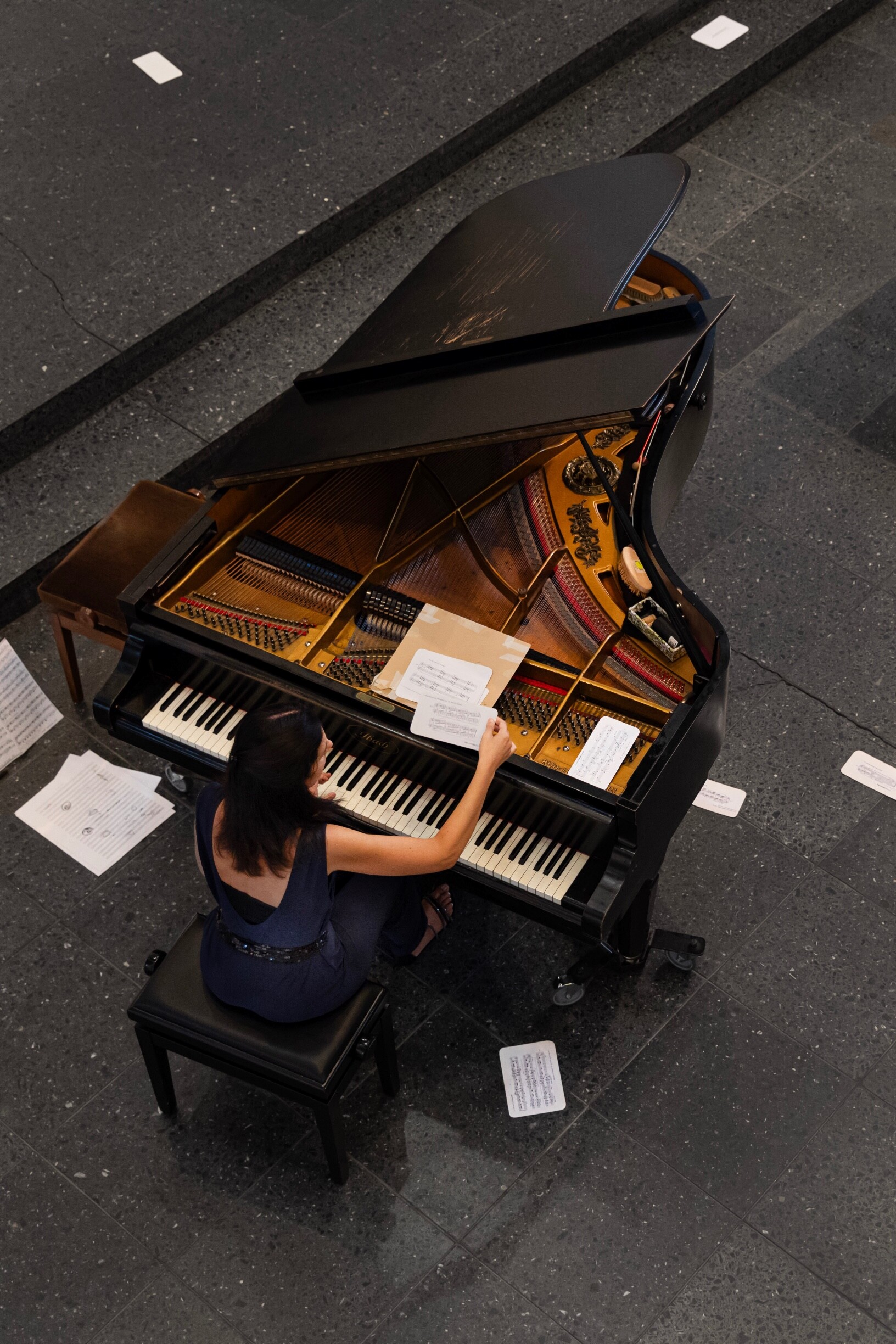
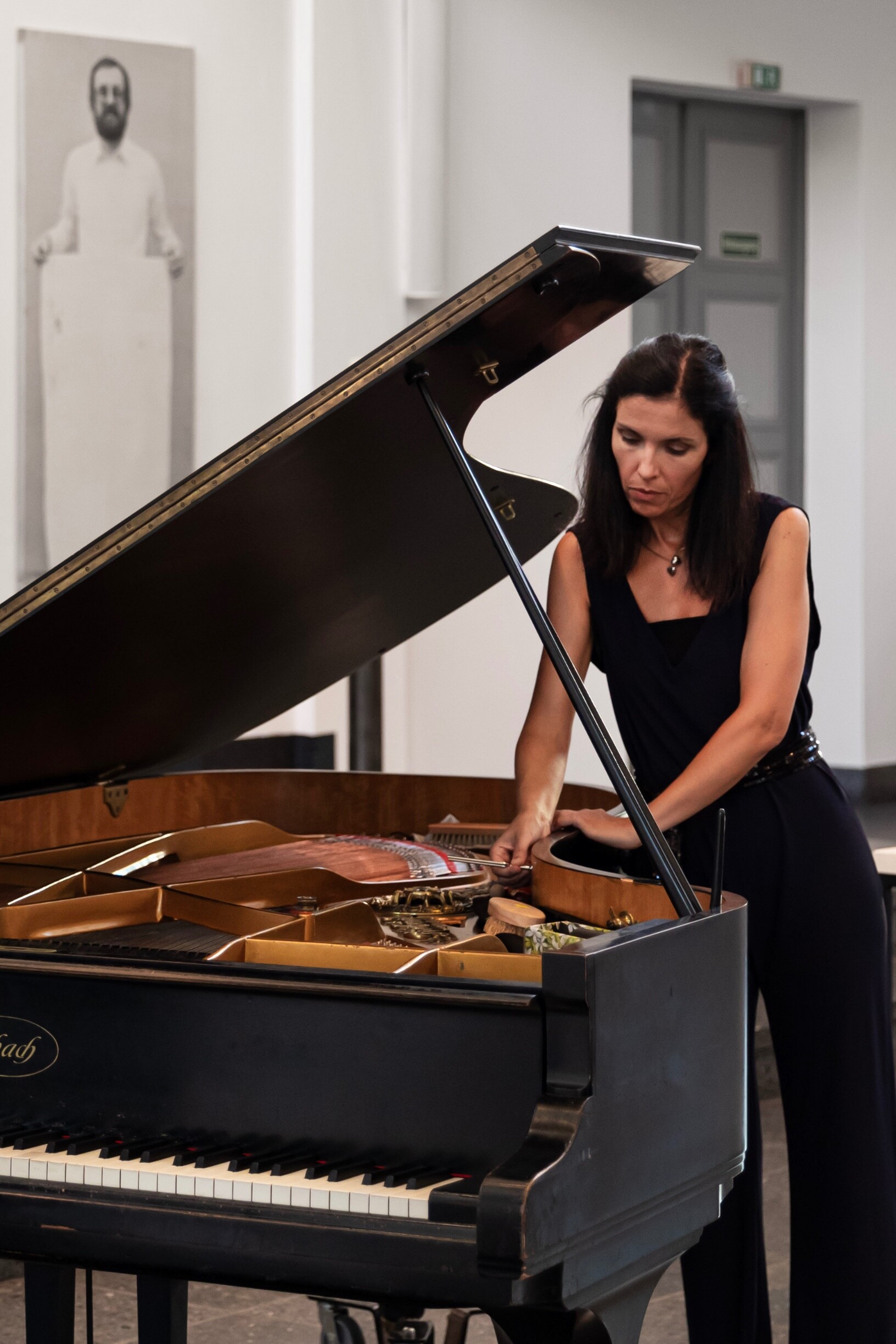
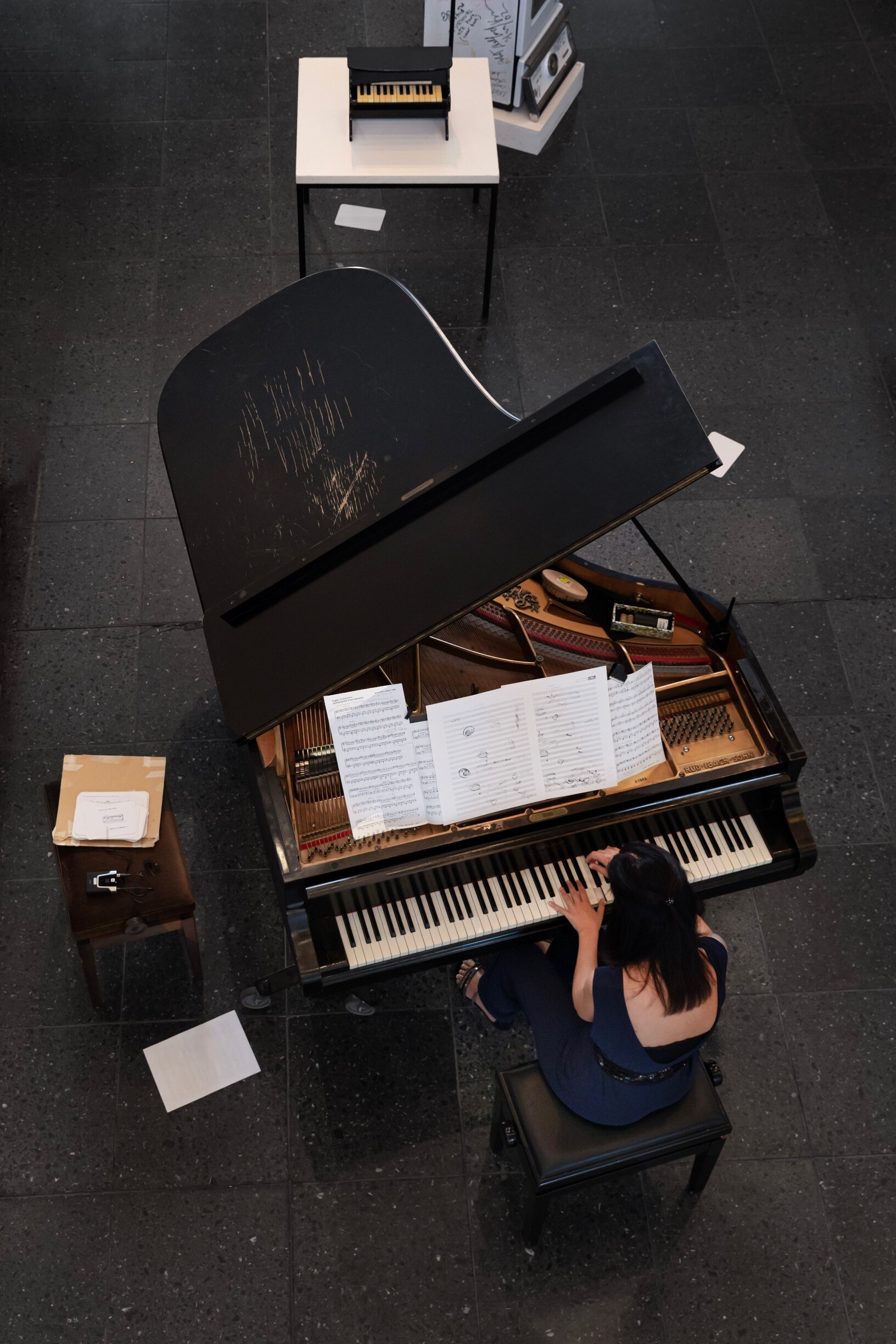
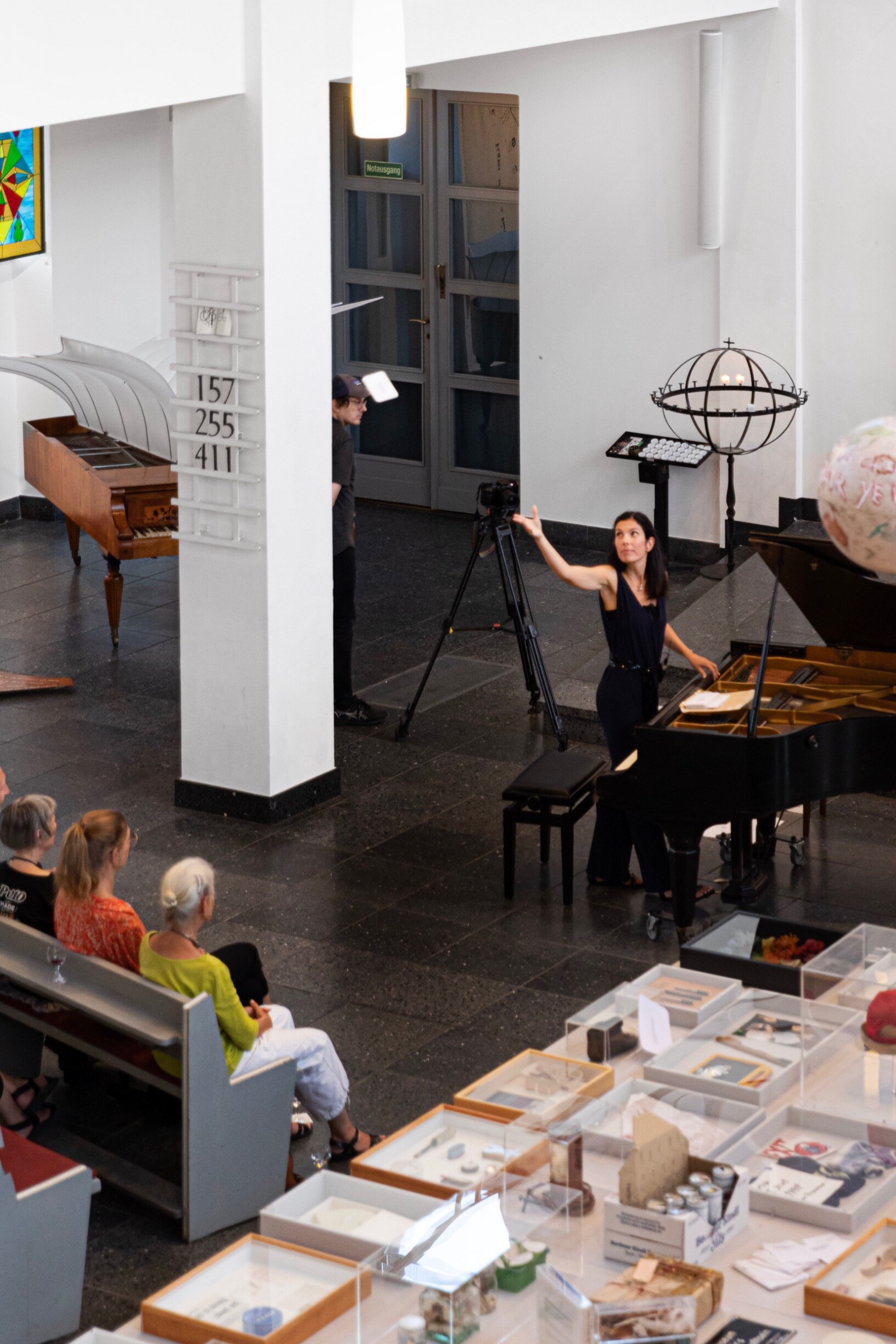
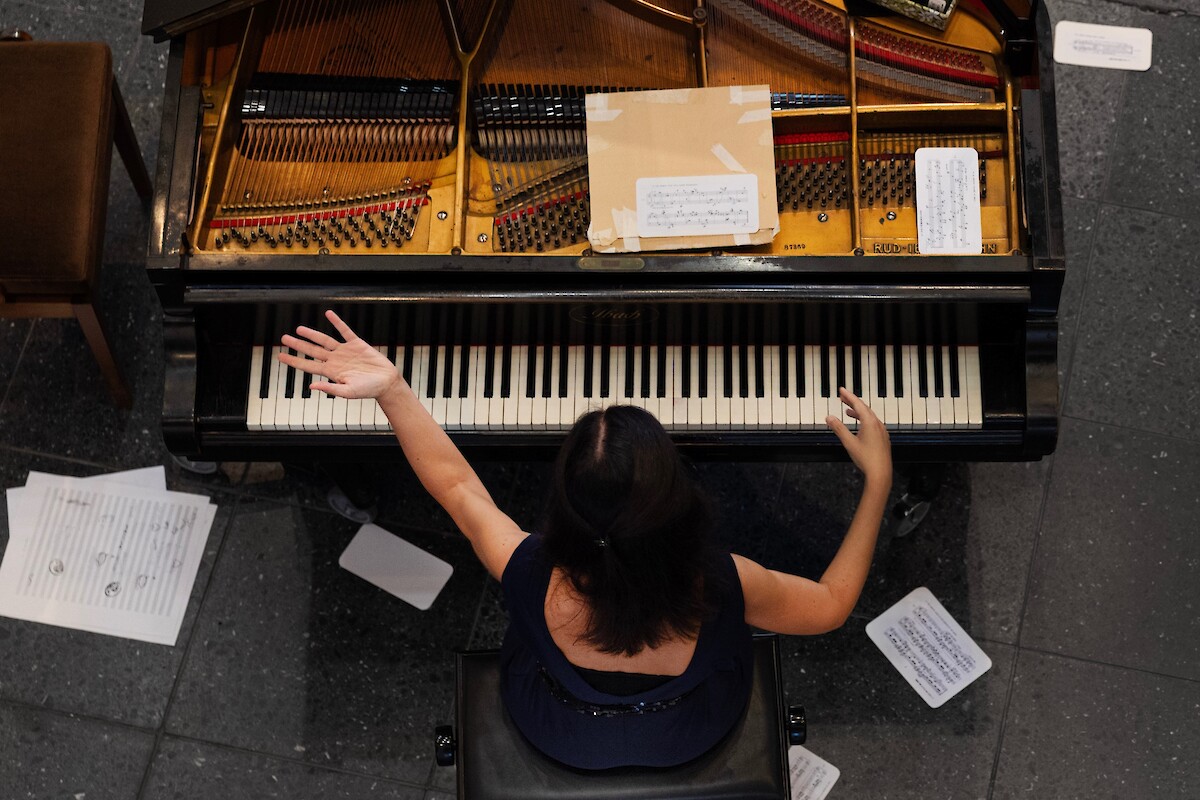
In a few weeks I’ll be in Berlin again with two concerts, on the 6th of August and on the 20th of August. The first recital, Open Cage, will be dedicated to John Cage‘s music for toy piano, prepared piano, string piano and “regular” piano. The second program, Fluxus Cardboards, will feature music by Fluxus artists and composers Corner, Shiomi, La Monte Young, Higgins, and Cardini. Both recitals are included in a concert series parallel to the exhibition “Holy Fluxus”, held from July 13th to September 8th at St. Matthews Church in Berlin. The exhibit is organized by Archivio Conz and presents to the public part of the wide collection of Francesco Conz, now available in Berlin thanks to a huge cataloguing work. Quoting from Archivio Conz press review, “Francesco Conz (1935–2010) was an obsessive Italian collector, patron, curator, friend of artists, and “producer as artist sui generis” (Thomas Marquard). In 1972, after meeting Hermann Nitsch, Günter Brus, and Joe Jones in Berlin, his interests focused on Lettrism, Concrete Poetry, Viennese Actionism, Fluxus, music, and literature. Over the course of many decades, he created a unique worldwide network of artists. His tireless activities as a publisher of over 560 art editions (Edizioni Conz) in the northern Italian city of Asolo, and later in Verona, contributed significantly to the development of Fluxus in Italy and worldwide. Since 2016, the Archivio Conz, with its approximately 5,000 objects by more than 200 artists, has been housed in Berlin and is now being presented to the public in its entirety for the first time after eight years of cataloging and digitization.”
I am very pleased to be part of the event together with many friends and musicians; in fact, the exhibit will host a free concert every Tuesday, and you can check the full programme here. Below some information about the two recitals (and some images later, as usual).
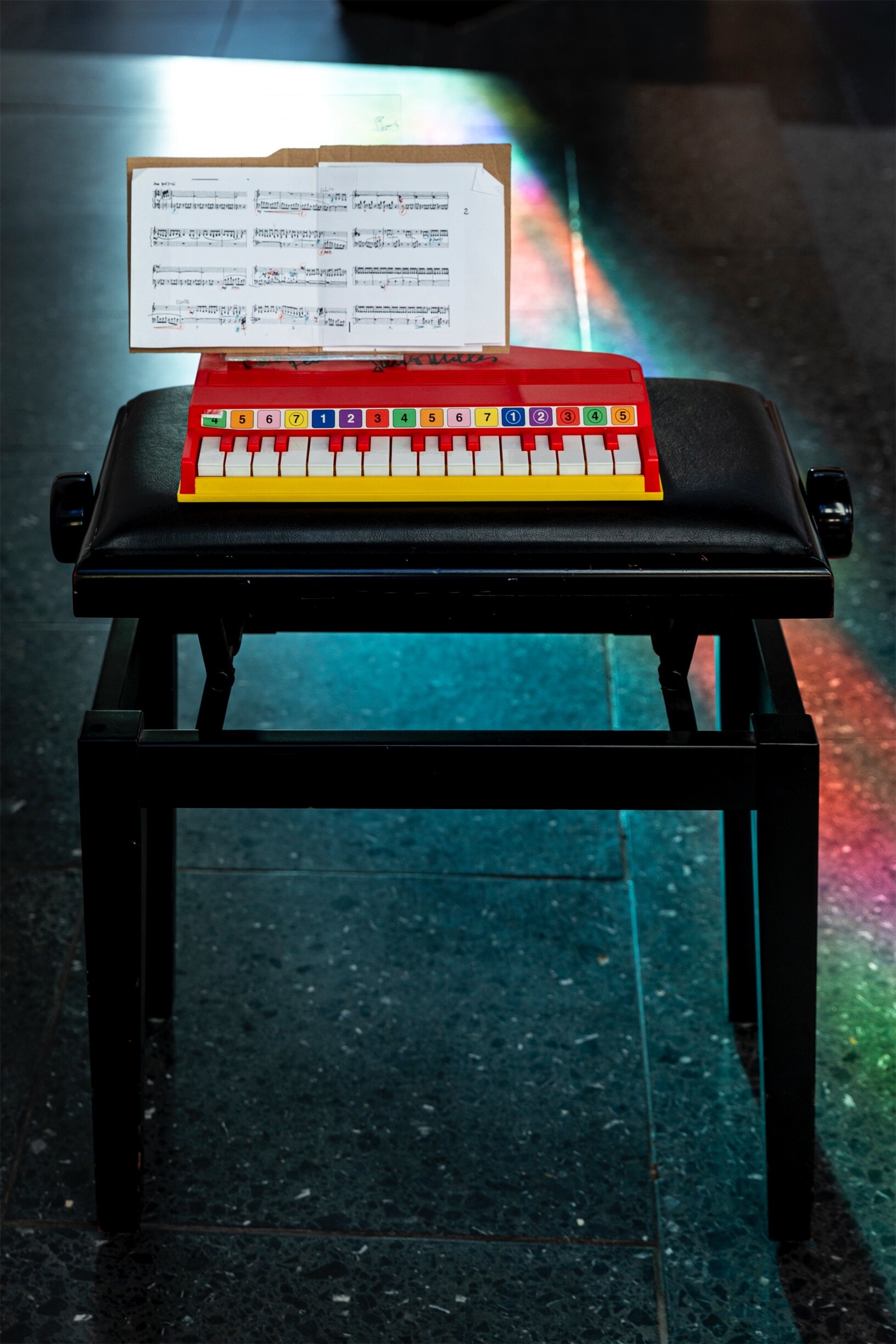
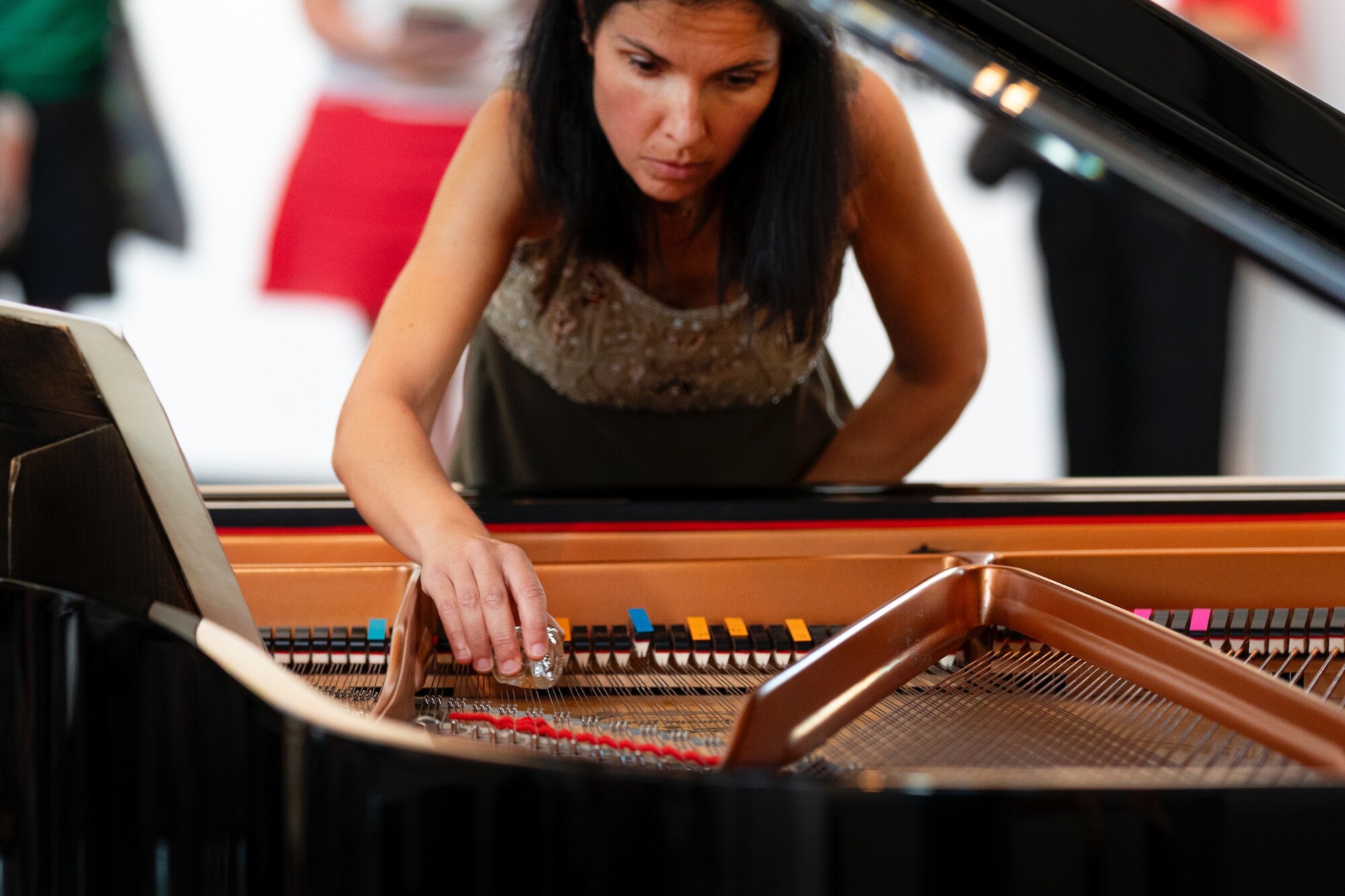
Open Cage, on August 6th, is a listening journey around the sound of the piano. It includes music by John Cage for toy, prepared and regular piano, hosting a piece for “string piano” composed by Tan Dun in honour of John Cage. The young Chinese composer found a supporter in Cage, who spoke very positively of him during the interviews and conversations of the last years. It’s a music programme I’ve played many times, always with a lot of pleasure, looking forward to the surprise of the new sounds of preparation of Sonatas&Interludes (you never know, when preparing a piano, what will come out at the end). A little treat: this time I will play a toy piano from Conz collection, signed by Fluxus artist Larry Miller.
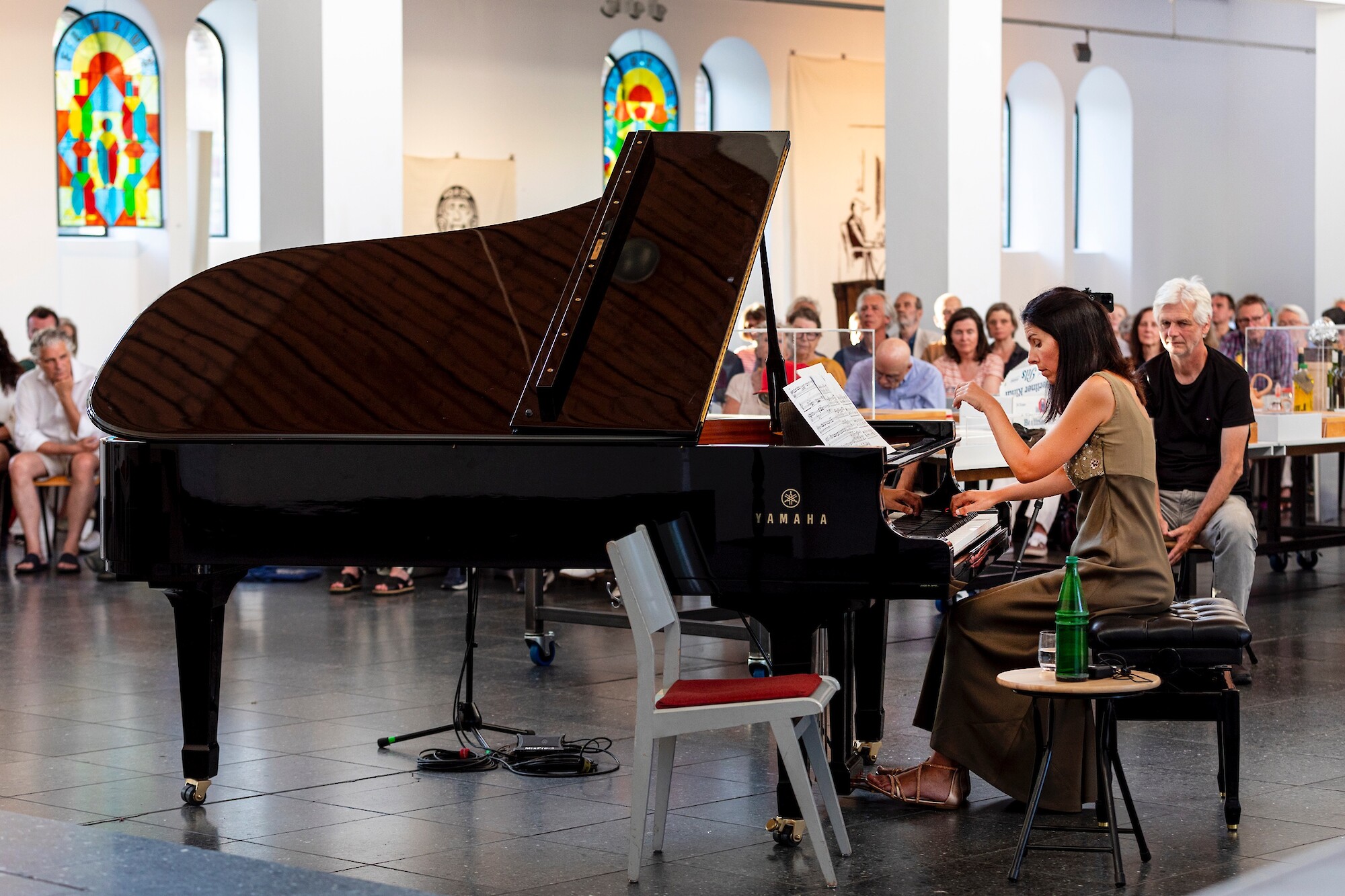
Fluxus Cardboards, on August 20th, includes plenty of Fluxus music and of course plenty of handmade musical cardboards. It’s not the first time that I spend some hours with scissors, glue, paper and cutter, as far as it seems that these fragments of score, once thrown into the air after being played, are irresistible souvenirs for the audience… Composer Mieko Shiomi wrote to me very pleased at the idea that some of her music is now in different homes around the world, so I keep cutting and pasting in good spirits. Beside Mieko Shiomi’s, the programme will feature music by Philip Corner, Giancarlo Cardini, Dick Higgins and inspired by La Monte Young. Cardboards, mallets, brushes, balls and other sonorous objects will be in my baggage – stimulating inquires at airport security check as usual. A stair will host as a special guest Anna Clementi, who kindly agreed to lend her beautiful voice for the opening piece.
↓Photos by @giuliabaresi – Courtesy of Archivio Conz, Berlin. Open Cage, 6th August
↓Photos by Giorgia Palmisano – Courtesy of Archivio Conz, Berlin. Fluxus Cardboards, 20th August
In the last couple of months two very interesting publications have been published about Fluxus, and I’m very pleased to have given my little contribution.
One is a double CD / LP in limited edition, Fluxus & NeoFluxus / Stolen Symphony (Vol. 1), by Sub Rosa label, enriched with a 72 pages booklet, full of texts, notes, images around Fluxus movement. Petr Studený and his Czech Opening Performance Orchestra had the idea to commission a collection of Fluxus recordings to some musicians devoted to this repertoire: Deborah Walker, Anna Clementi Ohlin, Werner Durand, Luciano Chessa, Miroslav Beinhauer, myself and several others. I contributed with new recordings of pieces by Mieko Shiomi (Direction music for a pianist, for spoken voice, piano and cardboards), Dick Higgins (Emmett Williams’ Ear) and (inspired by) La Monte Young (Composition 1960 #15), and some re-releases by Philip Corner and Giancarlo Cardini. But the entire first part of the collection features also music by Eric Andersen, George Brecht, Ay-O, John Cage, Giuseppe Chiari, Henning Christiansen, Öyvind Fahlström, Ken Friedman, Sten Hanson, Geoffrey Hendricks, Toshi Ichiyanagi, Joe Jones, Bengt af Klintberg, Milan Knizak, Alison Knowles, Larry Miller, George Maciunas, Sara Miyamoto, Nam June Paik, Yoko Ono, Opening Performance Orchestra, Benjamin Patterson, Josef Anton Riedl, Terry Riley, Takako Saito, Tomas Schmit, Dieter Schnebel, Yasunao Tone, Ben Vautier, Yoshi Wada. The release is listed among the ten Best Contemporary Classical on Bandcamp in May 2023, here is the link.
An other collector’s item, but above all a valuable study tool, as far as I am concerned, is the beautiful book/catalogue “FLUXUS 1962-2022 – SIXTY YEARS IN FLUX”, published after the big event/exhibition in Genoa dedicated to the 60th anniversary of the founding of Fluxus (Sept-Nov 2022). In addition to the images documenting the exhibit, which alone would be worth the catalogue by themselves, the book is full of statements, testimonies and interviews by Fluxus artists and scholars. It is edited by Caterina Gualco, who has devoted endless energies to promoting Fluxus movement in Italy since the 70ies, Francesca Serrati and Leo Lecci. Honoured to see the program of my September concert in Genoa at the end of the volume, designed by artist Mauro Panichella as all the other graphics of the event. The book is available at Museo d’arte contemporanea di Villa Croce in Genoa.
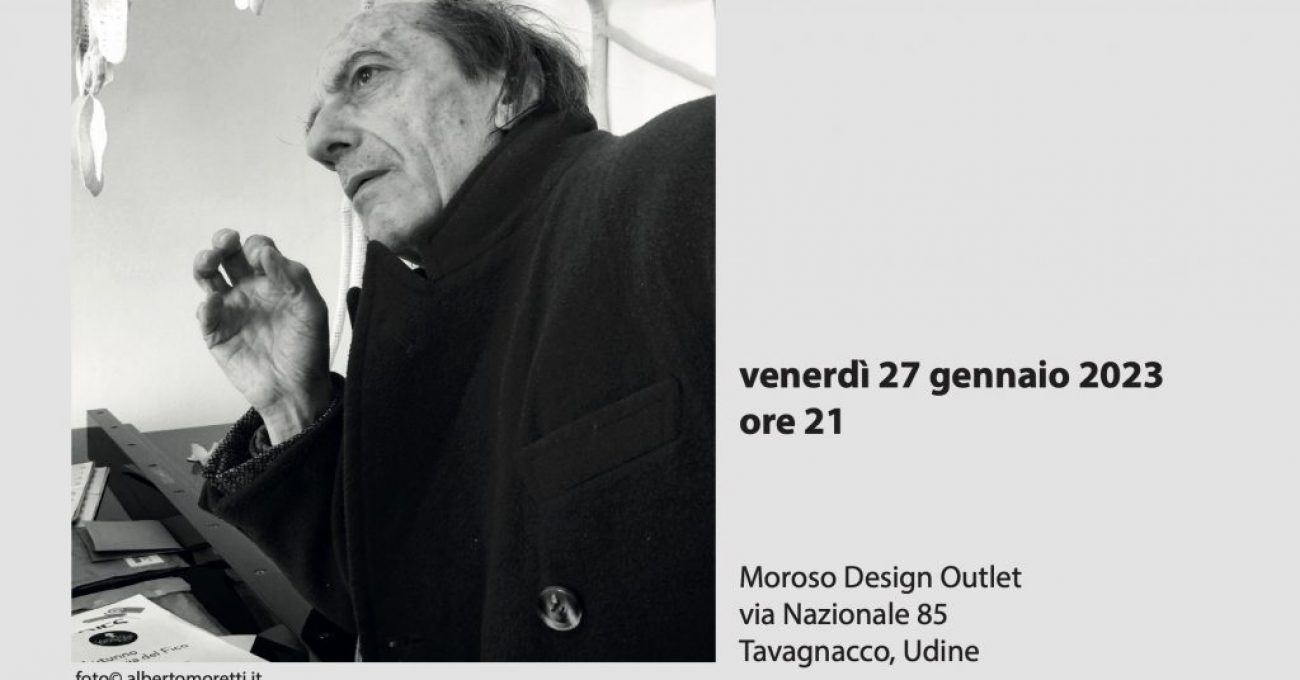
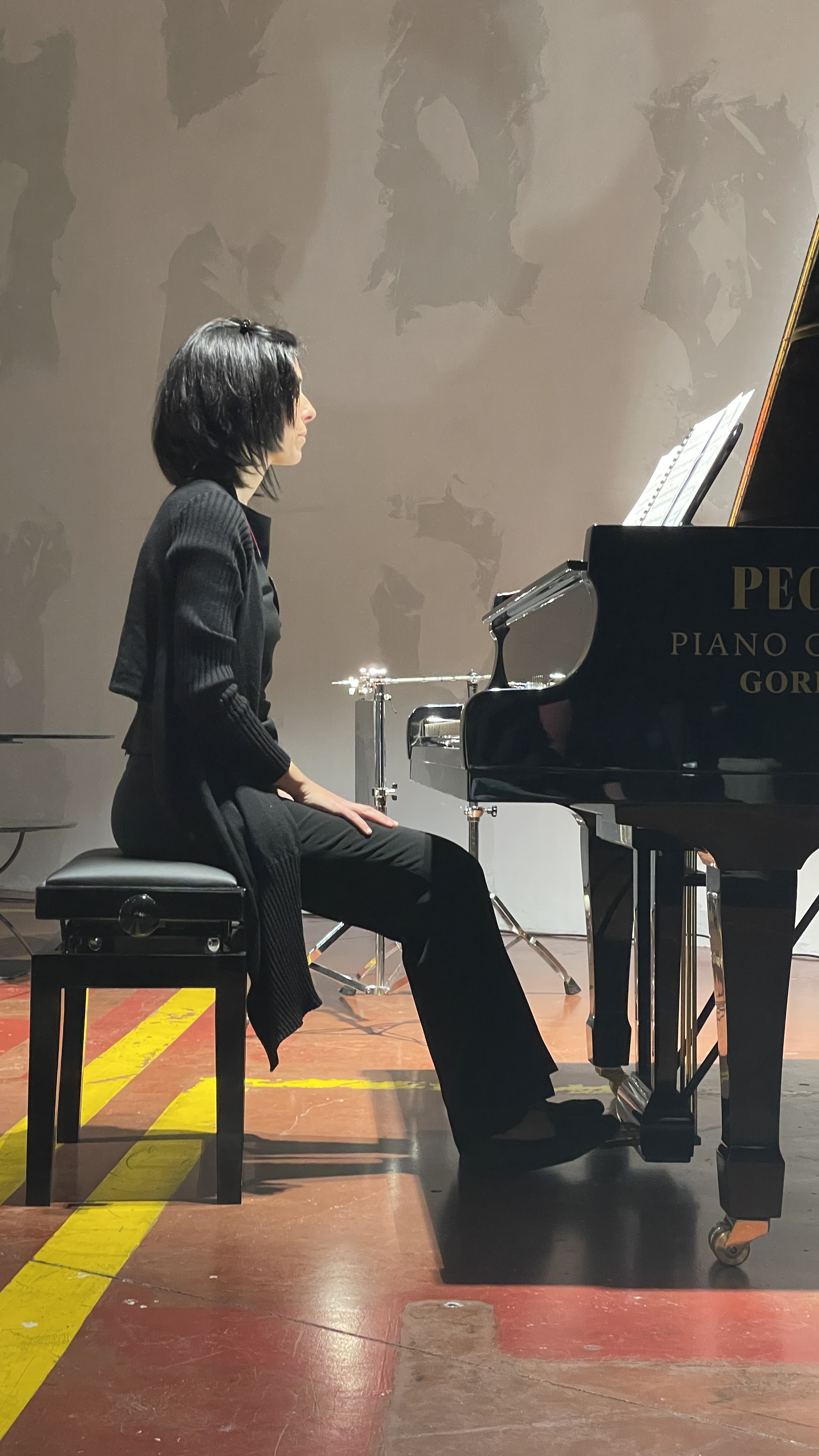
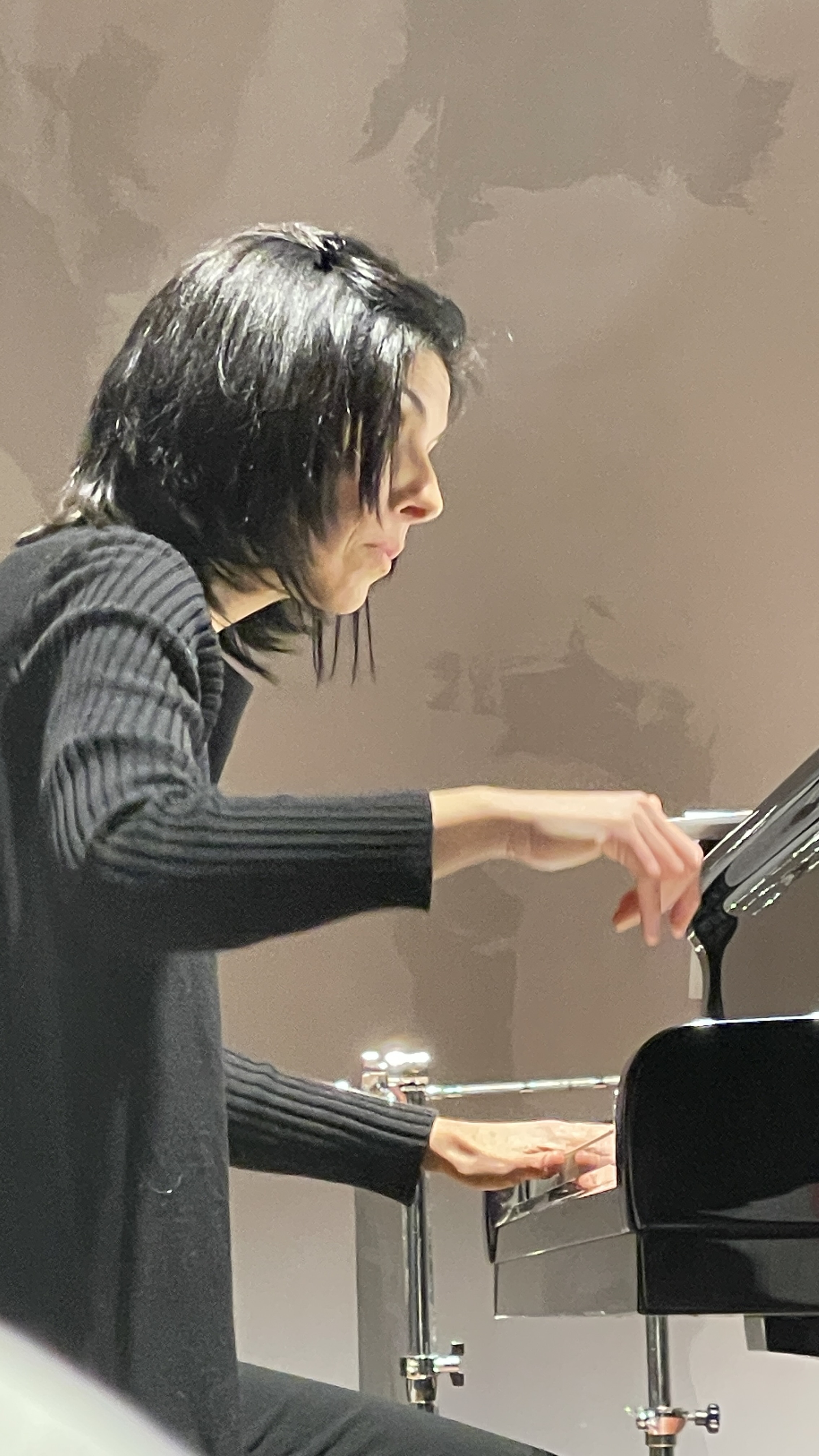
An event dedicated to Giancarlo Cardini coming soon this Friday, 27th January, organized by Salotto Musicale Fvg in Udine. Cardini was the dedicatee of 2017/2018 season of Salotto, and visited the association listening to the concert and giving an interesting speech the day before. Together with the music by Cardini, the Cold Pieces by Erik Satie – Cardini recorded the opera omnia for solo piano by Satie – and the Solo from Passion selon Sade by Sylvano Bussotti, a friend of the composer and companion in many concerts and performances. A special moment, the interwaving of the music with Cardini’s voice, reading his short poems from Bolle di Sapone / Soap bubbles and performing Solfeggio Parlante by Paolo Castaldi from the concert for Demetrio Stratos in Milan. While preparing for this concert, several memories of Cardini’s collegues and friends were shared with me; a shining legacy silently scattered in the hearts of people who knew him. I am aware of how lucky I am to be able to witness all this. Journalist Paolo Carradori will be again with me introducing the concert, as for last November performance in Rome. Below some pics of the event
Music is a powerful tool for going beyond the earthly limits of space and time. This is a thought that comes to my mind as I think with a certain emotion about the upcoming concert, with music by Giancarlo Cardini and Giacinto Scelsi, at Isabella Scelsi Foundation in Rome on November, 22. Journalist Paolo Carradori will introduce the concert, dedicated to Giancarlo Cardini. On Monday, 21st November an interview made by composer Stefano Taglietti for his series “Clocks and clouds” at Radio Start will be dedicated to Lento trascolorare and the concert in Rome (here in podcast – Italian). The day after I’ll spend some time researching at the Archives of Scelsi Foundation, and then I’ll get back on the road to reach Conservatorio “A. Vivaldi” in Alessandria, my new teaching position for this academic year.
Below some pics of the event made by Paolo Carradori, in concert and in rehearsal playing on Giacinto Scelsi’s Bechstein piano, and with Gianni Trovalusci who kindly played the gong in Rituals for the Ryoanji Garden. On the wall, a gong that Scelsi gave to composer Mario Bertoncini, now again in place; in the background some of Bertoncini’s sonic sculptures.
Next week I’ll be part of a huge celebration for Fluxus anniversary in Genoa, “1962-2022 Sixty Years in Flux”, a big exhibition in Villa Croce Contemporary Art Museum, performances, events and music around the city. On Sept 15th I’ll play an Italian premiere by Mieko Shiomi and other pieces by Philip Corner, La Monte Young, Mieko Shiomi, Giancarlo Cardini, Dick Higgins.