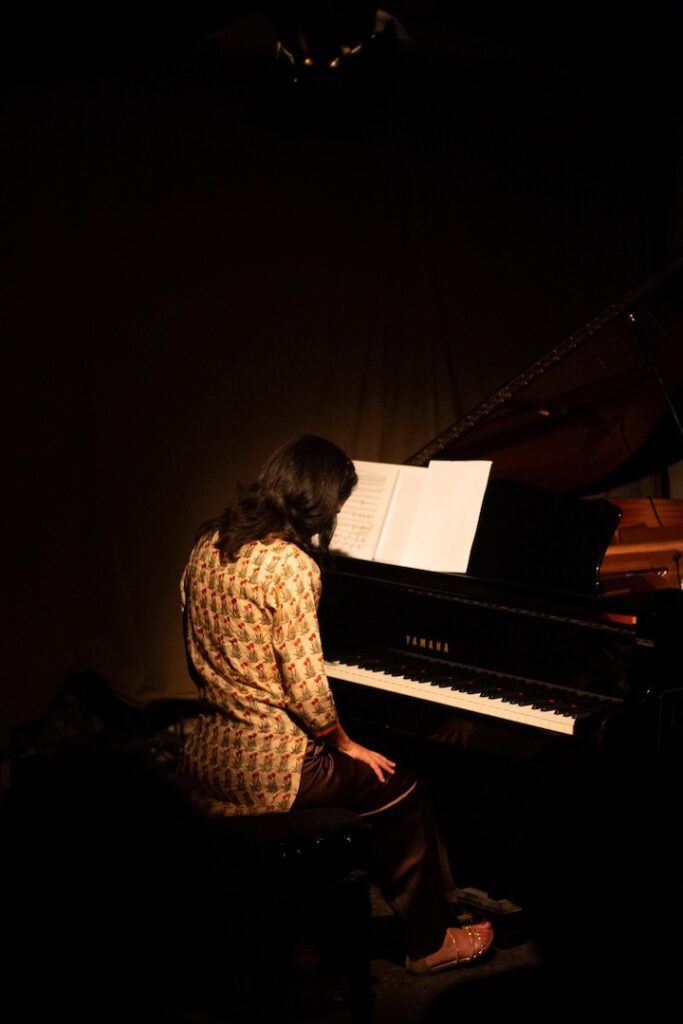
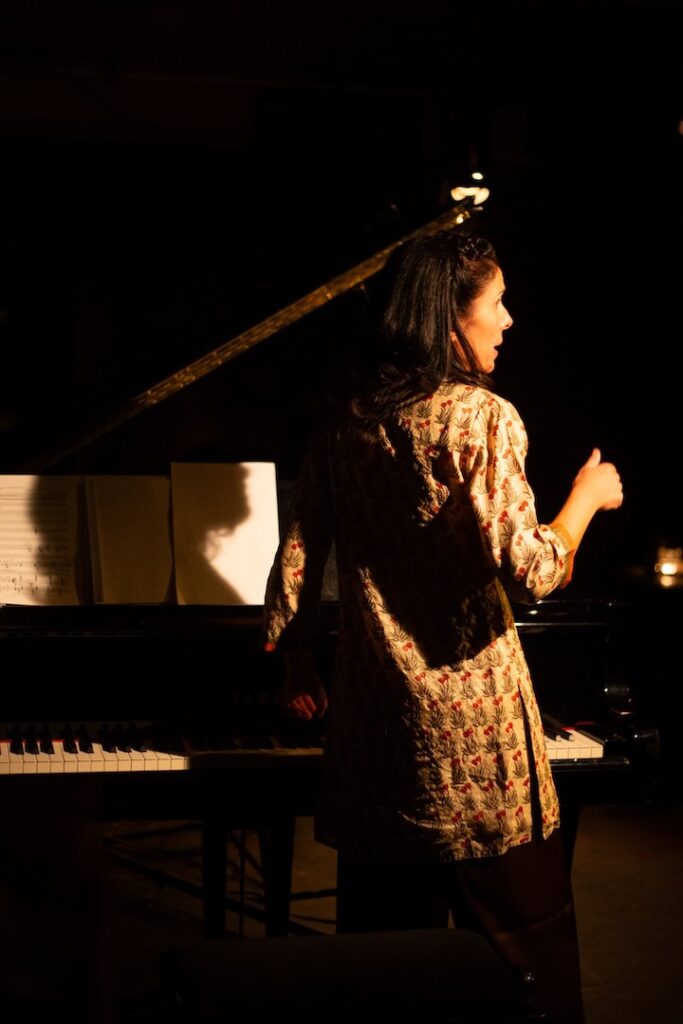
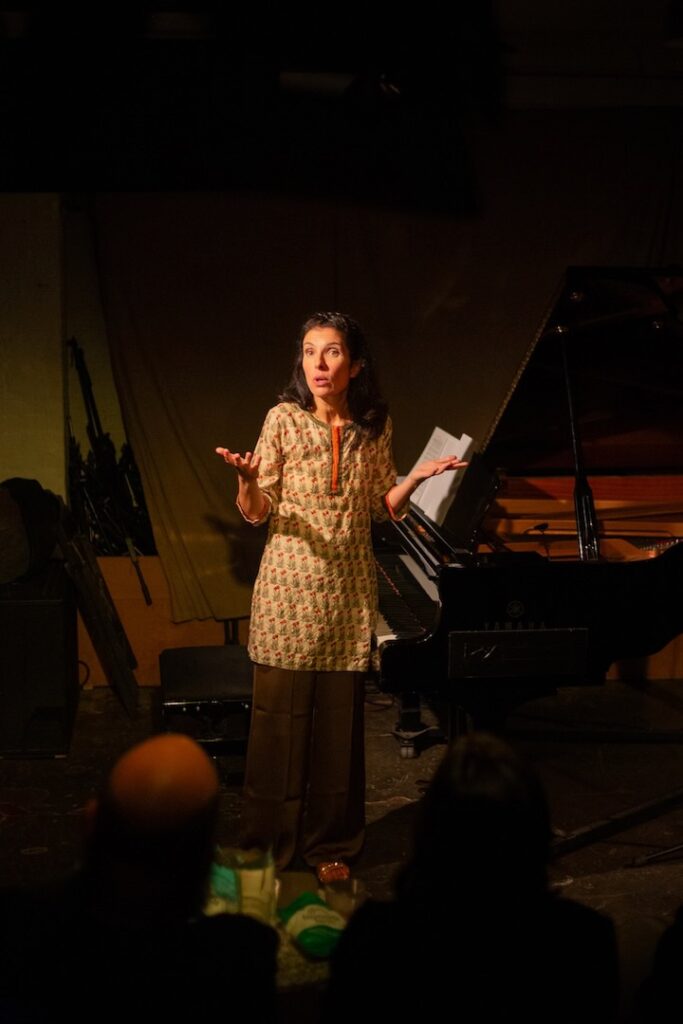
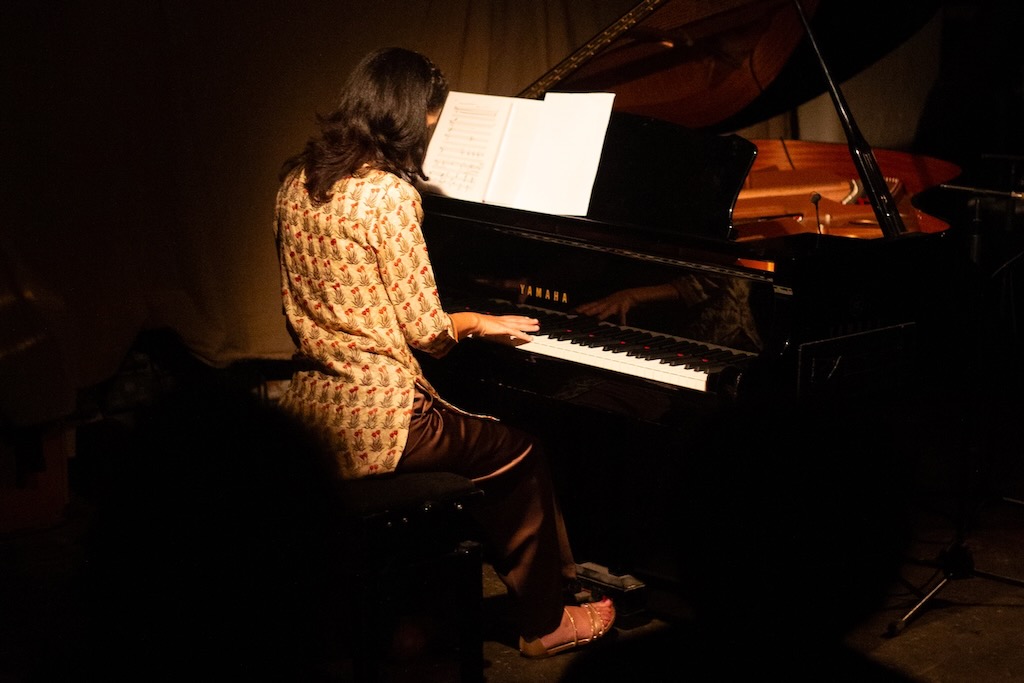
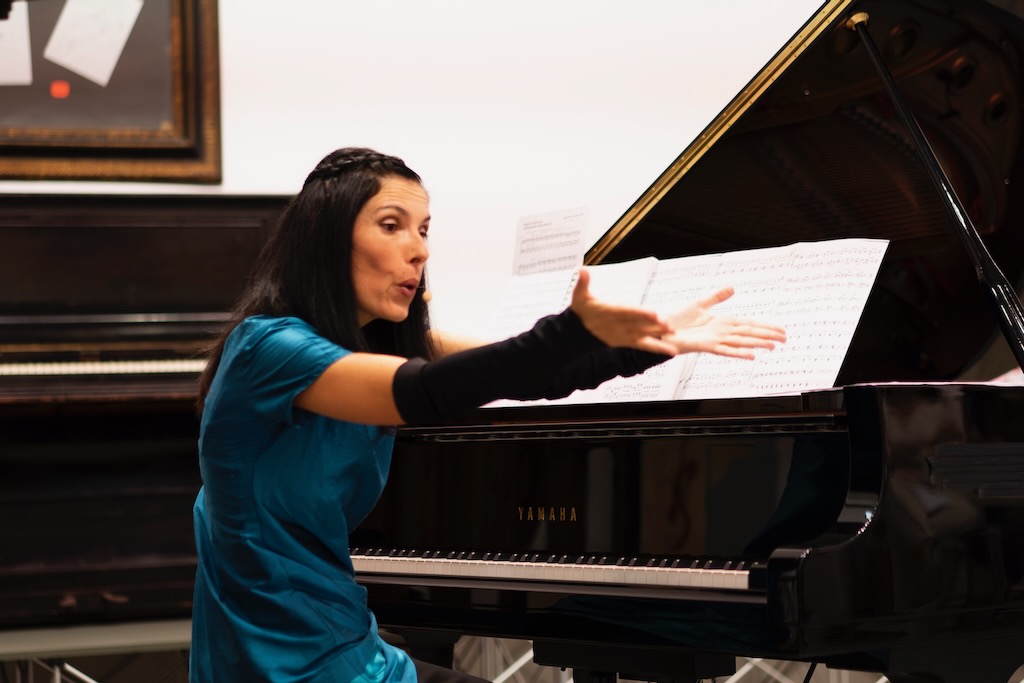
A tribute for the centennial of Morton Feldman (1926/1987) on the 27th of November in Udine for Salotto Musicale Fvg. As more and more often, I find myself surrounded not just by music but by the relationships that some music creates, reverberating in time and space from one composer to the other. Understandably the fascination I feel for Feldman’s music is shared by many others; among them there is for sure composer Giancarlo Cardini, whose inner music world was clearly close to Feldman’s rarefied, spacious, resonant landscape. And composer Philip Corner, who knew and played with Feldman since a long time, just told me how much he likes his music (in fact some years ago he dedicated him a work in an hidden homage). The last composition phase of Feldman is characterized by very long durations: from the one hour and a half of Triadic Memories to the monumental (and beautiful) 6 hours of the second Quartet. But his very last piano piece, Palais de Mari, brings together the quiet spaciousness of the large works with a limited duration – more or less half an hour. The ideal piece to follow Feldman’s resonance into the works of his fellows.
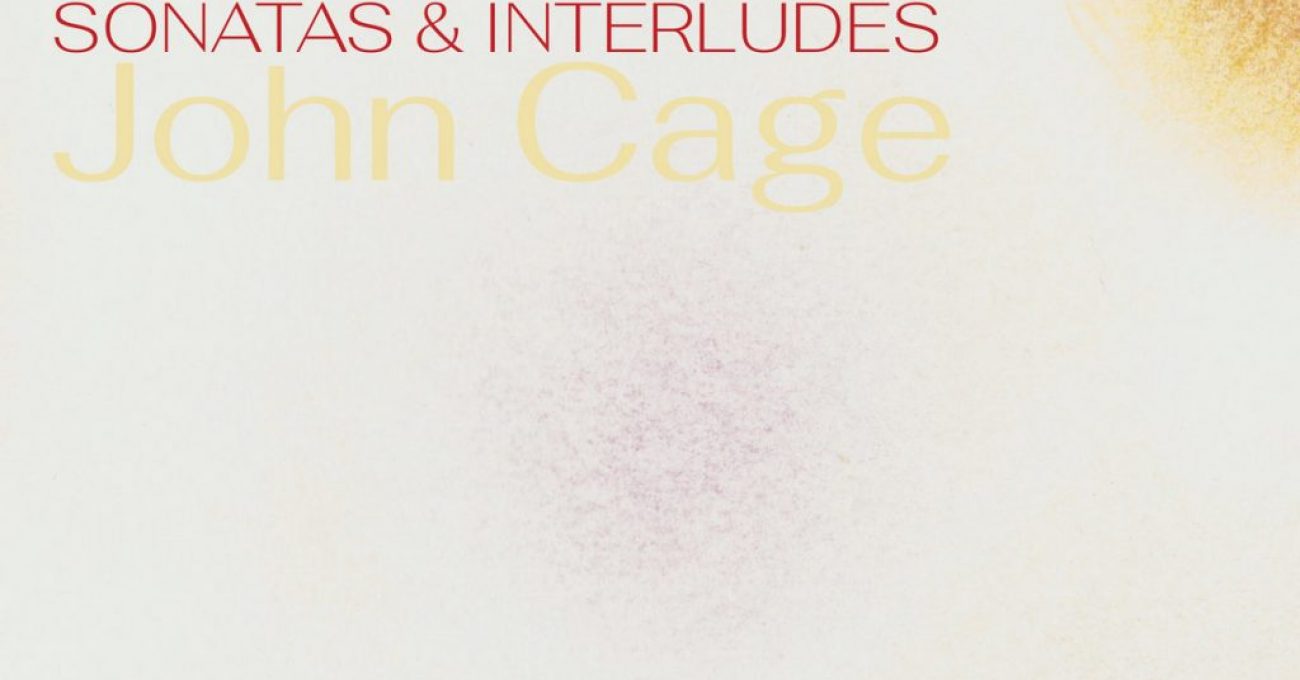
Despite the hot summer and the three years since the recording of Sonatas&Interludes for prepared piano by John Cage was released by Neuma Records, a couple of nice reviews came up during the last months. I am always pleased when someone takes the time of listening to my music and grateful to read such nice words. Some extracts below and the complete reviews in the links.
PARIS-MOVE, August 18th, 2026 Frankie Pfeiffer , Editor in chief
Agnese Toniutti and the Ghost in the Machine: Inside Her Recording of Cage’s Sonatas and Interludes Some performances feel like an act of channelling rather than interpretation, as though the performer has stopped standing between the composer and the listener and has instead become a kind of conduit. Agnese Toniutti’s recording of John Cage’s Sonatas and Interludes for Prepared Piano is one of those recordings. […] it’s more like listening in on a private conversation between a pianist and a composer’s ghost. It’s a fascinating album!
[…]Toniutti’s choice throughout this recording is restraint in service of wonder. […]Toniutti’s version of “right” is unhurried, luminous, and deeply attentive to the grain of every individual sound. […] an interpreter who treats every unconventional score as an invitation to research as much as to perform. […] Across this recording, you can hear Toniutti sitting comfortably inside that contradiction, never trying to smooth it away. […] there’s a spaciousness to these performances that never tips into slackness.
The Sonatas and Interludes has been recorded many times, and it doesn’t need Toniutti’s version to secure its place in the twentieth-century canon, but what her recording offers instead is a genuinely distinct relationship to the material: an interpreter whose entire artistic practice has been built around investigating what sound does inside a composition, applied to the one solo-piano work most explicitly designed to force that question. The result […] feels like an artist who has found, in Cage’s transformed instrument, a subject worthy of everything she already does best. This is a recording to sit with rather than skim, one where the space between the notes carries as much information as the notes themselves, and where Cage’s spirit of patient, curious attentiveness feels, for nearly an hour, genuinely alive in someone else’s hands. Do I have to say it again? It’s a fascinating album!
Just when you might think there’s nothing more to say about the prepared piano, then comes Cage’s classic vividly captured. A quick spot check with older performances on the shelves (Ajemian, Tenney, Tilbury, Henck) confirms this release’s admirable clarity (Ok, Ajemian’s is from 1951). It sounds as if we’re in the piano. There are distinct colors when the pedal is down, and Toniutti’s fast passages render cleanly. This is never mushy or blurry. Toniutti appears to be in love with every sound.
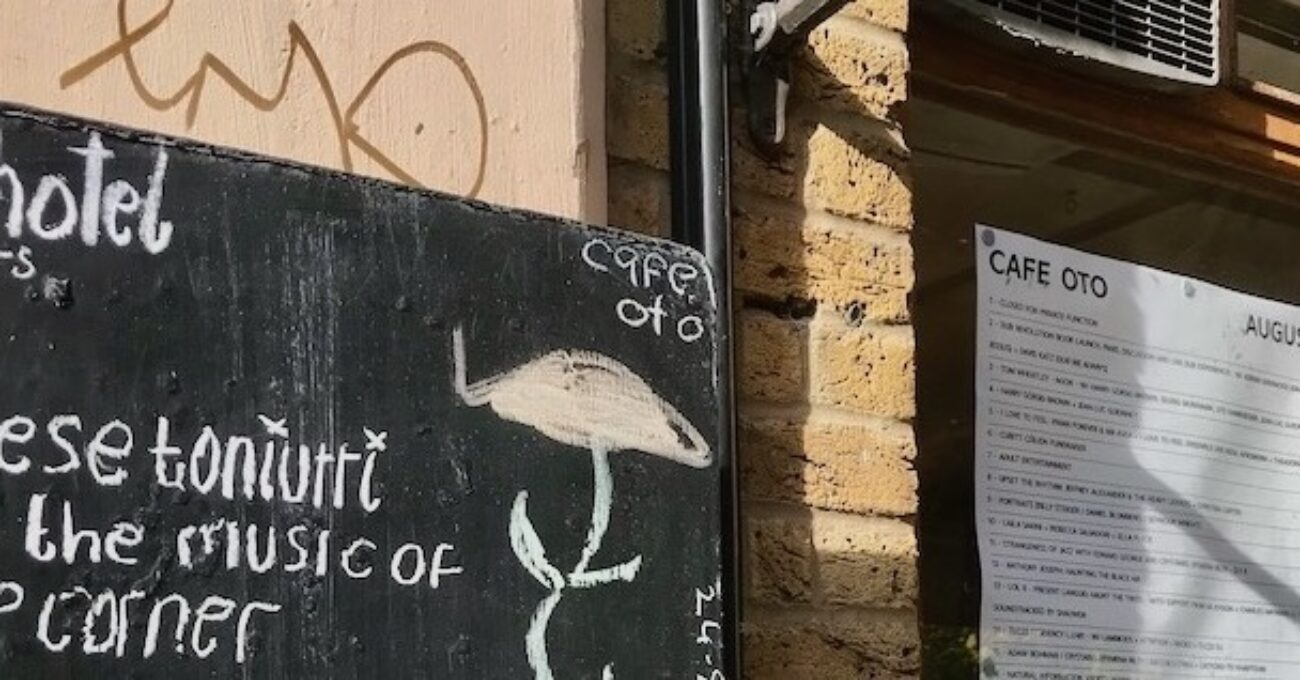
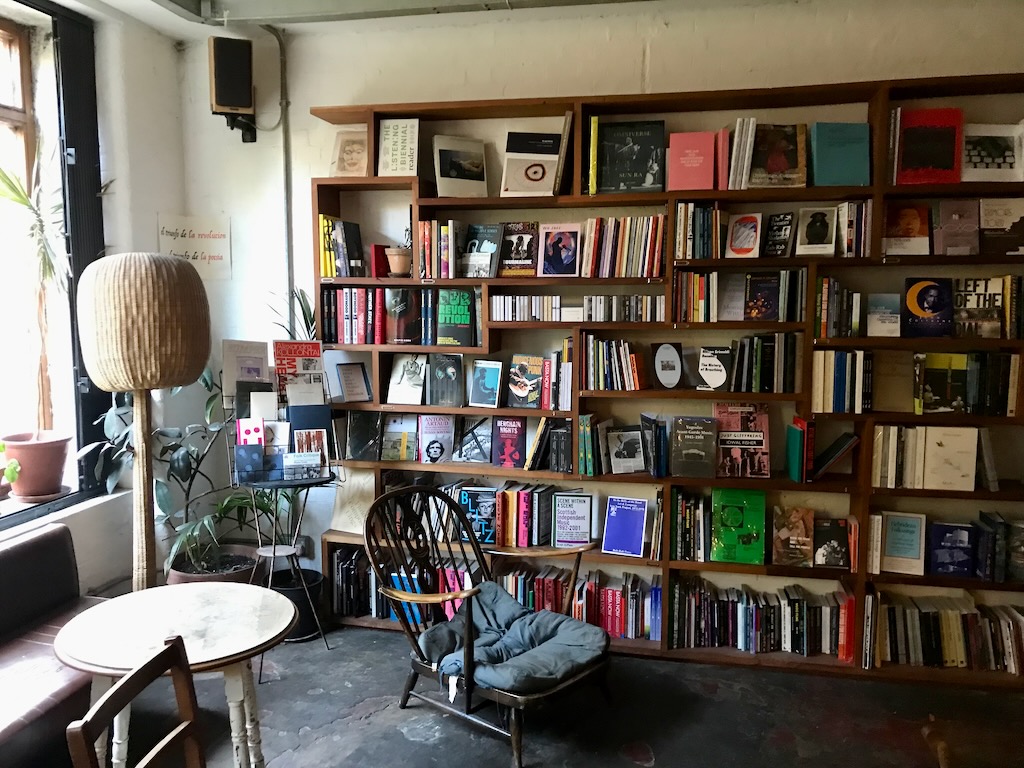
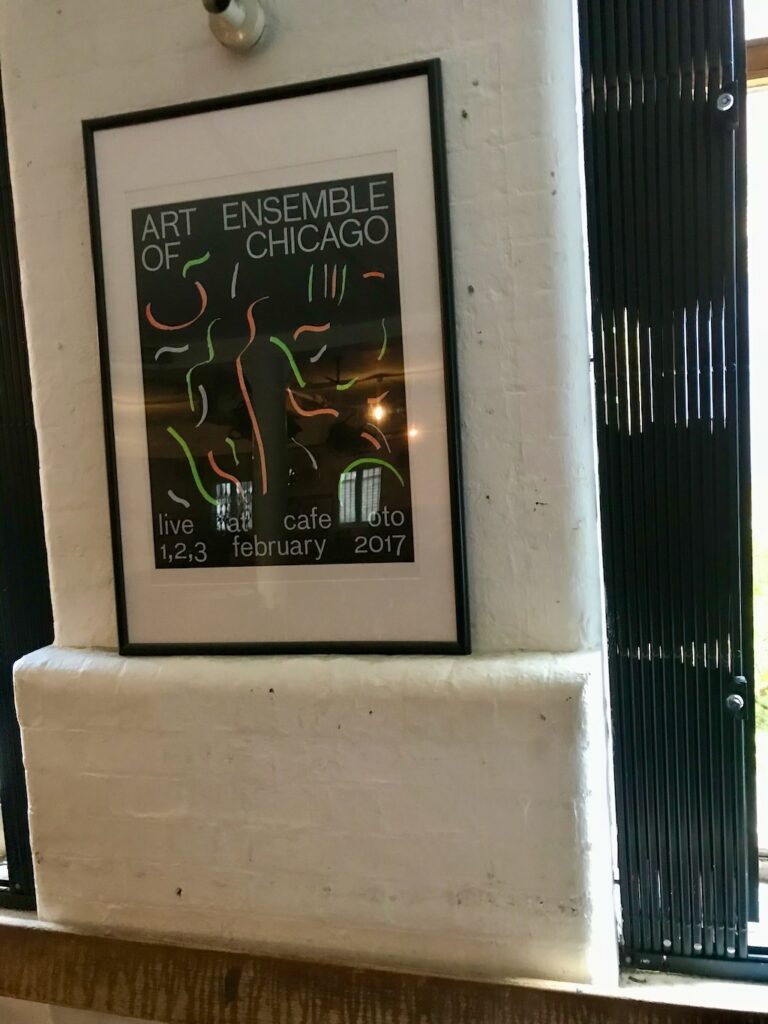
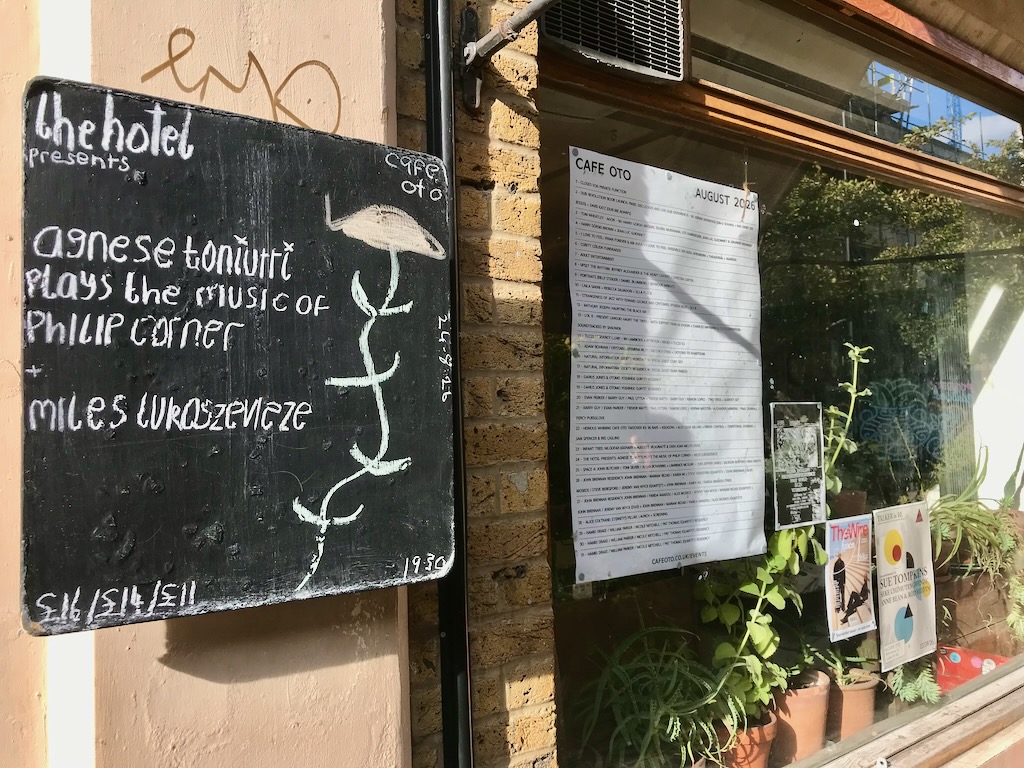
Cafe OTO‘s reputation is well-deserved. During the day it is a lovely place to have lunch and look for carefully selected music and books. During the night it becomes an informal spot where professionals in the music field, often musicians themselves, guarantee a performing and listening experience where the audience can enjoy music and silences as well. So I was very happy of my recital there in August, organized by a new curatorial label, The Hotel, run with passion and care by Henry Cyer and his colleagues, all young musicians and/or music lovers.
My all-Philip Corner programme was in fact connected to the release of a recording made by Corner same decades ago after watching a film by Stan Brakhage. Philip told me how much he admired him; the rec was an homage in gratitude for the inspiration he got after the screening. Brakhage unexpectedly answered back with a new film inspired by Corner’s recording! The Hotel took all this flourishing of works of art in their hands and made them available to the public.
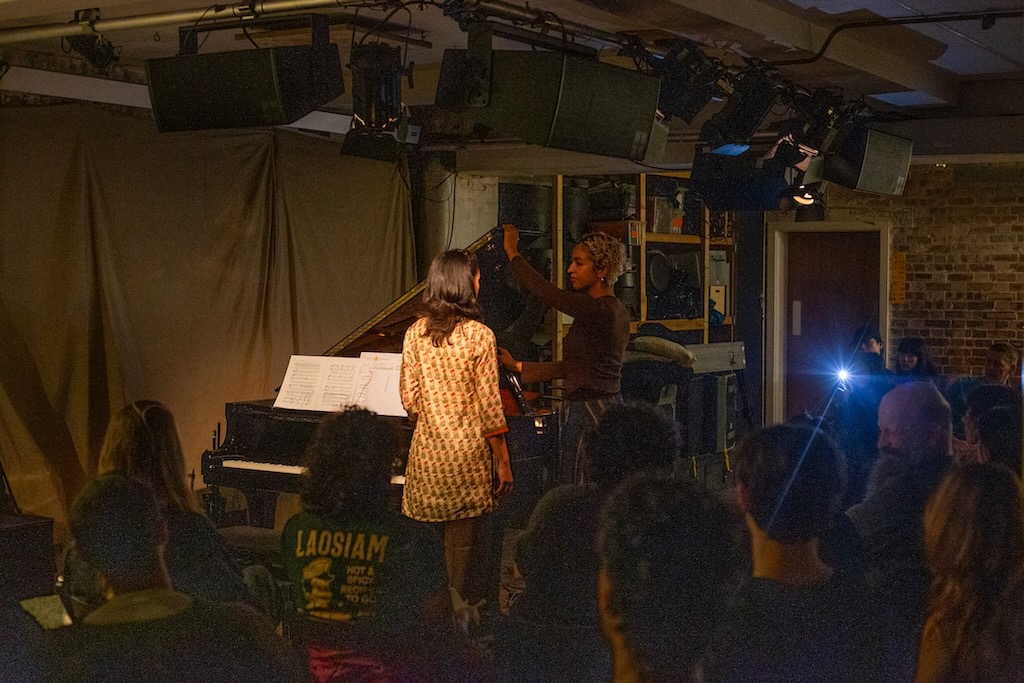
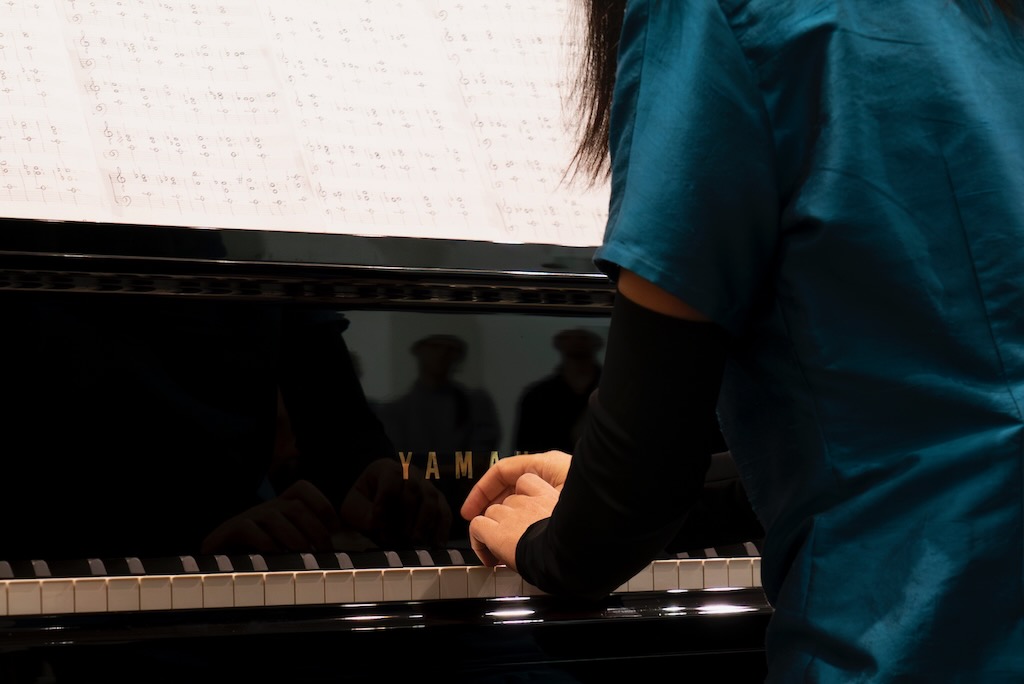
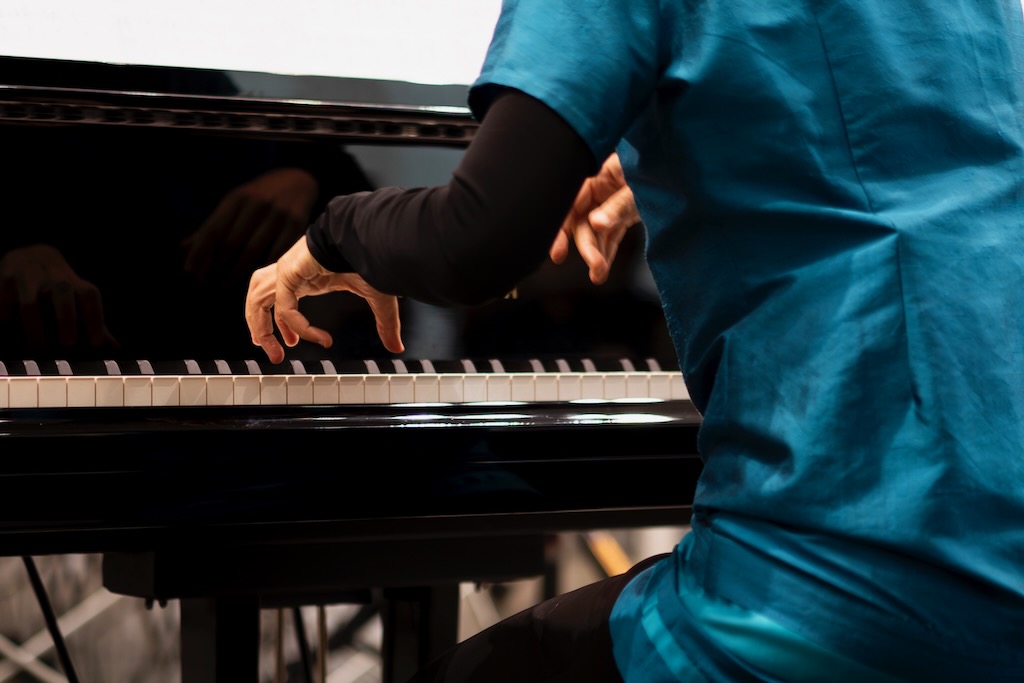
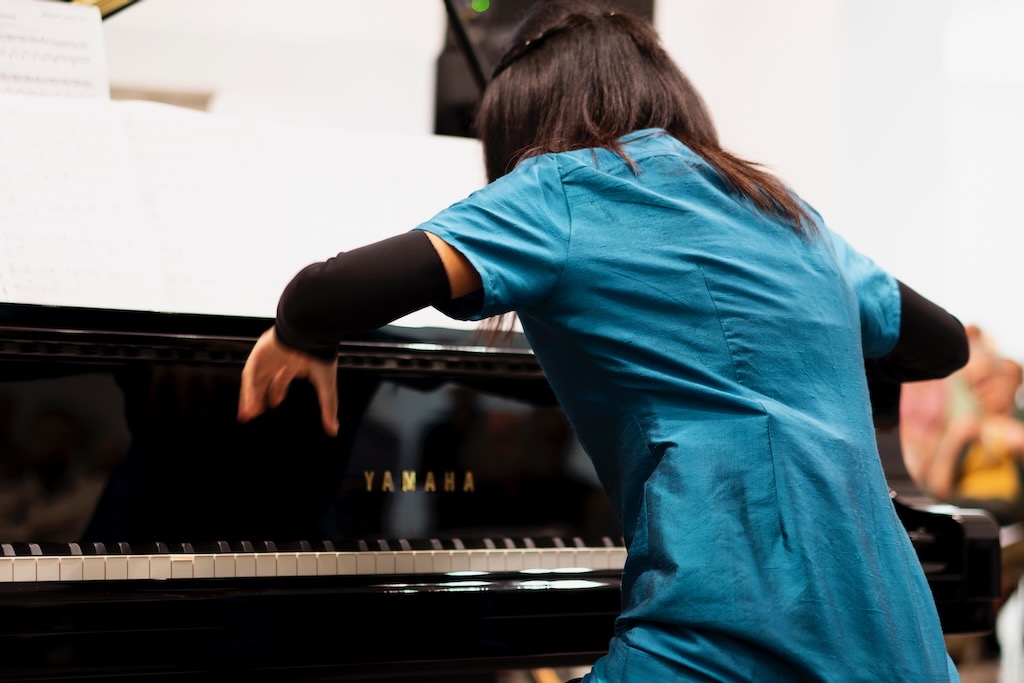
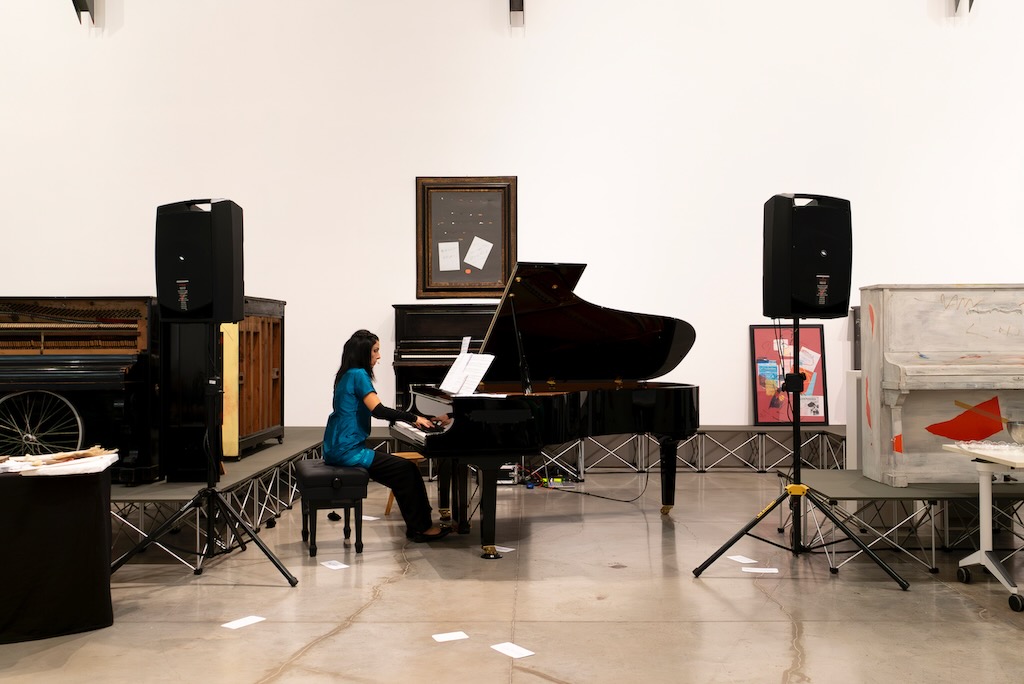
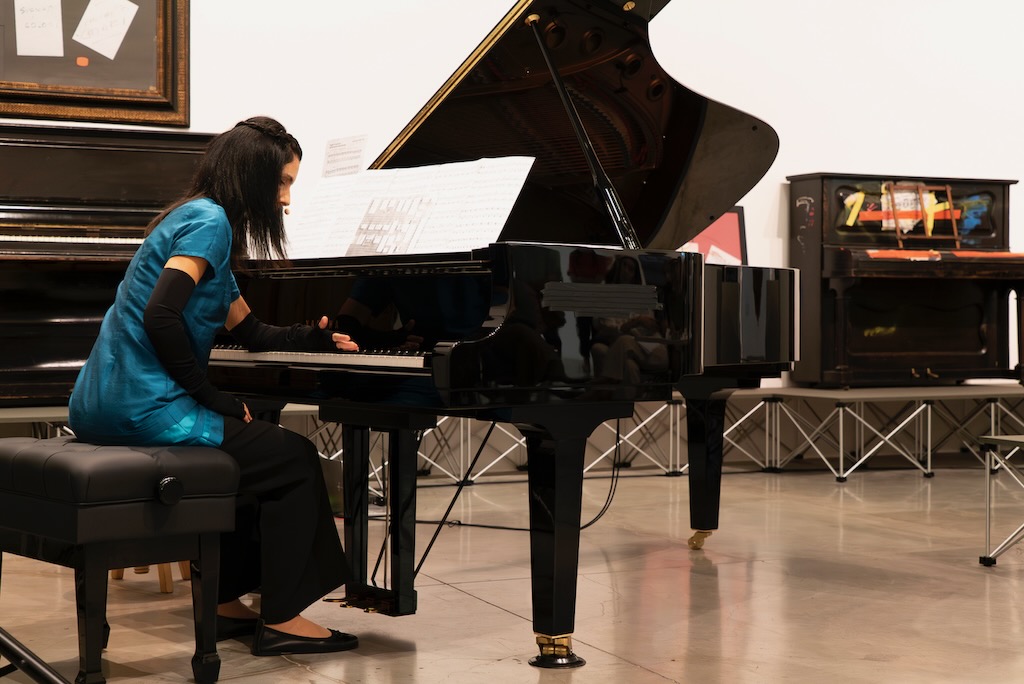
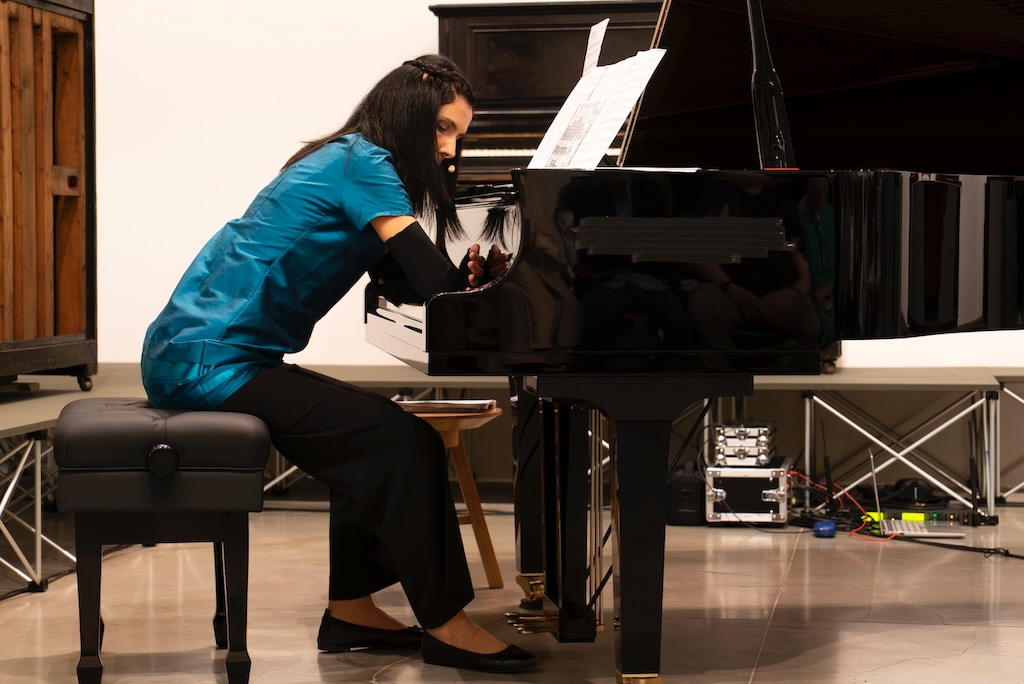
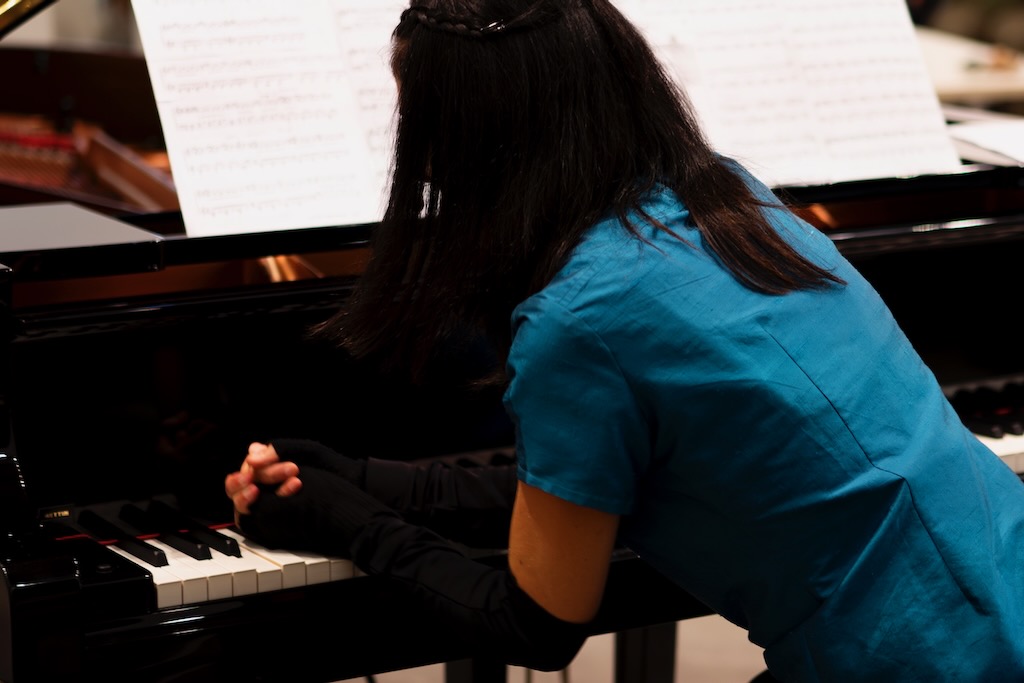
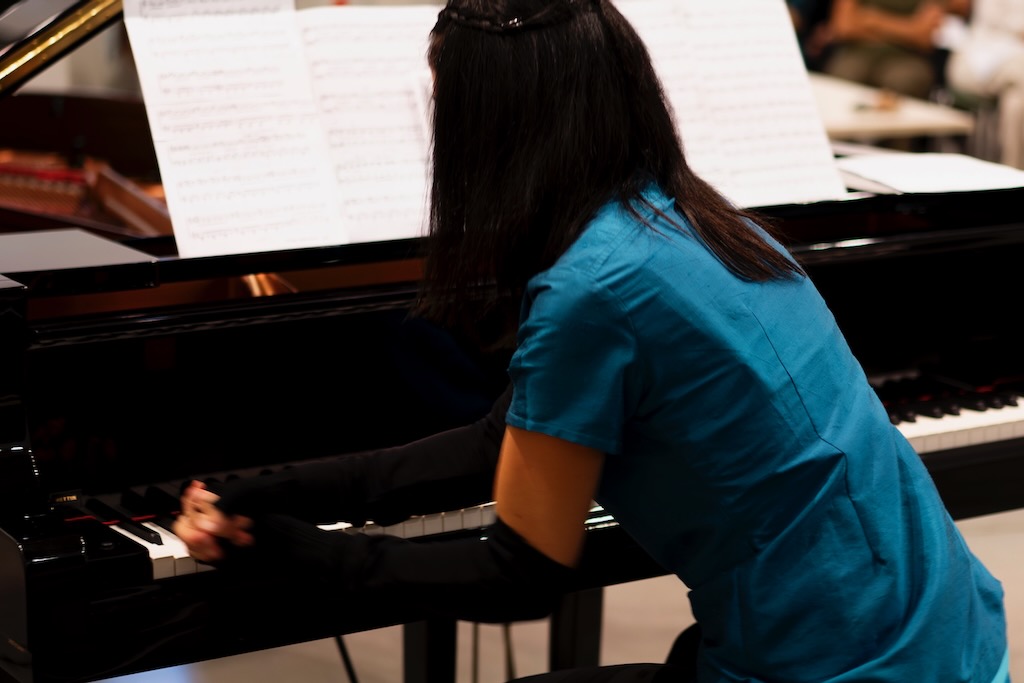
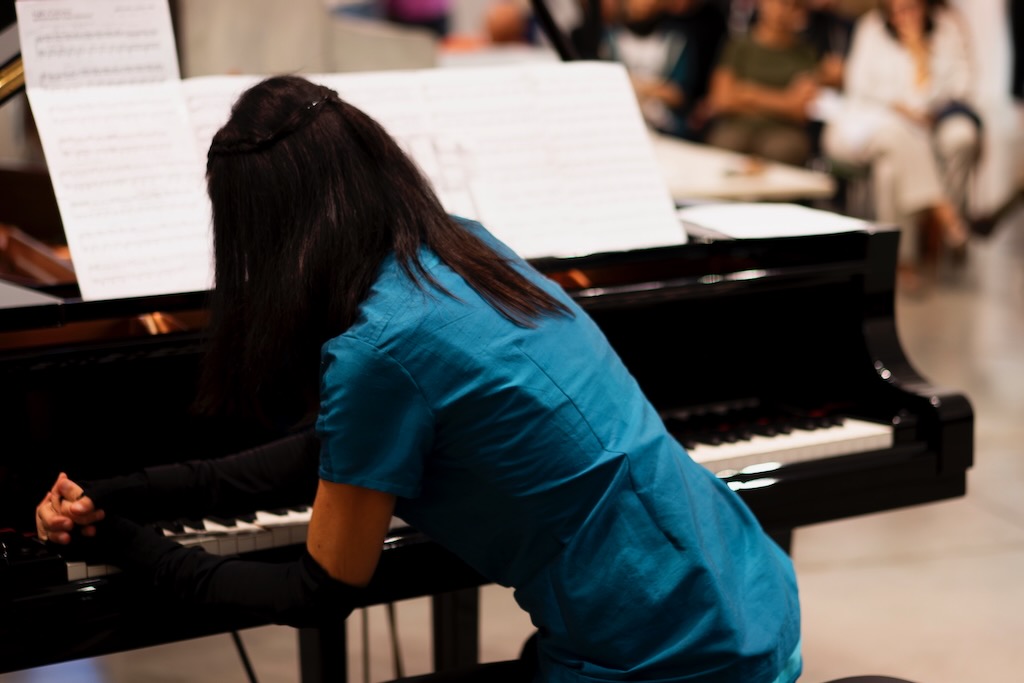
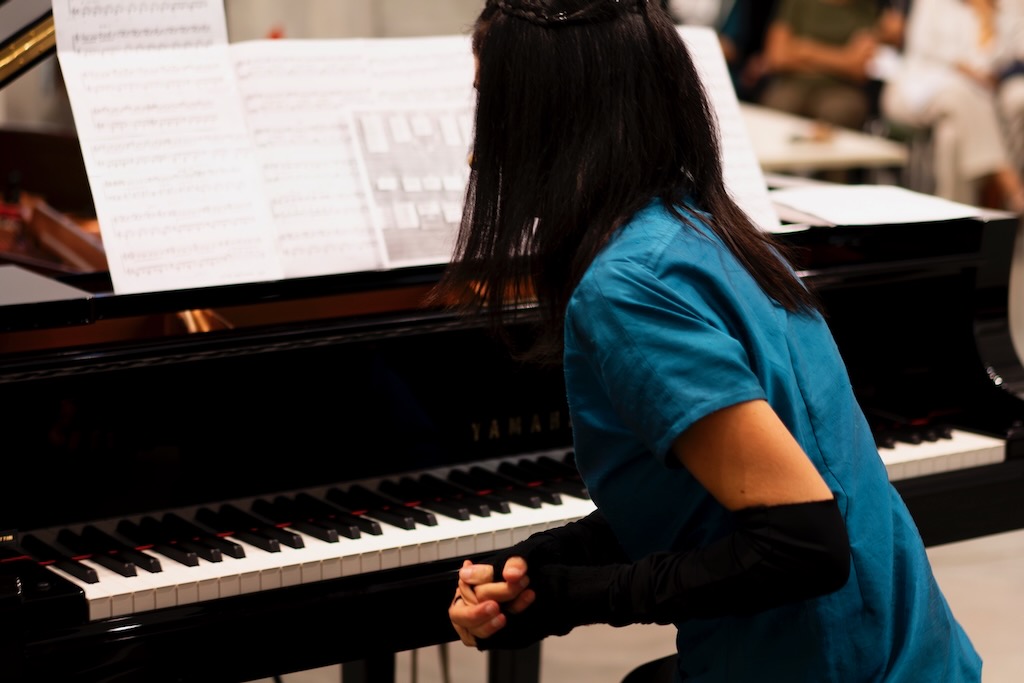
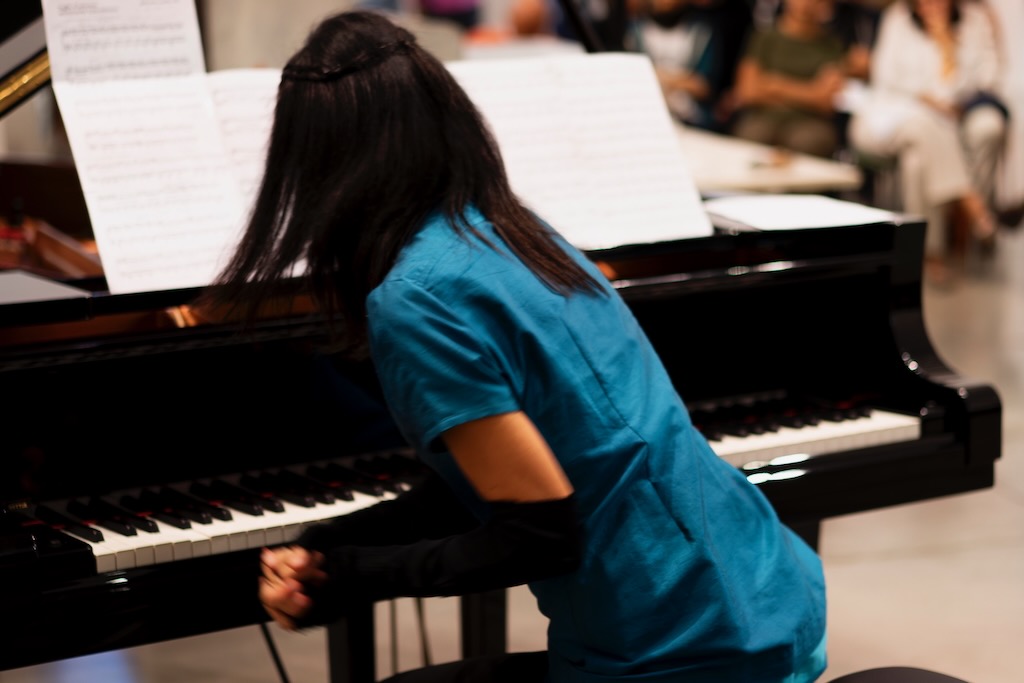
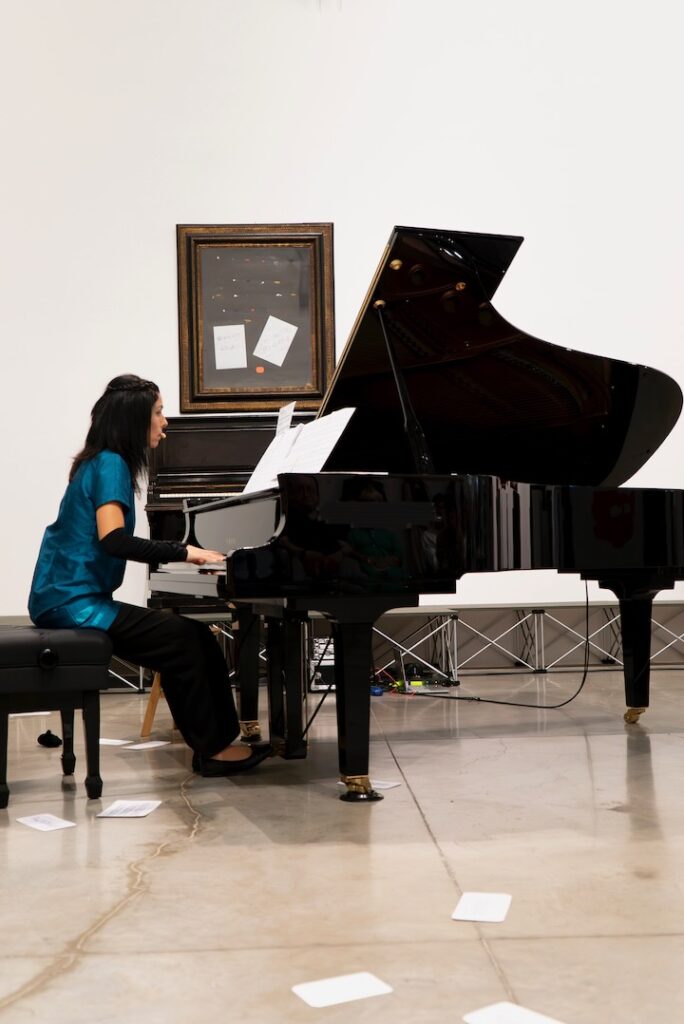
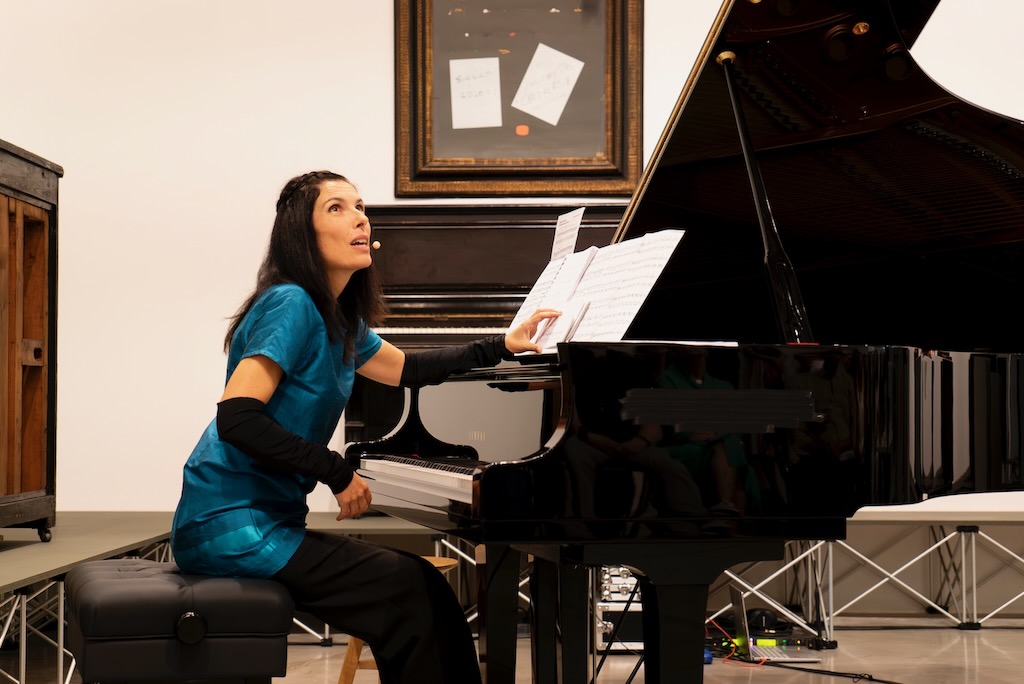
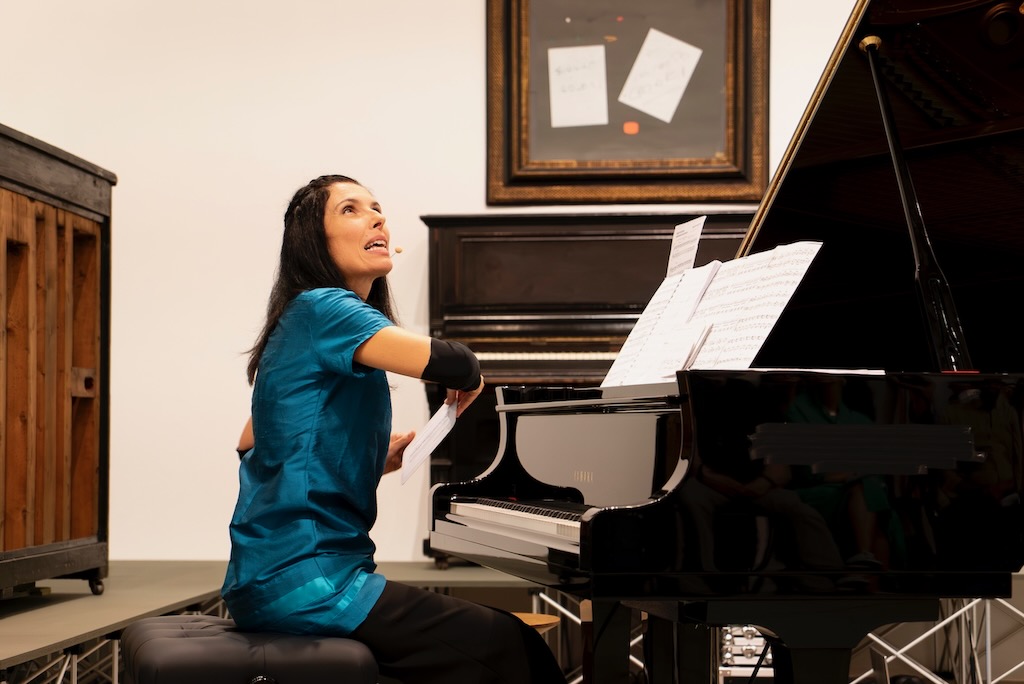
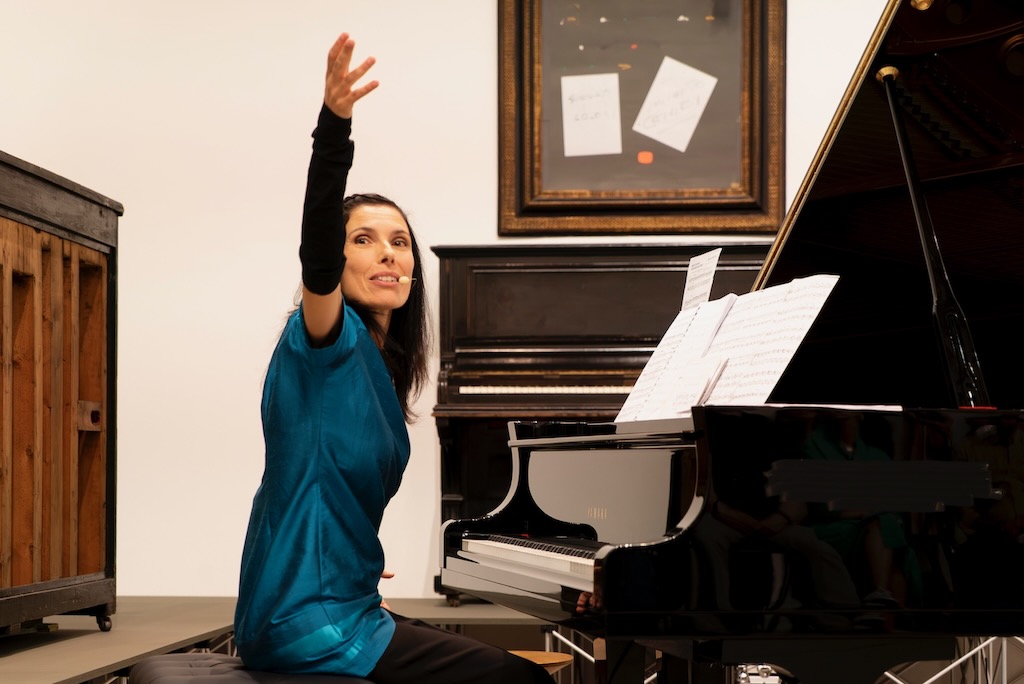
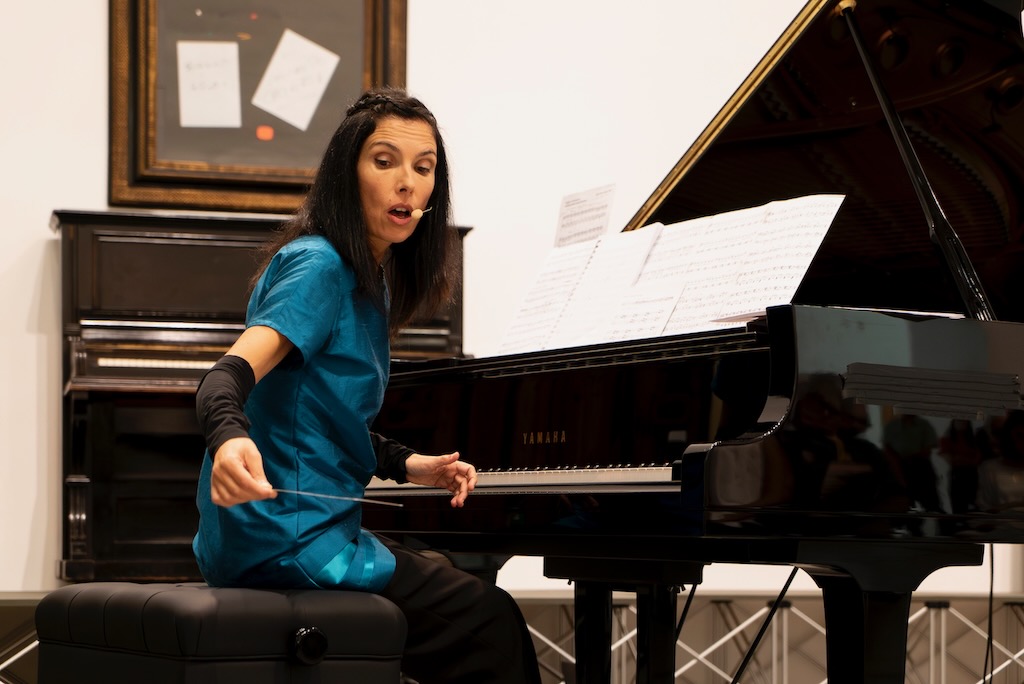
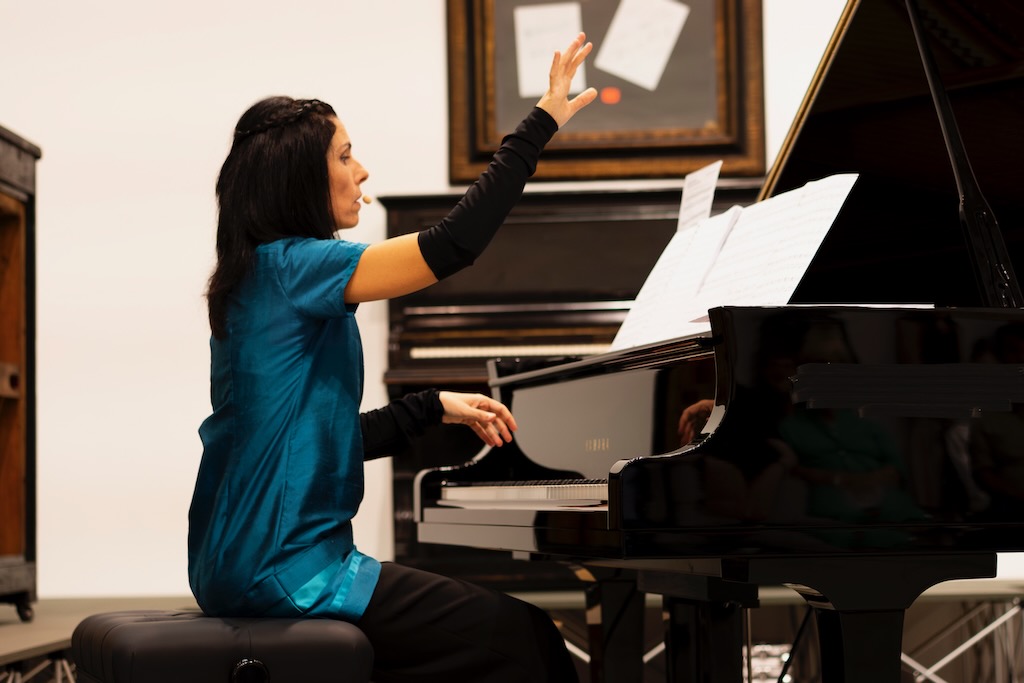
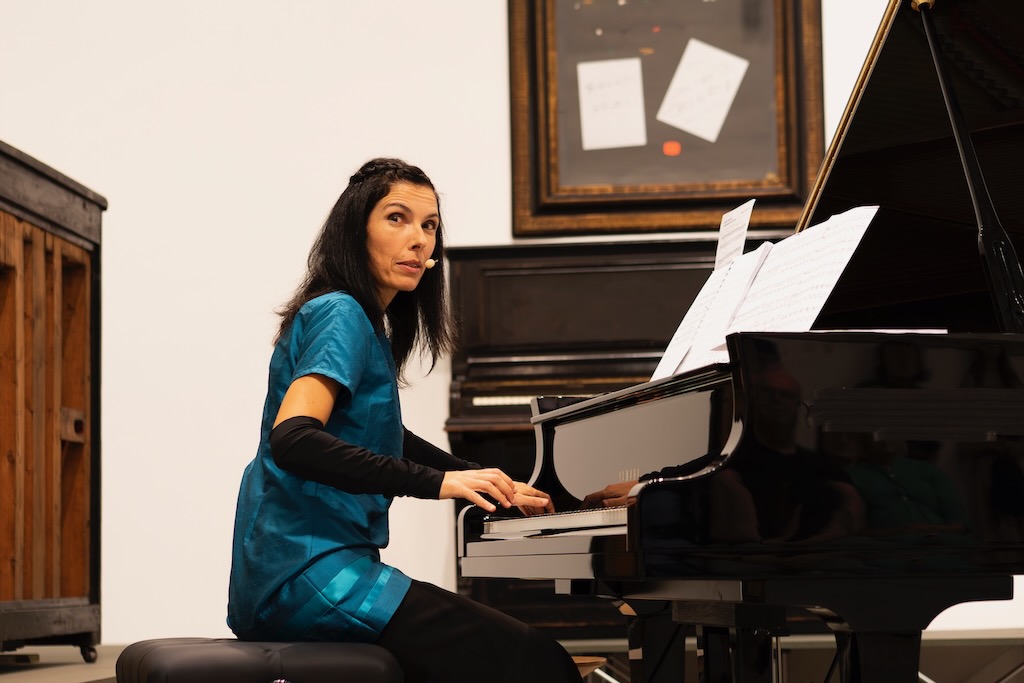
Below some nice pics of the evening made by Tobias Bulman. In the first one you can see also Jess who graciously helped me in the performance of Corner’s Piano Works: A Movement for pianist and operator. Thank you Henry, Jess and Tobias; long live The Hotel and all initiatives that as this one contribute to make the art field healthy and alive!
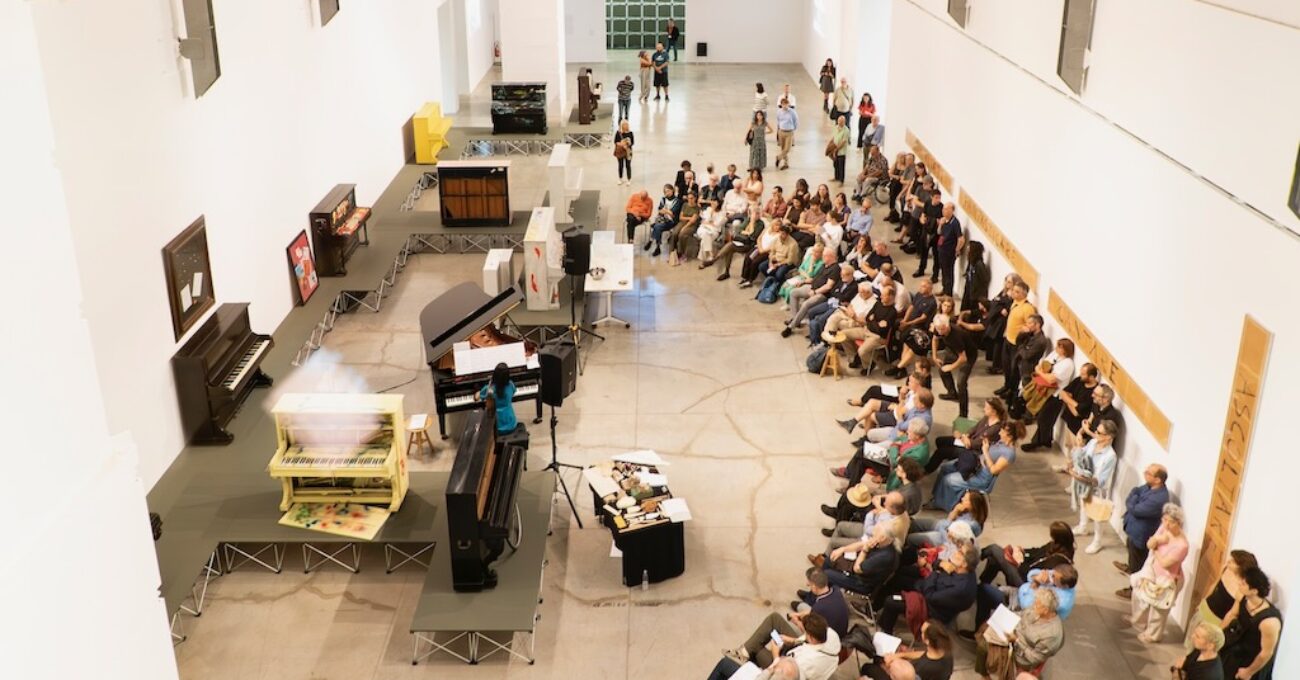
A nice evening indeed the one at MAMBo – Museum of Modern Art in Bologna on Saturday 26th September. It was a pleasure to be part of the celebration for the centennial of the composer and artist Giuseppe Chiari and I was very happy to visit the beautiful exhibition and listen to the fascinating performance of Metodi by Deborah and Chiara.
Here you can find the complete review of the concert by Paolo Carradori (in Italian) on Le Salon Musical. Below an extract in English, interpolated by some of the nice pics courtesy of Comune di Bologna | Settore Musei Civici | MAMbo – Museo d’Arte Moderna di Bologna made by Ornella De Carlo.
Agnese Toniutti draws up a Fluxus Cardboards For Giuseppe Chiari Solo program that involves composers who not only took more or less active part in the movement / non-movement Fluxus (of which the Florentine composer was the only Italian to be part as an official member since 1962) but share with Chiari the same vision of research, experimentation, musical action: Philip Corner, Giancarlo Cardini and Mieko Shiomi.
Intervalli n.2, Do, which is part of a twelve-part piano cycle, is a good entrance ticket to the world of Chiari. Arsonal blocks are suspended, they chase each other, they go as if filling an undefined space, they accumulate creating tensions. […] Toniutti chiselle every element, offers iridescing shapes in a scenario where performance rhythm and gesture complete a deep reading. With Exstensions of Giuseppe Chiari’s “DO”and Giuseppe Chiari’s “DO”further extended Corner plays, elaborates, expands the intervals. Extensions that regenerate new sounds, unexpected routes, sharp corners, bright waterfalls. Corner uses Chiari’s materials, summons them, as a launch pad for new explorations, in a dialogue with both composers stating that the score is never final.
If Chiari is above all known, even by those who frequent the contemporary field, for Gesti sul piano (a long gestation that goes from 1962 to 1976) there will be a good reason. Probably because it is among the first examples of music to see, a direct thread with the poetic of Fluxus. […] An action music that is never the same as itself, plastic, unpredictable. Toniutti, who knows very well that her role, her relationship with the instrument is constantly in question, chooses the path of a draining of the performative aspect in favor of a radical sound research.
The last violent vibration of Gesti still wanders when the scenario opens on Foglie d’autunno lentamente trascolorano. We will be able to define Cardini a pleasant anomaly in the framework of the new music of the second half of the twentieth century. What is it doing in that context of extreme research a composer who claims to love melody unconditionally? In Bologna the answer is given by the Friulian pianist who knows the Tuscan composer well by proposing this short masterpiece. In Foglie d’autunno trascolorano… Cardini shows how the melody, purified of clichés and vices, can tell us through beauty, purity of silence, poetry of the fleeting moment, the restlessness, problems and fragility of contemporary man. In the Cardinian plot the evoked melodic track is always stained, wounded by a restlessness, a doubt, which makes it current, never taken for granted, never cheesy. In the game of friendships, complicity and homage Chiari, between 1997 and 1998, wrote PCA (Per Cardini), two booklets containing eight short piano compositions. Here shines the intimacy of the dialogical exchange, through short, dry phrases. The composer seems to want to approach the poetics of his friend, managing only to touch it.
The Toniutti set closes with Direction music for a pianist by Shiomi. The pianist also becomes a narrator on poetic fragments, reflections on art and life. […] The performance creates a direct relationship with the public through the cardboard as musical objects, the word, the monologue, the piano understood as a congenius capable of generating an action that amplifies the communicative ability of the work.
On Saturday 26th September 5.00 pm I’ll be in Bologna at MAMBo-Modern Art Museum playing at the finissage of the exhibition that celebrates the centennial of Giuseppe Chiari: Giuseppe Chiari, partitura per un museo (score for a museum). The piano solo recital Fluxus Carboards for Giuseppe Chiari follows some of the artistic and human connections between members and friends of the Fluxus movement. The programme includes two premieres: Chiari’s pieces dedicated to Giancarlo Cardini and Philip Corner‘s pieces inspired by Chiari, as well as other works by Chiari, Cardini and Mieko Shiomi.
Here are some programme notes: “The programme connects three compositions by Giuseppe Chiari from three different creative phases – included the notorious Gesti sul piano which accompanied him throughout his life – with some of the works of artists who where members or sympathizers of Fluxus movement. I had and have the privilege of meeting and working with composers Giancarlo Cardini, Mieko Shiomi, Philip Corner. Philip Corner, one of the founders of Fluxus, openly dialogues with Chiari’s music: the core idea of DO, the second of Intervalli collection of 1950, expands and transforms while resounding in Corner’s creative world. Giancarlo Cardini (1940/2022), pianist and composer, champion of new music and for some time close to Fluxus, was one of the performers of Gesti sul piano until 1972, when the same author became the interpreter. To Cardini are dedicated the two folders of PCA (For Cardini), composed in 1997 and 1998. Cardini himself played some of the sections of the collection at the concert for Chiari’s 80th birthday in 2006. The full work is here premiered. The cardboards mentioned in the title refer to the ones played in Direction Music for a pianist by Mieko Shiomi: performative and musical objects, poetic fragments gently opening to a reflection on art that Giuseppe Chiari, whose music was included in the first Fluxus Festival in Wiesbaden in 1962, had been systematically developing for his entire lifetime. His musical actions as well as his written works still question the great shared meanings of music, musician, instrument and their ideal and real role in our society.”
After this programme, Deborah Walker and Chiara Saccone will perform Chiari’s Metodi per suonare.
Here it is the list of the upcoming concerts – very much looking forward!
° 24th August 2026 – London, Cafe OTO in collaboration with The Hotel: Agnese Toniutti plays Philip Corner, music by Philip Corner Info Bookings
° 26th September 2026 – Bologna, MAMBo Museum of Modern Art Bologna in collaboration with Angelica: Fluxus Cardboards for Giuseppe Chiari, music by Giuseppe Chiari, Philip Corner, Giancarlo Cardini, Mieko Shiomi Info Bookings
° 17th October 2026 – Reggio Emilia, Festival Aperto: Open Cage, music by John Cage, Tan Dun Info Bookings
It’s always a pleasure to perform Open Cage, a recital about the caleidoscope of sounds a piano alone can produce, starting from Sonatas&Interludes for prepared piano by John Cage, of course!
It’s always valid what I wrote in the booklet of Neuma Records release: “I’ve played John Cage’s Sonatas and Interludes in concert several times. Every time I felt a sense of wonder, listening to sounds I didn’t expect, adapting the performance to a new palette of timbres. Each piano, in fact, reacts differently to the same preparation, and even using the same instrument in different concerts means partly changing the objects used inside. This is one of the mysteries of the Sonatas’ recitals: you never end up with the same set of preparation as the day before, even following Cage’s instructions as scrupulously as possible.“
So I’m very much looking forward this new discover, October 17th in Reggio Emilia for Festival Aperto.
The recital is part of a series dedicated to the multiple identities of contemporary piano, “PianIstmi”. In program also music by Cage for toy piano and “regular” piano, and a piece for inside keyboard/string piano composed by Tan Dun in honour of John Cage.
In September 26th, date of birth of the composer, I will perform in Bologna at MAMBo – Museo d’Arte Moderna di Bologna a recital dedicated to Giuseppe Chiari. MAMBo offers in fact the first complete retrospective exhibit of the work of Chiari in occasion of his centennial.
My musical contribution, Fluxus Cardboards for Giuseppe Chiari, will revolve around his long-date relationship with Fluxus group members and shared attitude. Besides Chiari’s compositions from different creative periods – before, during and after the crucial Gesti sul piano – there will be pieces by Philip Corner (inspired by Chiari), Giancarlo Cardini (friend, interpreter and creative fellow of him) and Mieko Shiomi, whose composition represents the performative and poetic side of Fluxus attitude. More soon!
It’s an honour to be the “pianist of choice” of Philip Corner (as they write in the presentation) at CafeOTO in London in August 24th. The program will be all dedicated to Philip’s music and it will hopefully give a taste of his creative versatility: from the performative pieces to the almost atonal (but very joyful) compositions of the 50s, to the homage to the beloved Couperin to again the big collections of the last decade. The most recent piece dates 2026 – of course! Everytime I meet Philip Corner there’s some new score waiting for me on the table, accompanied by the lapidary words “this is the last one”, which I soon learnt to understand as “this is the last one I wrote“, a pure chronological factual information.
So I’m very excited and also aware of the not easy task to represent the continuos source of creativity and aliveness that flows out of the composer and artist.
The show is organized by The Hotel label in collaboration with CafeOTO in anticipation of the release of Philip Corner’s ‘Passage Through: A Ritual’ LP. As prelude there will be a premiere of Miles Lukoszevieze’s new piece ‘Self-Shadowing Prey’ for live electronics and playback ensemble, inspired by the writings of Ghérasim Luca.
Thanks to the invitation of Mario Chiari, the son of the artist, and of MAMBo – Museo d’Arte Moderna di Bologna, I have the worderful opportunity to immerse myself in the work of Giuseppe Chiari.
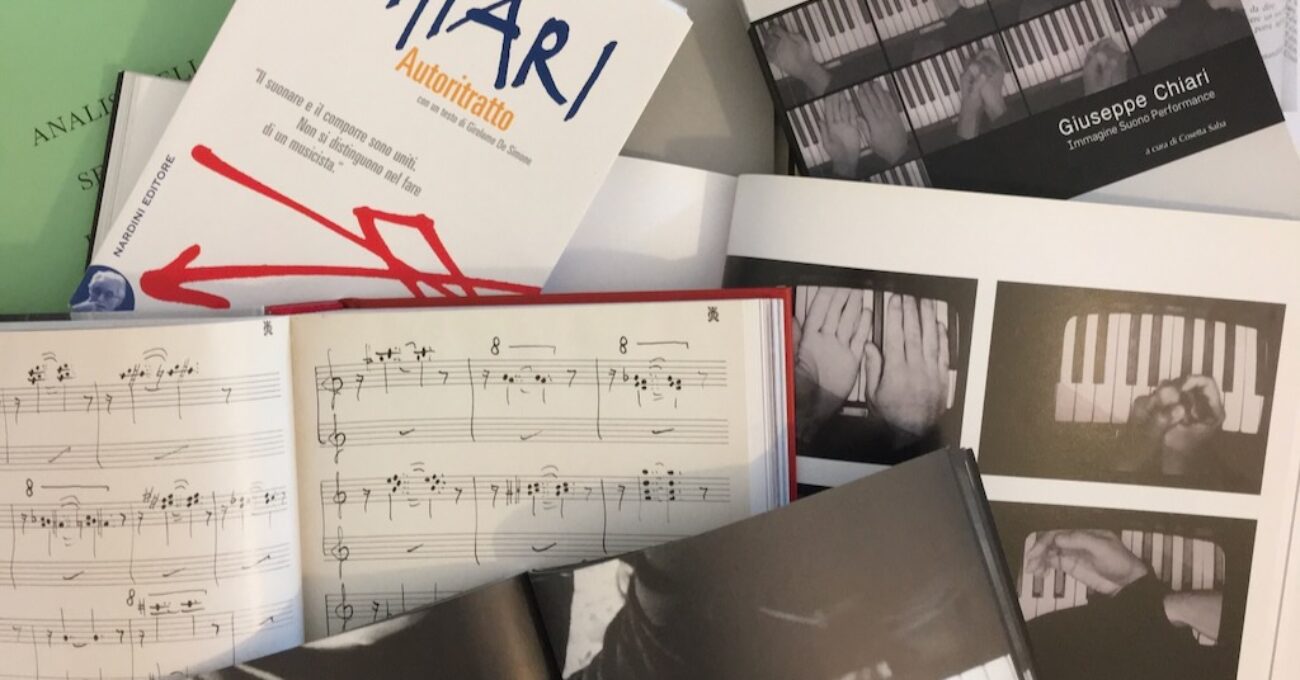
I already knew Gesti sul Piano, his most famous and experimental work on the keyboard. Watching the video artworks of his hands, dialoguing as individual characters with the piano and with each other, left me enchanted and moved at the same time. I also had the feeling that this was the poetic output of a rigorous critical reflection, though. It was correct; now I’m diving into critical essays, conceptual art statements, art books, photographic series of his performances, videos, recordings and finally, yes, scores (in standard, verbal, graphic notation) of this prolific composer, performer, artist welcomed by the Fluxus movement as well as by the conceptual art milieu.
In the occasion of his centennial (Chiari was born in Florence in 1926) several detailed books about him have been published, precious maps to navigate into his constantly-in-progress work.
This is the case with Gesti sul Piano, whose first score was written in 1962 and undergone many transformations, following the creativity of his author who became soon the performer of the piece (before him the dedicatee, Frederic Rzewski, and Giancarlo Cardini). From paper – verbal and graphic scores – to pictures and videos, from open composition to performance and improvisation, the life of this work left many different traces. Collecting them makes me feel as in a kind of treasure hunt – I’ll write more about this later.
And now it comes the funniest part: playing “with” Gesti sul piano. A playfully serious way of opening doors… what will be on the other side?
“The man is unaware that the keys exist to him / the keyboard is just a long white strip he realized however that his hands and arms can leave an imprint on the keyboard just as they would on sand he realized that his anger his anxiety his tension his rigidity his apathy his tenderness would leave for a moment a furious tender imprint on the white keys…
he has never seen anyone play the piano he cannot conceive that a single finger is meant for a single key“ Giuseppe Chiari, 1969
Playing with Giuseppe Chiari’s Gesti sul Piano
Front image: Photo from the exhibition “Party Chiari & Amicizie Fluxus” at Galleria Susanna Orlando – Pietrasanta, 2026