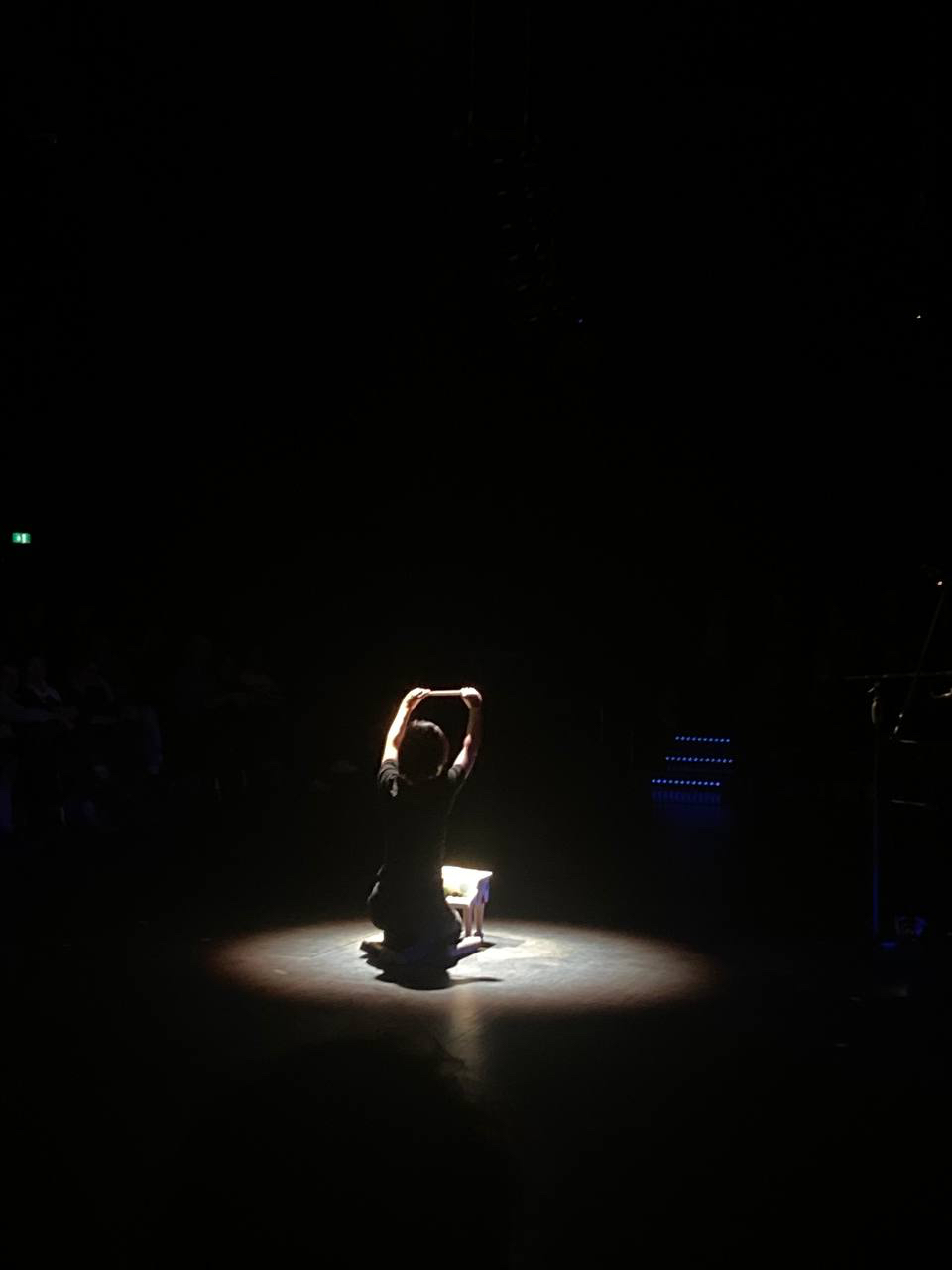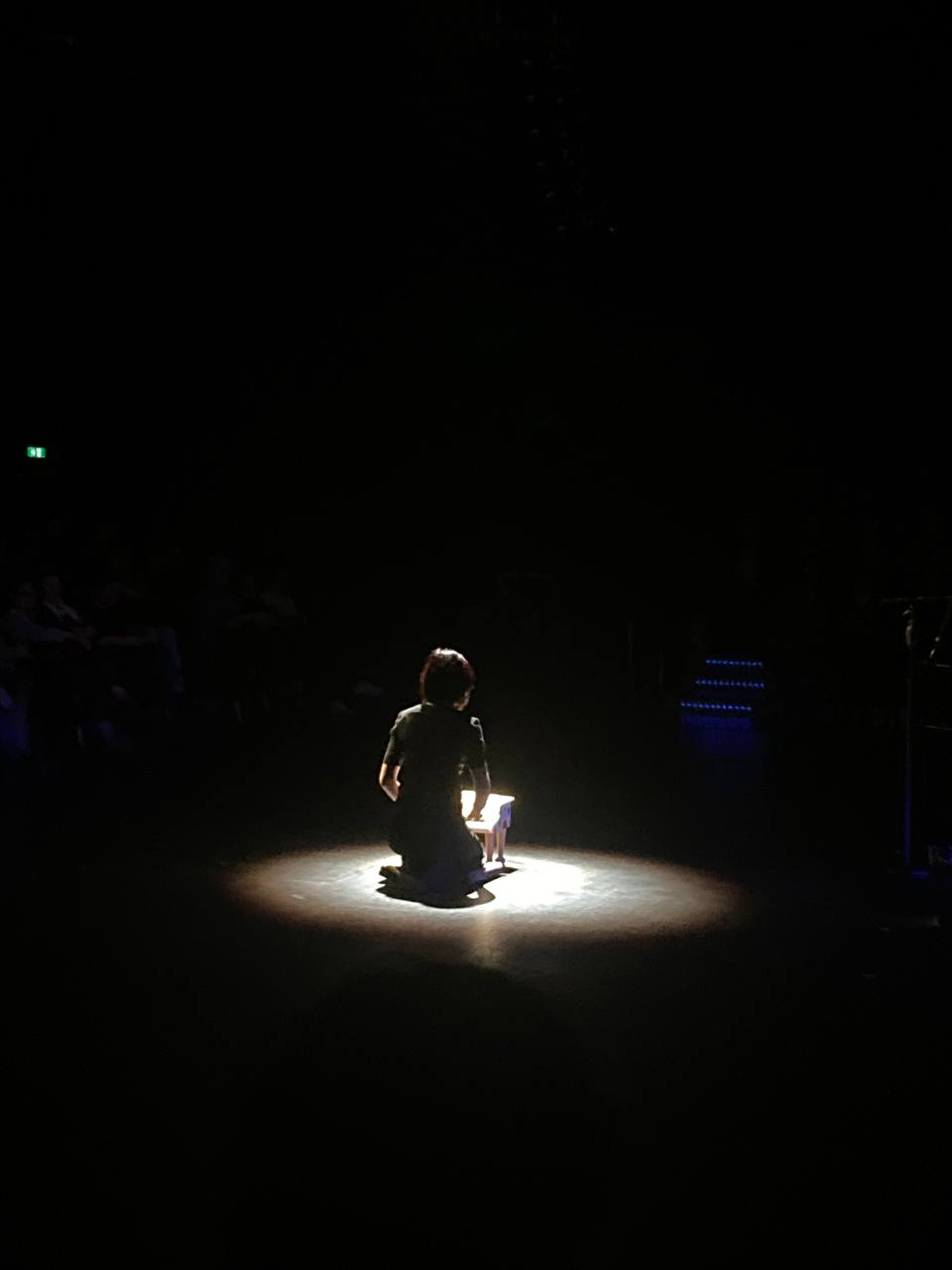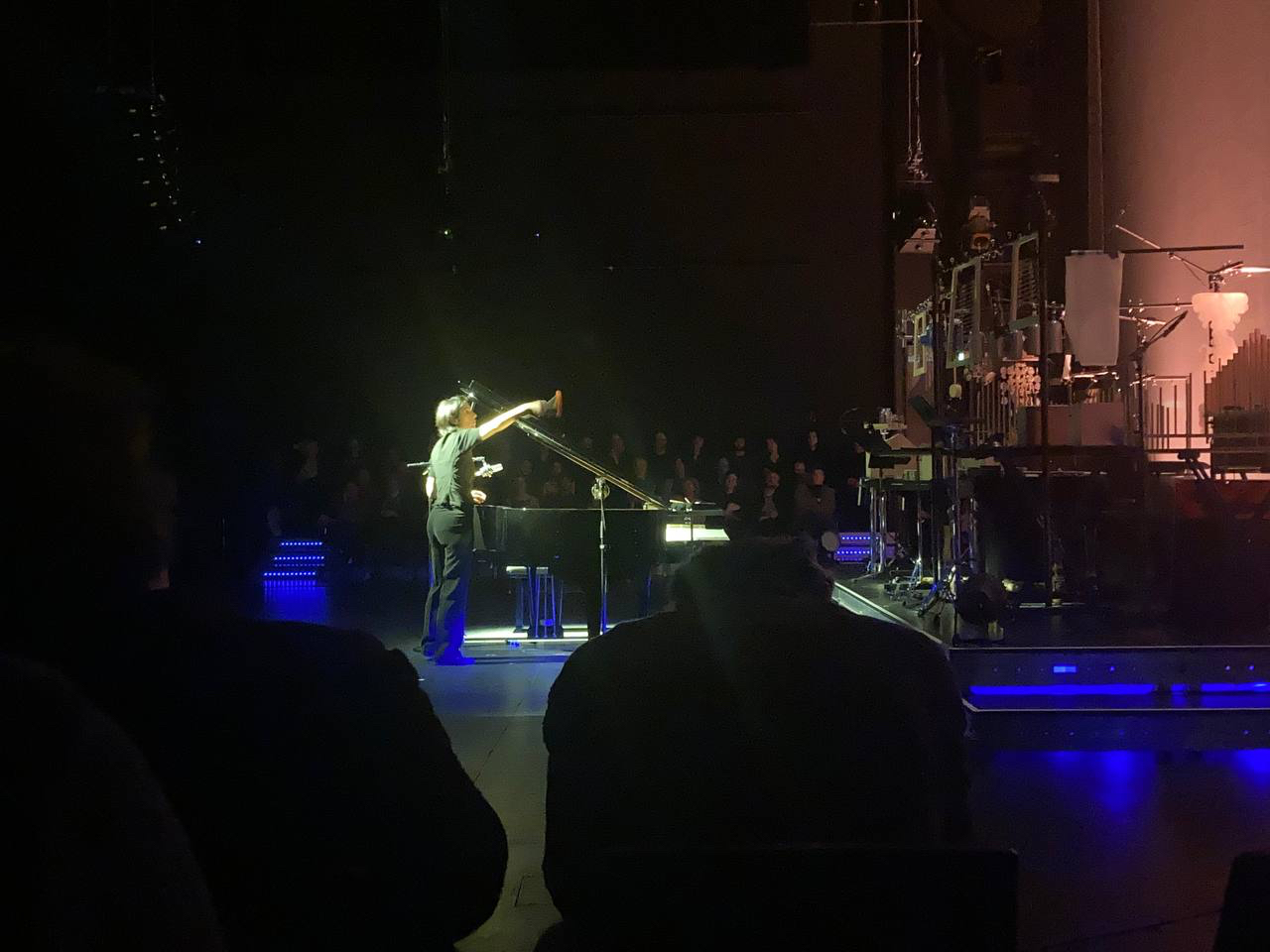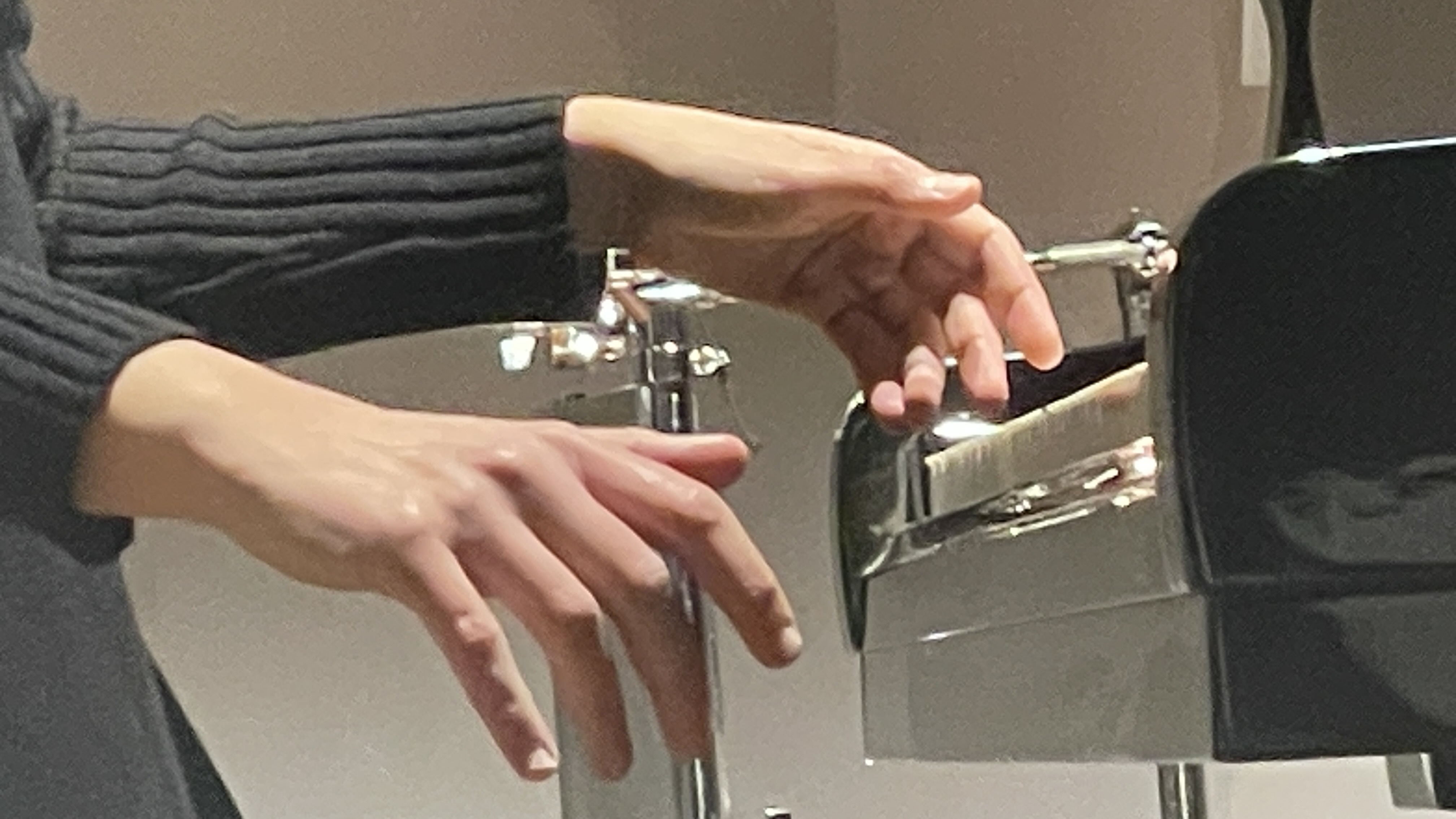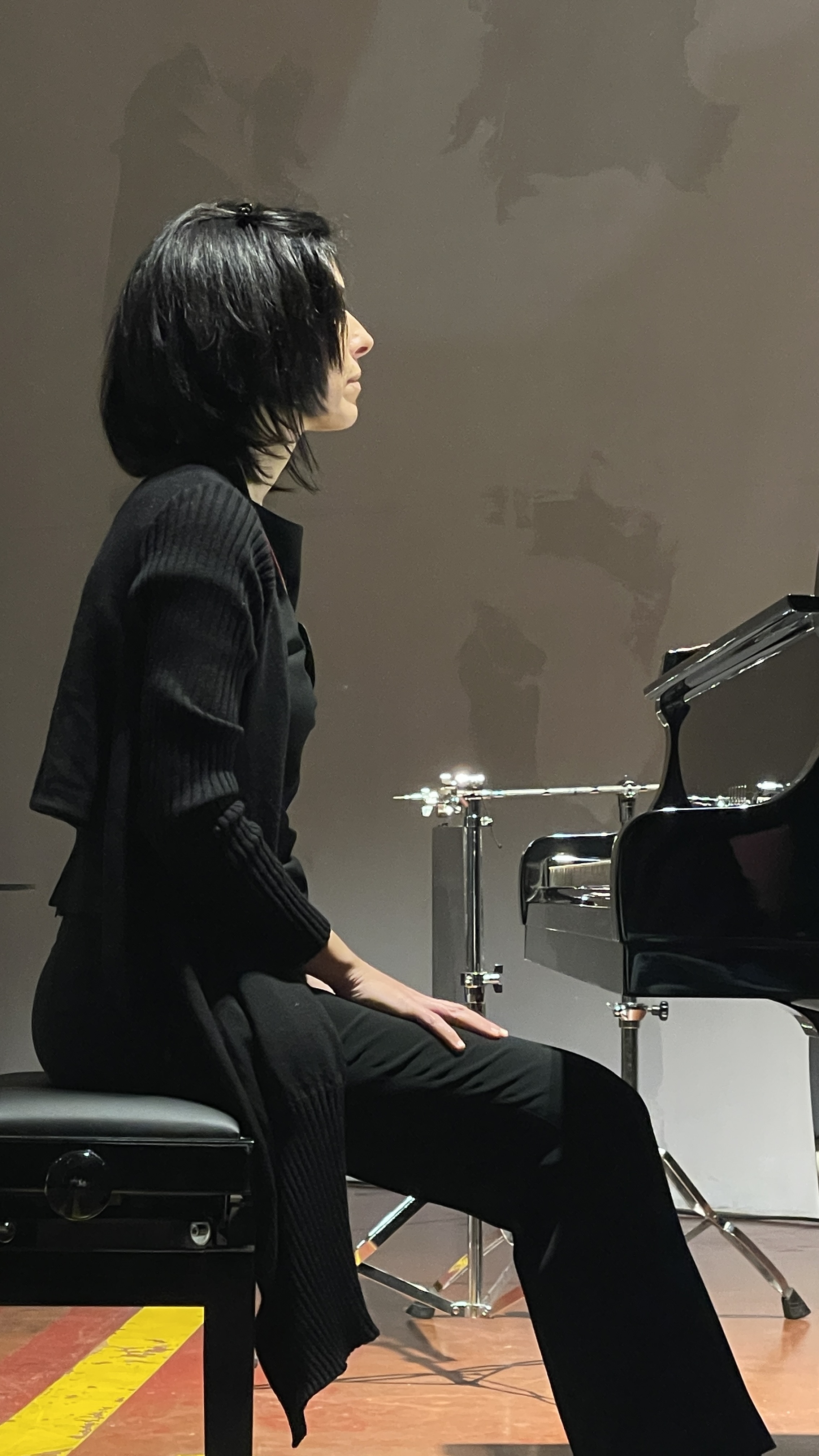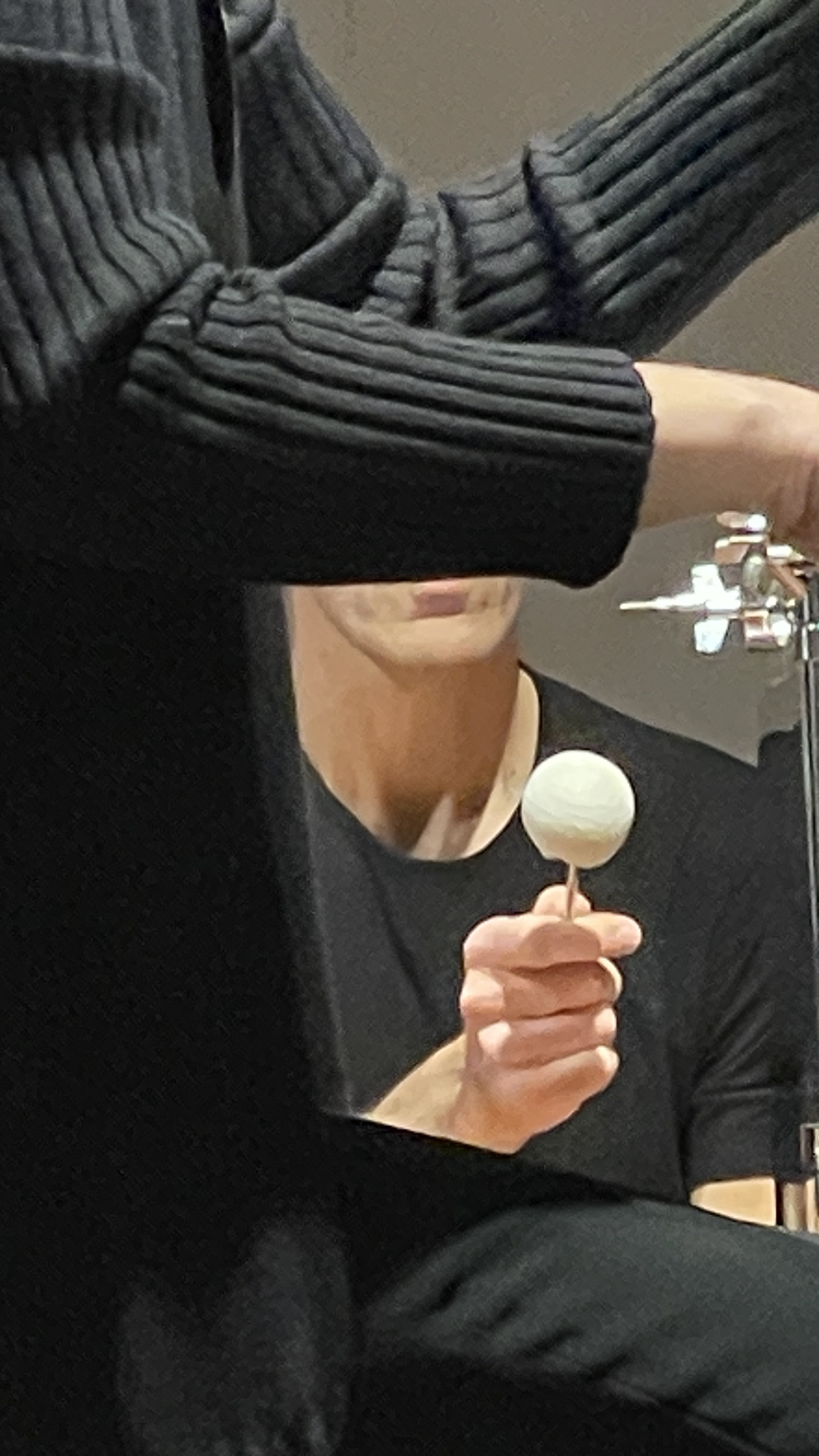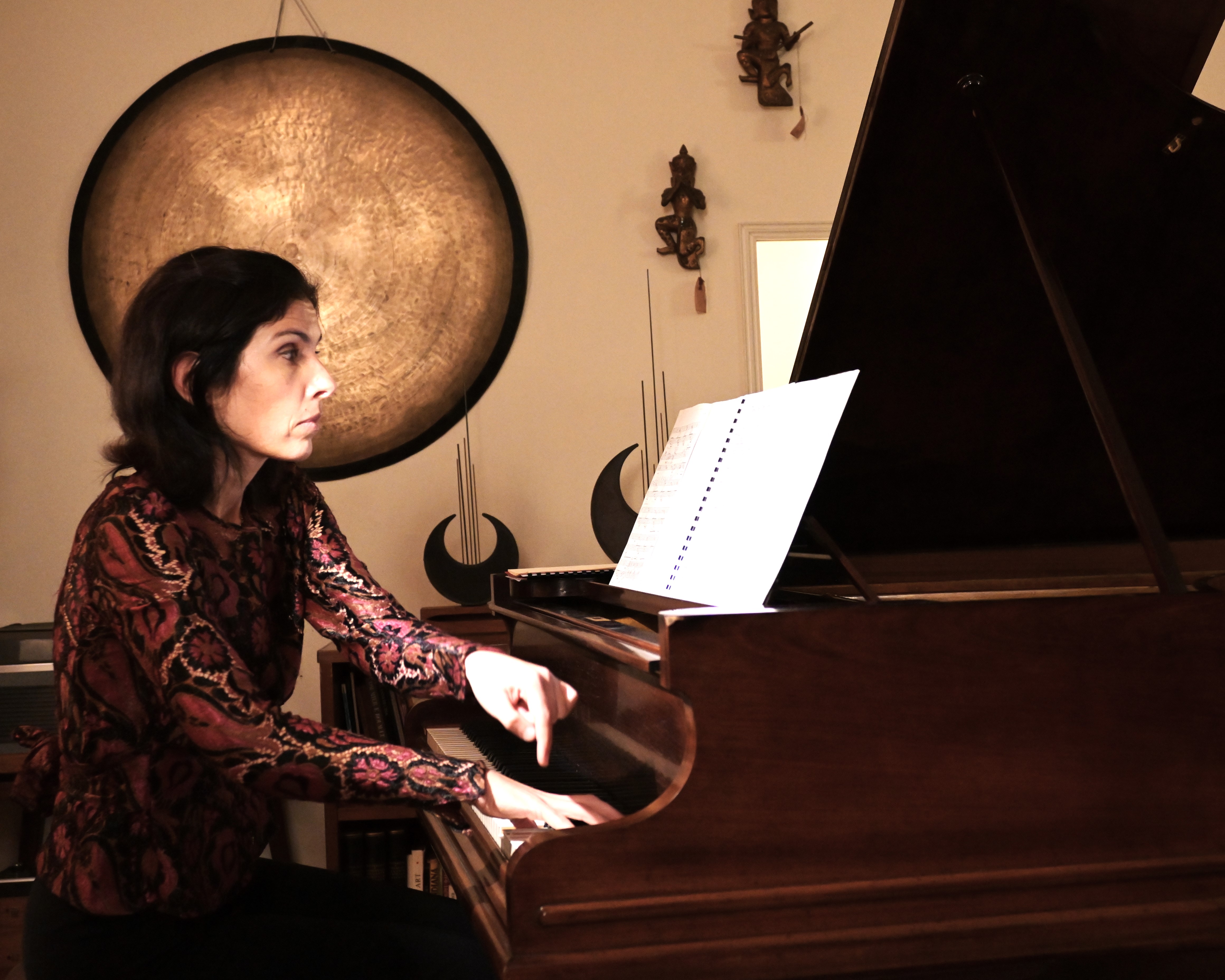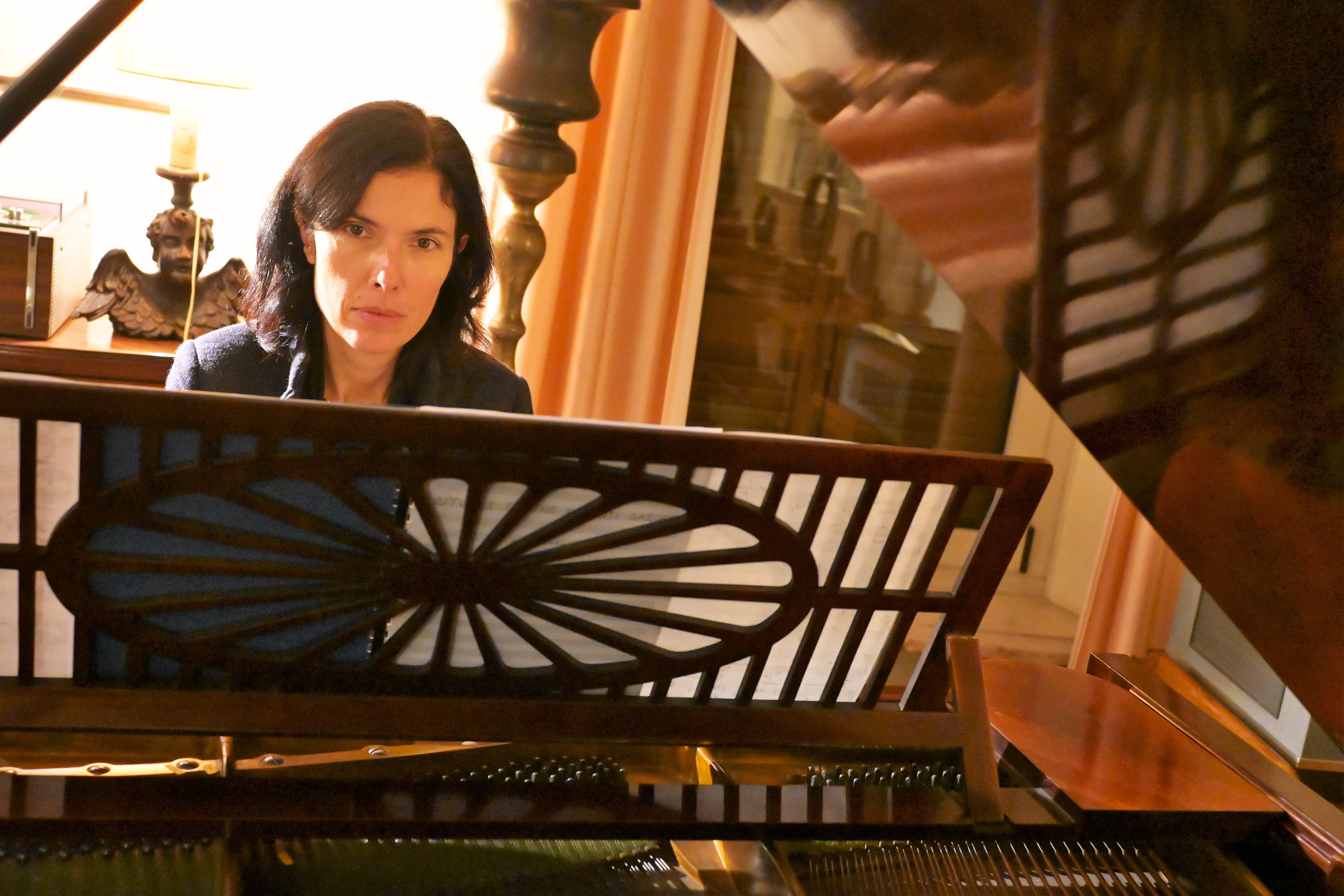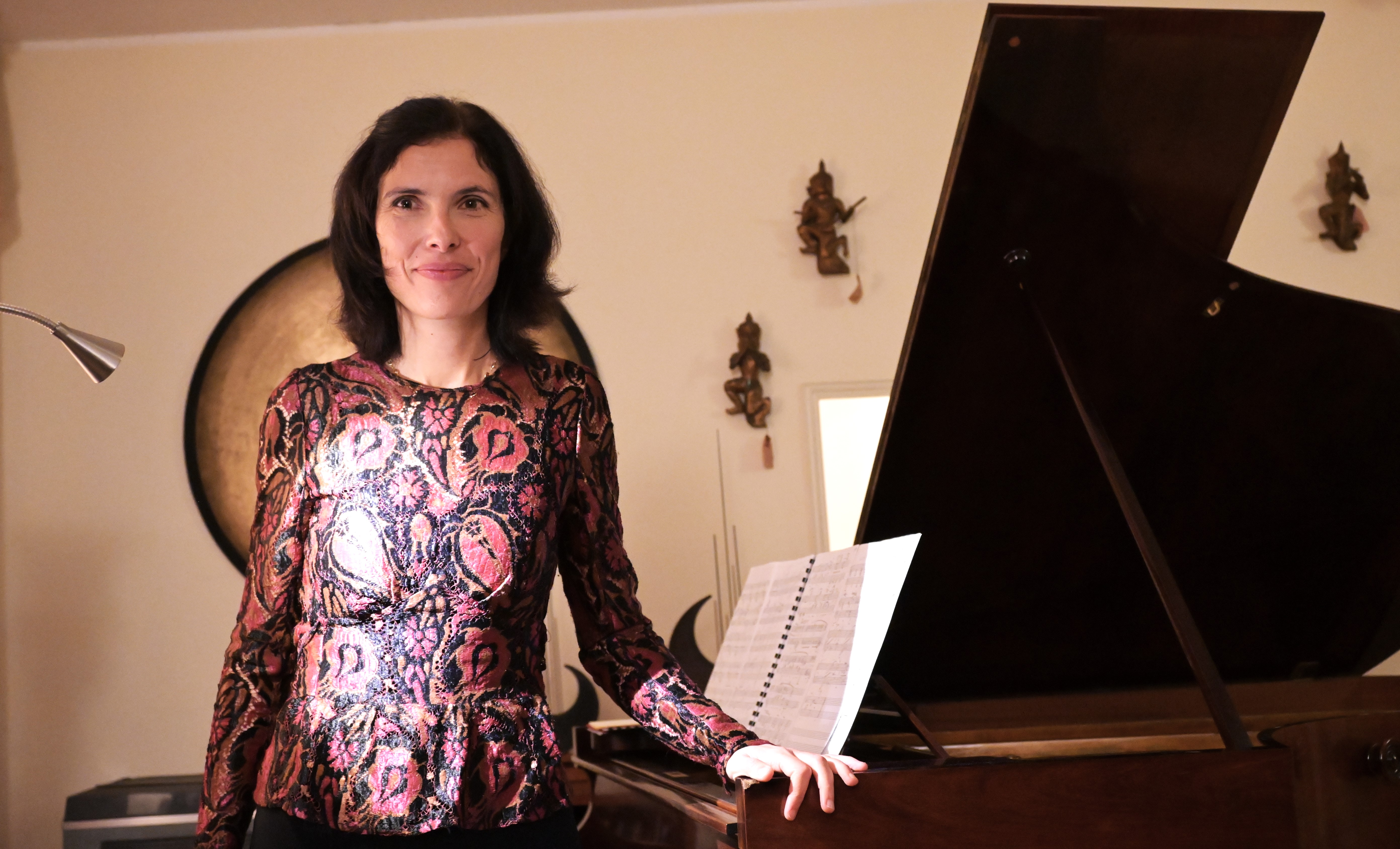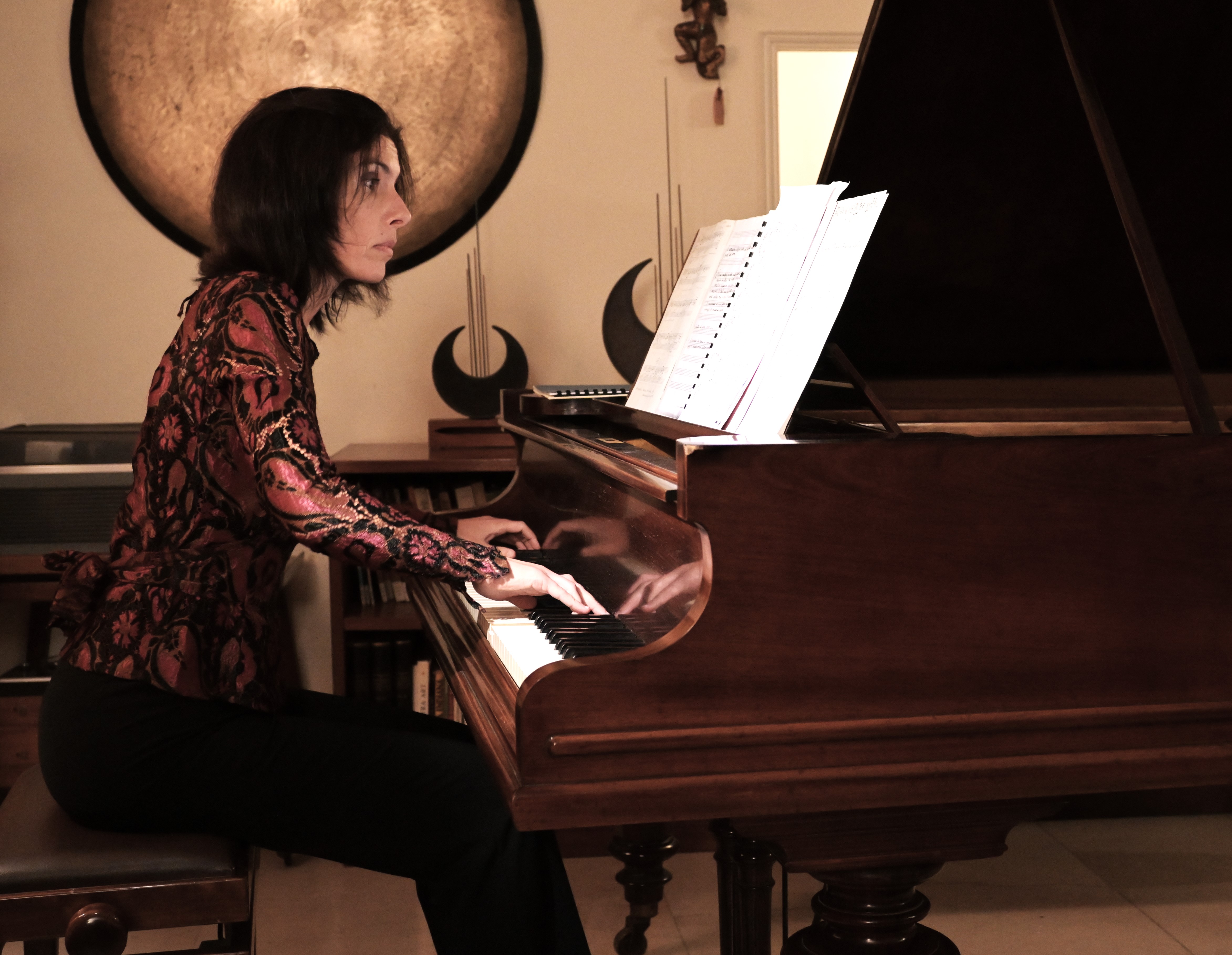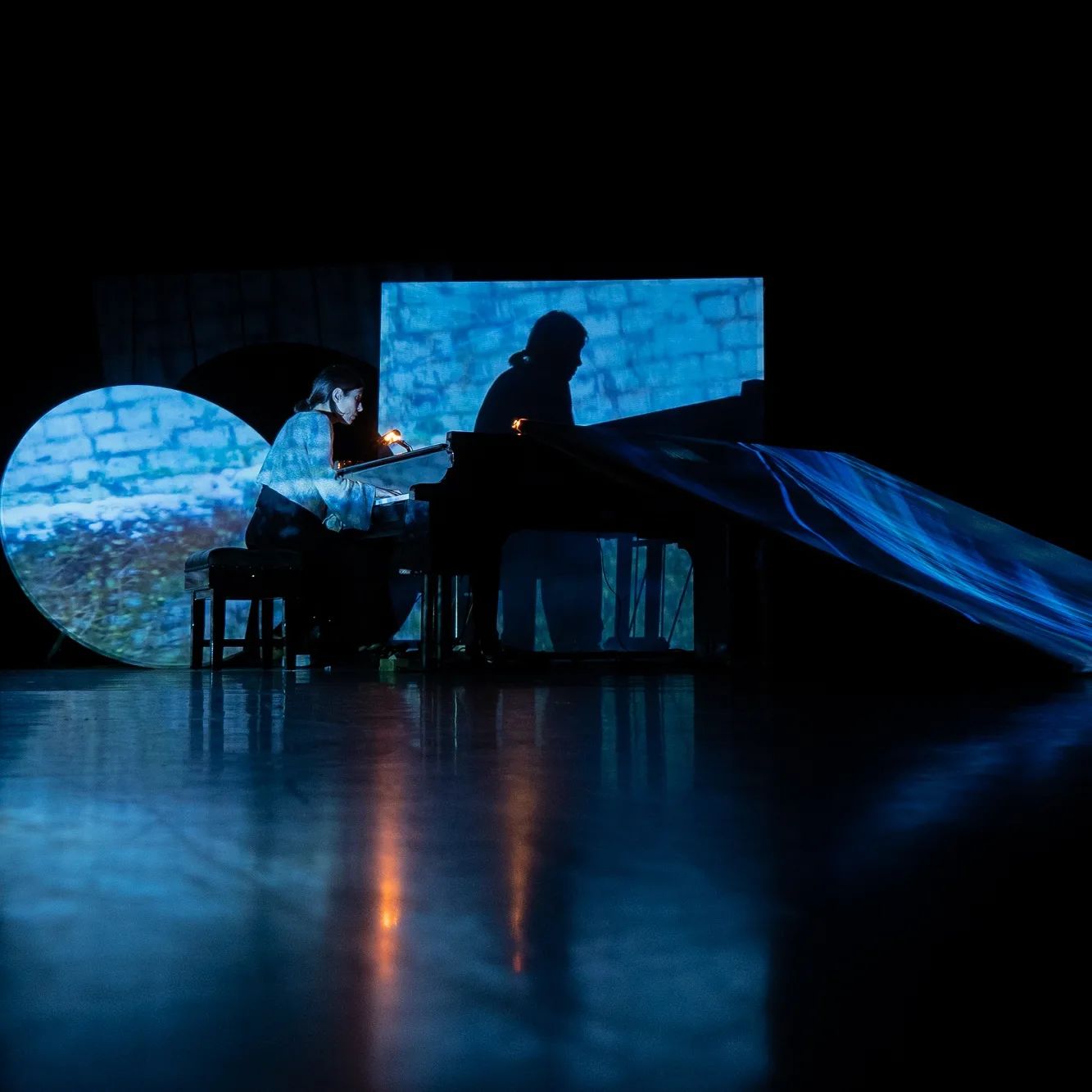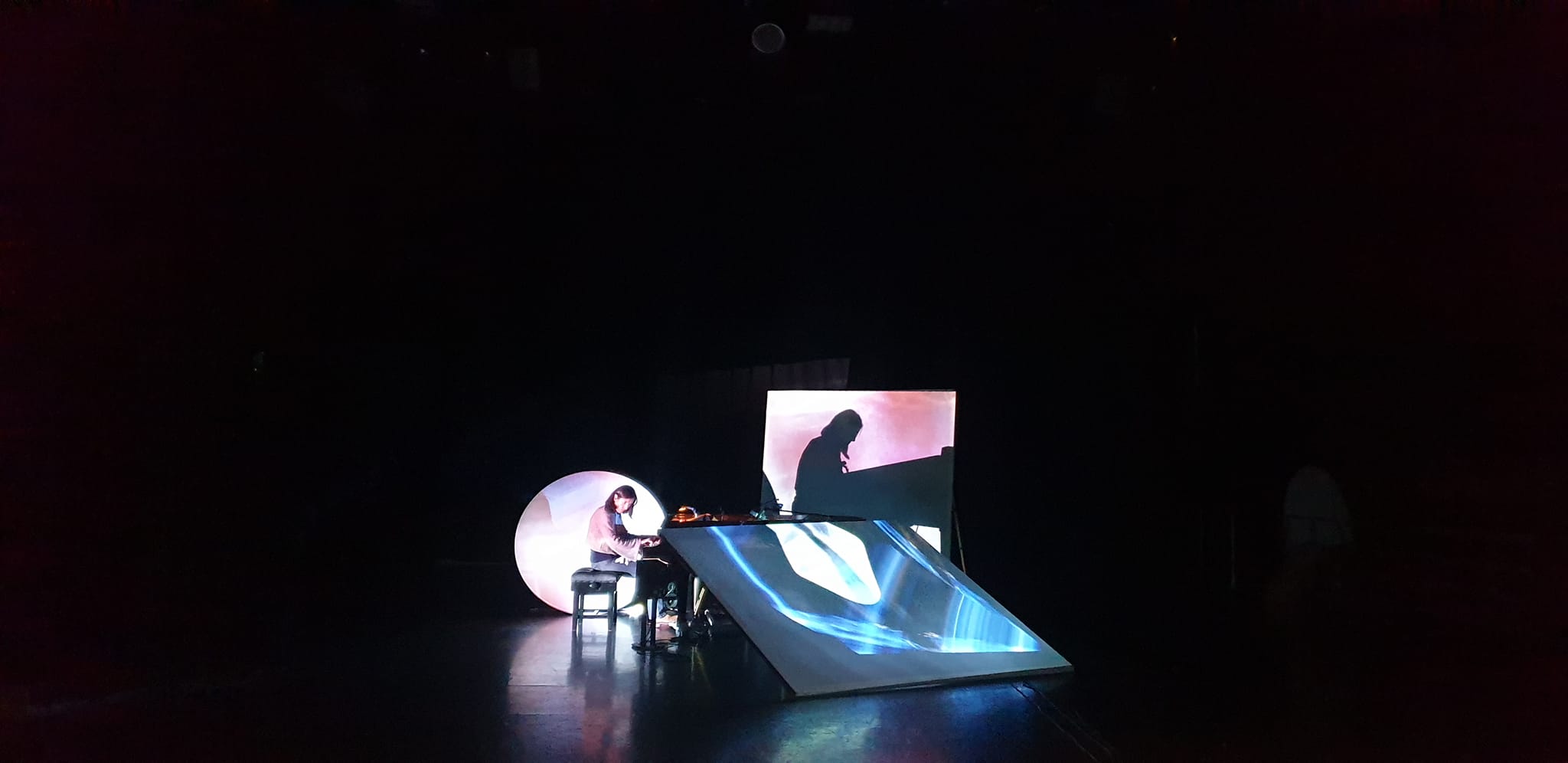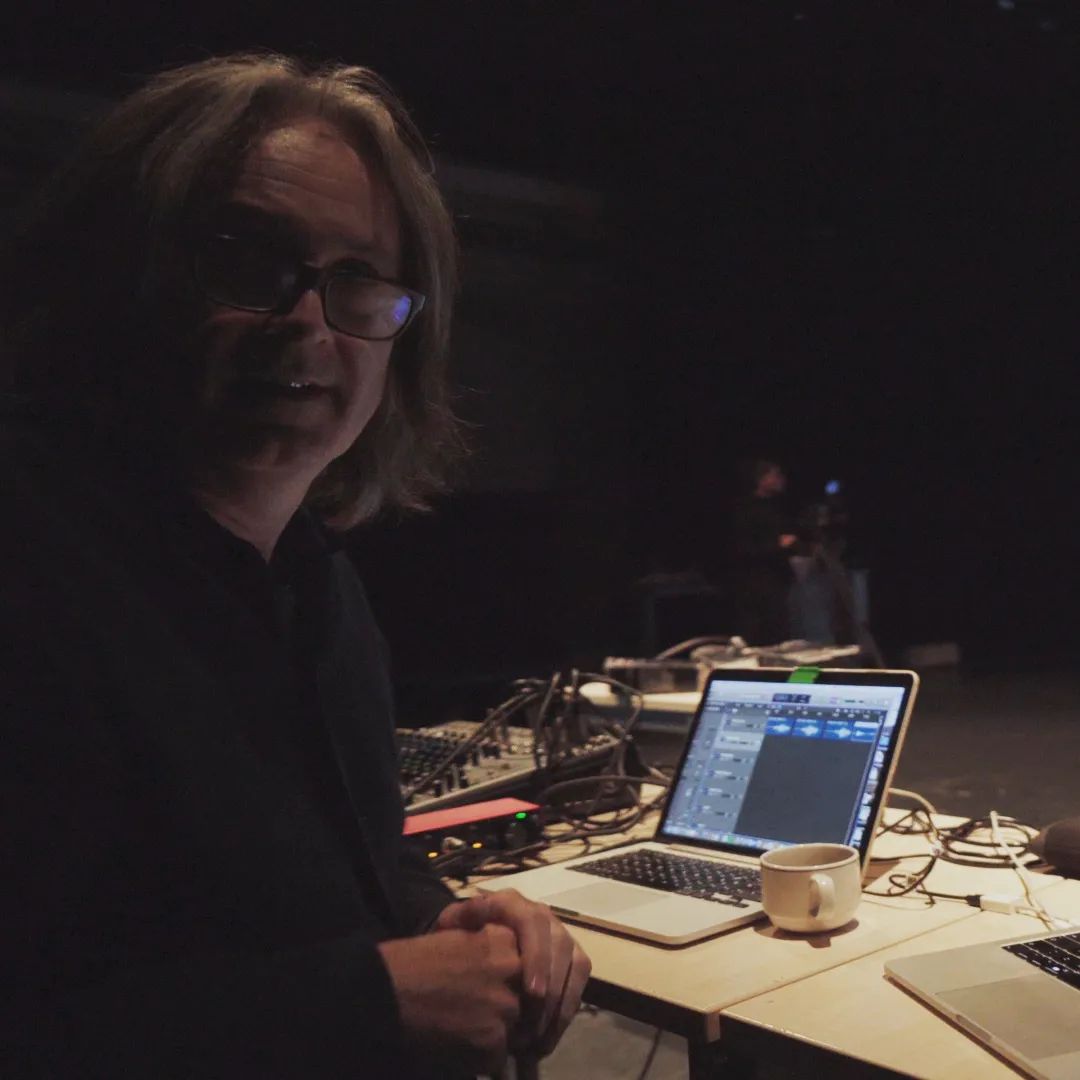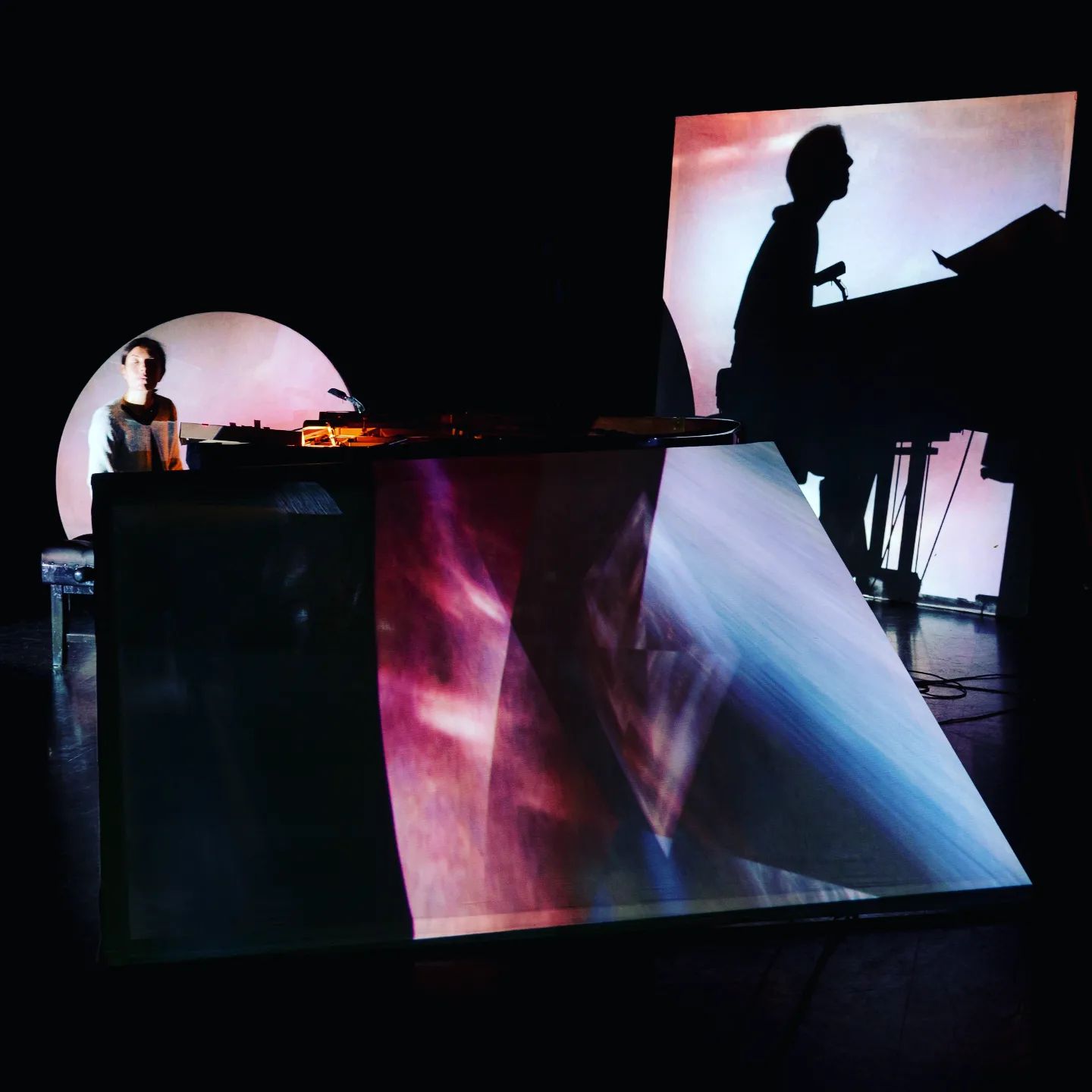

Great time in London visiting Brunel University London College of Music and experimenting with sound and visuals. In 2019 composer Colin Riley dedicated to me a set of miniatures, Ludic Inventions. We recorded them and then ask Lituanian videoartist and composer Kristijonas Dirsė to add a visual layer to the music. Sabina Covarrubias, composer and multimedia artist herself , joined the group from Paris to create an interactive video layer, reacting live to the music.
A joy to meet this great team finally in person and have some fun experimenting, improvising, adding musical layers to the original score.
A work in progress still going on, you can find more info here.
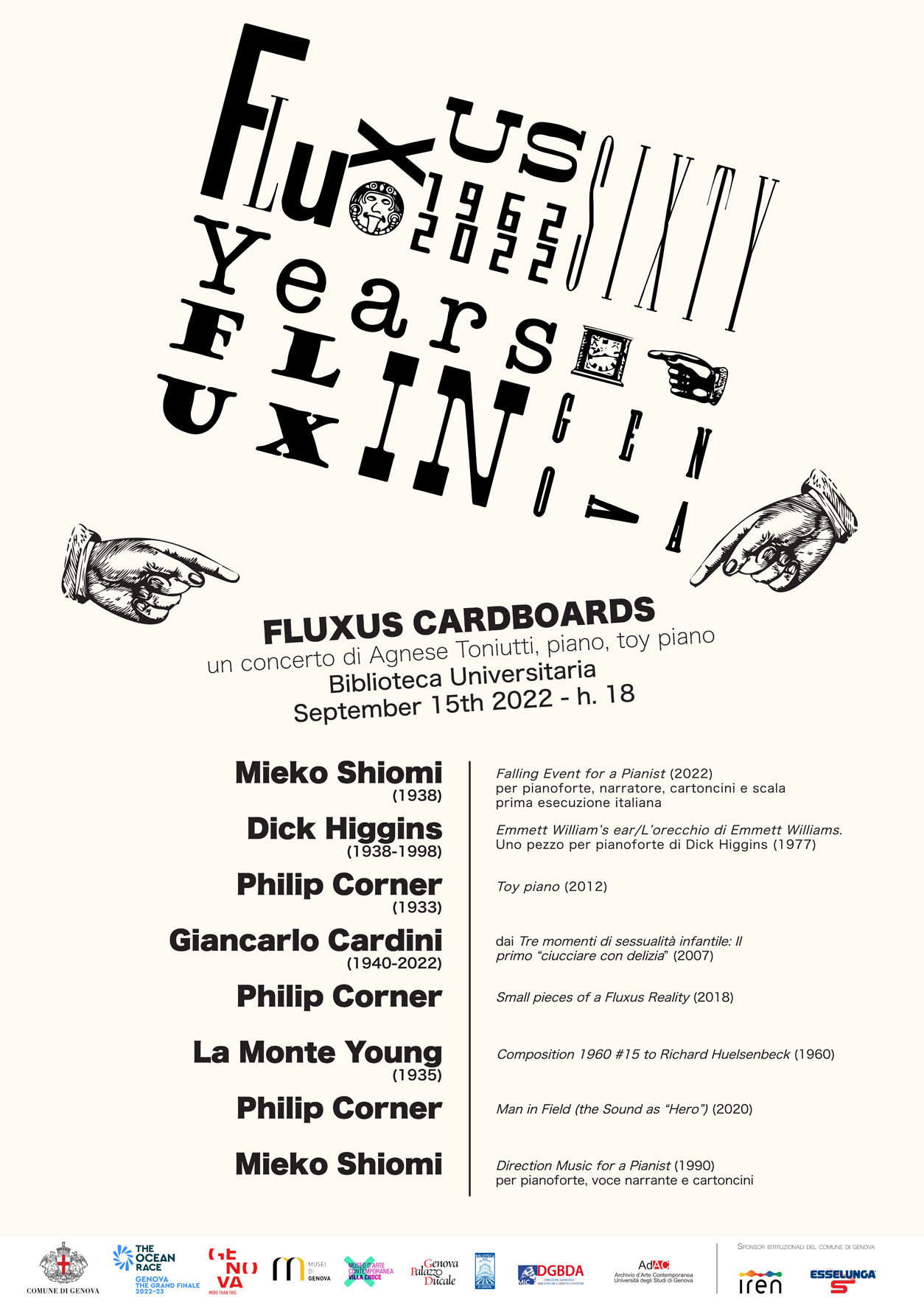
Next week I’ll be part of a huge celebration for Fluxus anniversary in Genoa, “1962-2022 Sixty Years in Flux”, a big exhibition in Villa Croce Contemporary Art Museum, performances, events and music around the city. On Sept 15th I’ll play an Italian premiere by Mieko Shiomi and other pieces by Philip Corner, La Monte Young, Mieko Shiomi, Giancarlo Cardini, Dick Higgins.
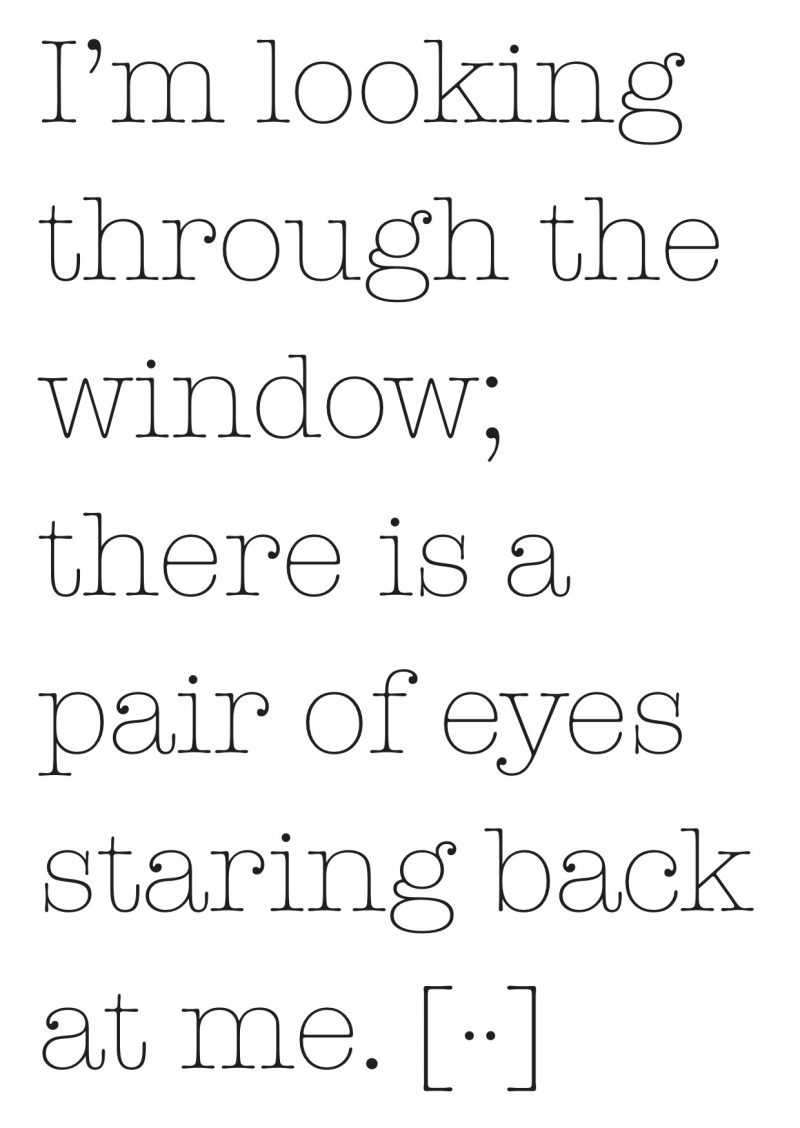
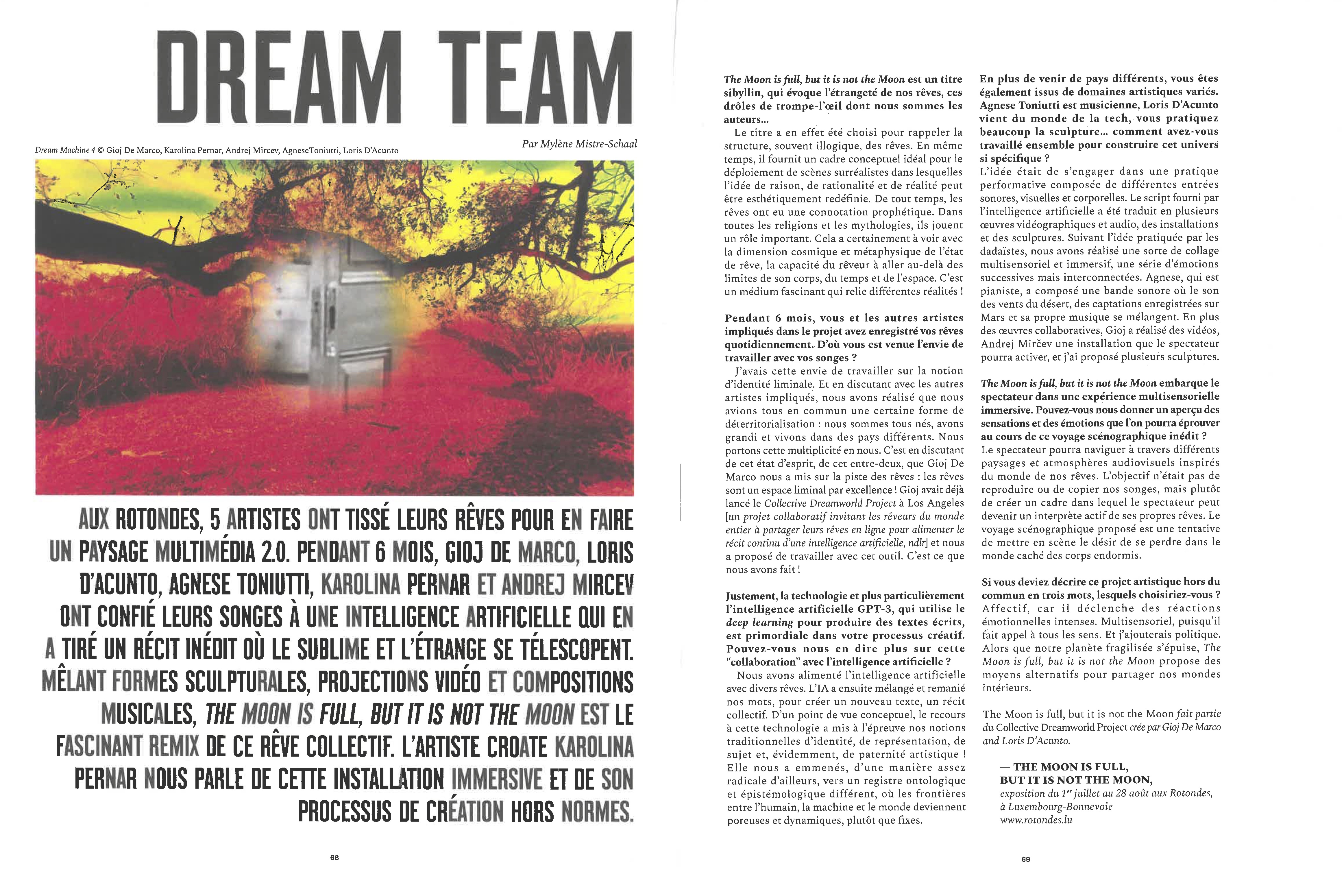
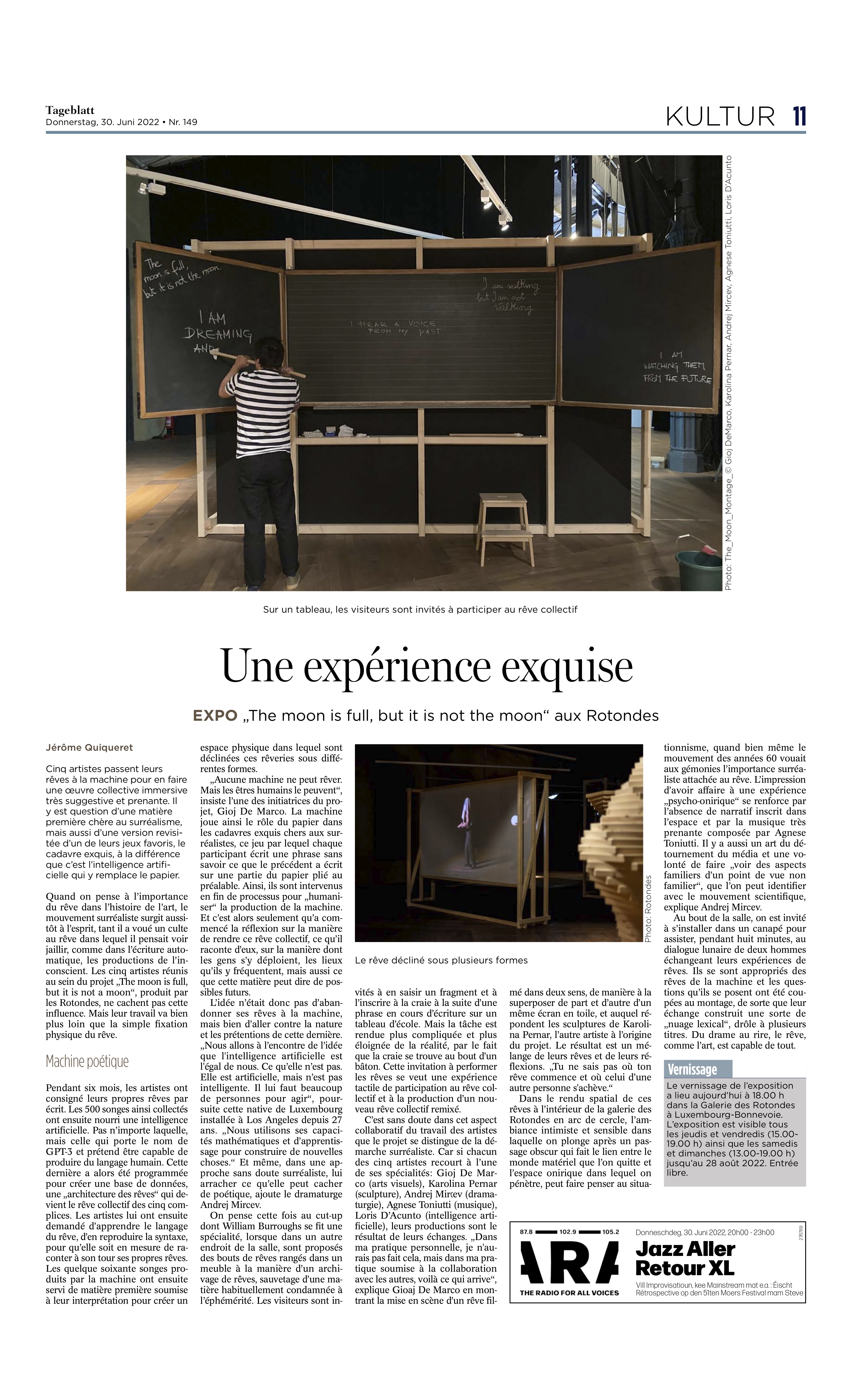
Is it possible to dream together, and, if so, to create something concrete from it? Happy to say it seems so, and excited to be part of the multimedia installation “The moon is full, but it is not the moon“, taking place in Luxembourg at Rotondes from June, 30th to August, 28th. The exhibition is in collaboration with artists Gioj De Marco, Karolina Pernar and Andrej Mircev and software engineer Loris D’Acunto and produced by Rotondes. We spent several months in literally dreaming together, writing our dreams and “feeding” with them an Artificial Intelligence. The dreams the AI gave us back in exchange were the basis for our work and for my compositions for the dreaming soundscape of the exhibition. The entire process of moving from dream experience to language, and from language to real experience has unveiled interesting insights into the nature of all these states of consciousness, and the fluid role of language and sound in the transition from one to the other. Last but not least, it helped to focus on one of the possible roles of so-called-but-not-so-much artificial intelligence in our human lives. Below some pics and press review; the advertising material quotes some suggestive phrases from the “dreaming” AI. The video trailer and some notes about the music are at the end of the article.
“But their work goes far beyond the mere physical concretization of the dream. … The impression of a “psycho-oniric” experience is reinforced by the absence of a narrative inscribed in the space and the very compelling music composed by Agnese Toniutti.”Tageblatt 30.6.2022 – Jérôme Quiqueret
“Et dans un paysage sonore, conçu par la pianiste Agnese Toniutti, une tritureuse d’instrument, fan de Cage. Son paysage évoque à la fois un égouttement de stalactites, «un tremblement de Terre sur Mars ou des échos radar de la surface de Titan.» Atmosphère étrange.” En mode rêveur 7.07.2022 – Marie-Anne Lorgé
The trailer of “The Moon is full, but it is not the Moon”
The Music
I created four piano pieces, for the most part using extended techniques, synchronized to the huge screen projection at the centre of the hall, which was running and standing still alternatively. Four different “promenades” interconnected the pieces, interweaving field-recordings taken in nature in different seasons of the year to sounds produced with extended techniques on the piano, so to possibly create a strange natural/unnatural sound perception. Some of the sounds of the piano in the promenades served as “themes” developed in each of the piano pieces. Almost-silent moments alternated to music to guide the public towards the “couch video” with dialogue, which was at the very end of the huge gallery. The overall duration of the work is around 45 minutes. The sound work was conceived to immerse the visitors in the Collective Dreamworld, and also to isolate the space from the outside soundscape (train station, bus station, traffic) and guide the audience through the different visual installations placed in the very big space of Rotondes.
The Moon is full but it is not the Moon
The moon is full, but it is not the moon is a multimedia installation which allows the audience to travel through a surreal landscape composed of sounds, images, sculptural objects, and textual traces.
For six months Gioj De Marco, Loris D’Acunto, Agnese Toniutti, Karolina Pernar and Andrej Mirčev recorded their dreams in collaboration with The Collective Dreamworld Project, an online dream-weaving experiment that uses an AI language prediction model. A sensorial collage emerged, recreated here in a series of atmospheric chambers where sculptural forms, video projections, soundscapes, musical compositions, and staged performances take turns appearing and disappearing. Moving through the space as if in a dream, visitors explore the connections between science, the arts and deep learning. Production: Rotondes / Photo credits: @ Lynn Theisen
Delighted to take up the challenge of ERT/Piccoli Palchi and bring my experience of piano experimentation to the very young. After a workshop in classes with kids from 6 to 11 years old, and one with their teachers, I will play in concert for them. The program will include one of their compositions based on selected extended piano techniques along with pieces by some of the distinguished experimenters of their times: Debussy, Cowell, Bartok, Kurtag, Cage.
From kids to adults, very happy to have accepted a teaching position at Conservatorio“G.Tartini” in Trieste.
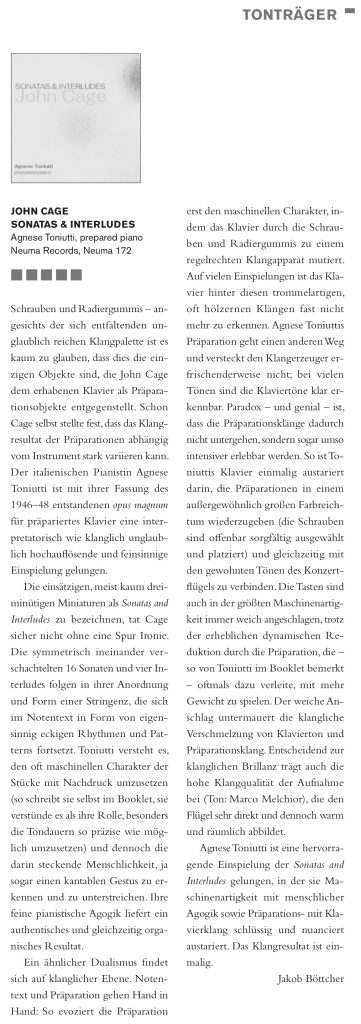
Here a new review of Subtle Matters by Paolo Carradori for Le Salon Musical: “I don’t know if courage can represent a useful category that can be spent in music criticism, but one thing is certain, this album is a courageous work. … Subtle Matters not only tells us how the piano not traditionally played, far from the bourgeois living rooms, can still give us surprising sound panoramas but also reminds us how the artist, whoever puts his hands inside the instrument, must necessarily put back into play, courageously re-discuss role and visions.”
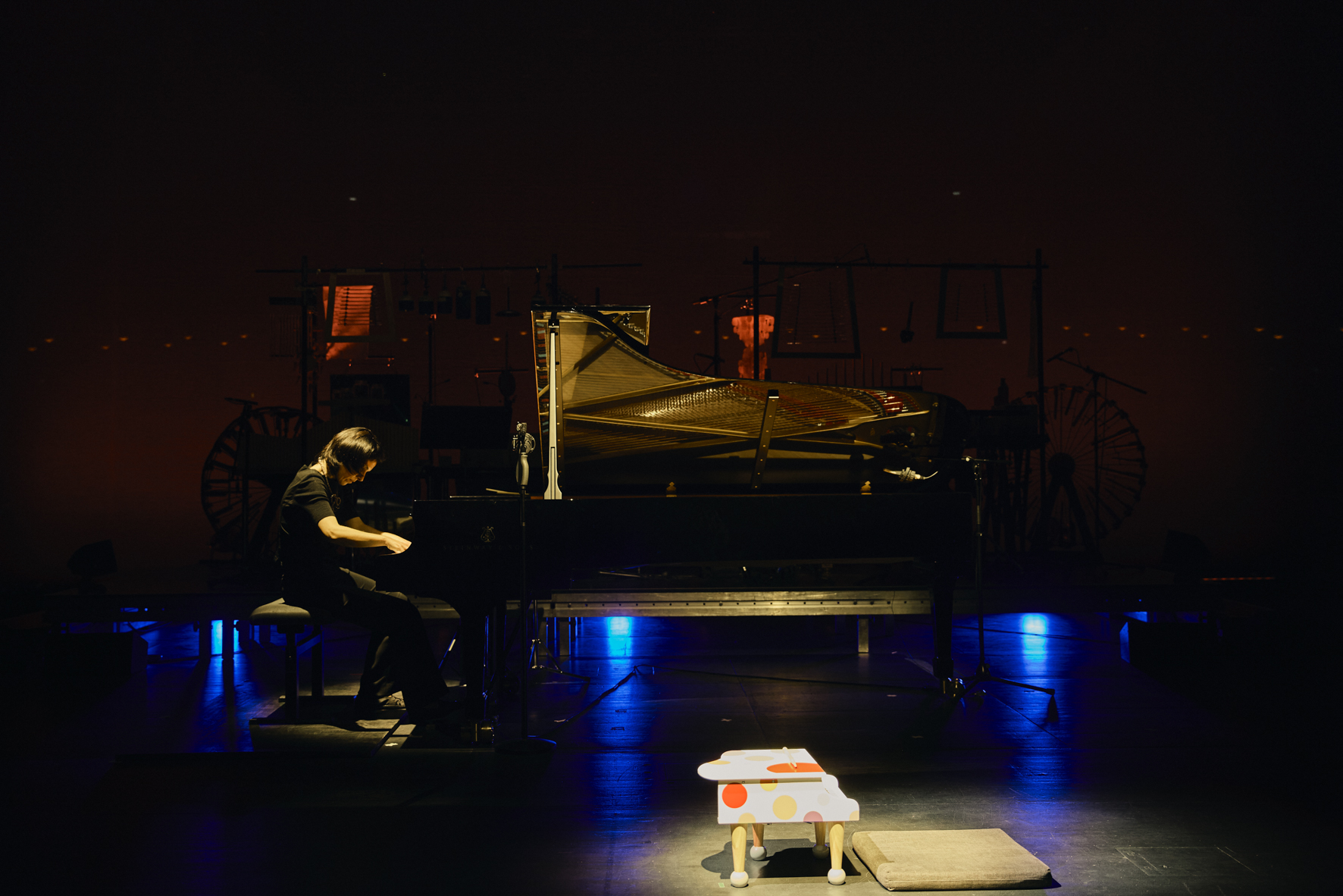
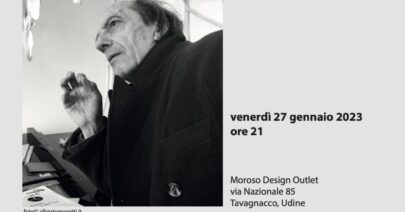
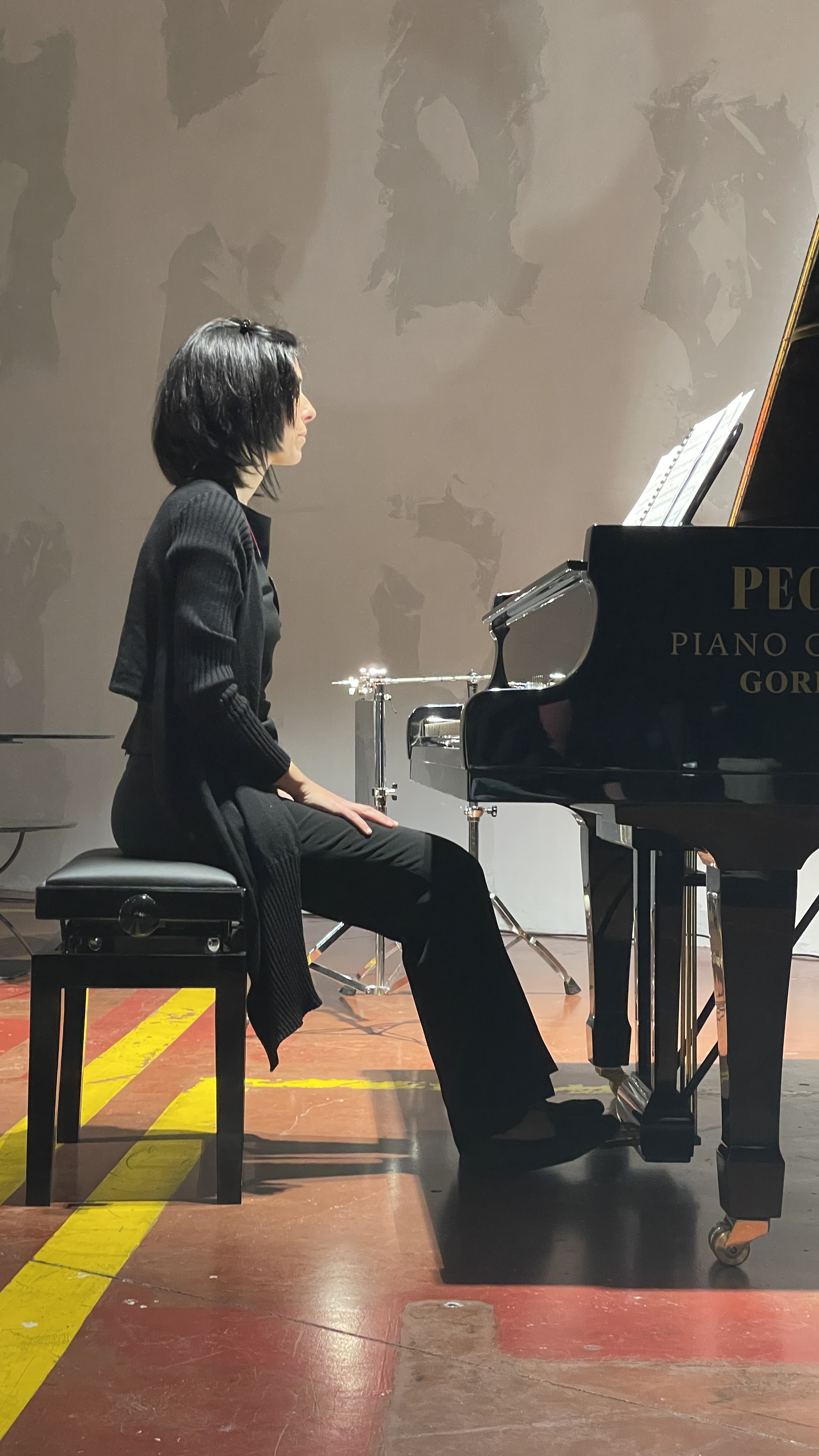
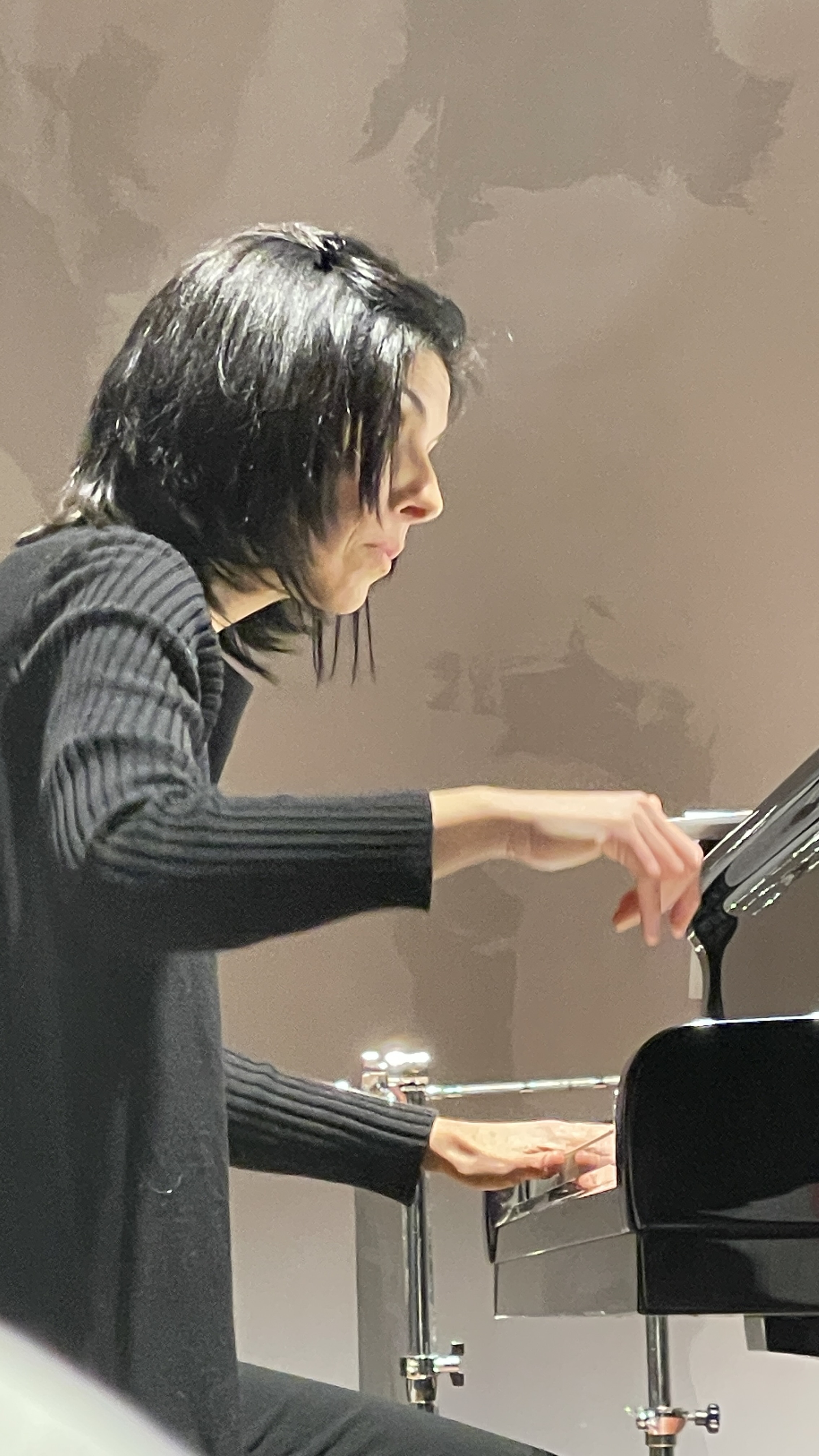
Below some pics from the last colourful concert on March 26th at Moroso showroom – which in addition had an excellent acoustics. Music by John Cage, Tan Dun and Philip Corner for prepared piano, string piano and… regular one.
A double live Hauskonzert on December 11th with works for piano, prepared piano, voice and keyboard cover (and also many postcards, as you can see) by some exponents of the Fluxus movement: Mieko Shiomi, Philip Corner and La Monte Young. Always an emotion to share music in intimacy at the Salotto Musicale Fvg, but this time more than ever, after so many differently articulated months. Great change of scenario on the 23rd: performance with Piano Twelve, ensemble made by twelve pianists, at the Teatro Nuovo in Udine. A light program to wish you a (hopefully) light Christmas. (Below, our first performance back in 2011, in Udine, Loggia del Lionello)
Delighted to be among the contributors of Looking Within – The Music of John Palmer, new publication by Vision Edition. The book is dedicated to the work of composer, pianist, improviser John Palmer, which has inspired several investigations into different aspects of his music. I’ve contributed with an essay and an interview focussing on one of my favorite topics, the mutual influence of composition and improvisation in the creation of a piece of music – and, consequently, how this affects re-creating the piece during performance. Here are some infos and reviews:
“This fascinating collection of interviews and essays is a testament to the breadth and depth of John Palmer’s creative imagination. However, it is not just a book about a single composer and the dynamic of inheritance and originality that their art evokes, but about music itself. It is about music as an expression of human values which is inseparable from other disciplines such as poetry, philosophy, anthropology, the visual and dramatic arts and other disciplines through which human beings seek to capture the meanings fundamental to their existence. Palmer’s driving motivation is to explore how these meanings can be uncovered by music, bringing music into dialogue with all the other pursuits of human spirit. It is a book for anyone who has felt that music is more than entertainment, and feels the urge to explore and give content to this feeling.” Dr. Mikolaj Slawkowski-Rode, Philosopher, Blackfriars, University of Oxford, and University of Warsaw.
Writers and interviewers: Paul Alan Barker, Daniel Biro, Eva Böcker, Anna Cepollaro, Patrick Crossland, Késia Decoté, Ricardo Descalzo, Theodor Flindell, Neil Heyde, Egbert Hiller, Jeffrey Holmes, Ikuko Inoguchi, Suzanne Josek, Johannes Klumpp, Anne LeBaron, Charlotte Leport, Carin Levine, Andrew Lewis, Matsuo Masataka, Christina Meissner, Vittorio Parisi, Claudie Reduron, Klaus Schöpp, Aanaya Shanaya, Gavin Stewart, Nick Storring, Sergej Tchirkov, Agnese Toniutti, Dan Weymouth, Peter Wiegold. Edited bySunny Knable 384pp, 257x182mm, colour
Very excited for this upcoming concert – Saturday October 23rd – together with cellist Frances-Marie Uitti in Udine at Salotto Musicale Fvg. “Visionaries”, dedicated to Sylvano Bussotti, is a duo exploration of music by Bussotti, Feldman, Brown, Cage, Stockhausen, together with works by Cardini, Uitti and a brand new work created for us by artist Luciano Martinis. Looking forward to such a great experience!
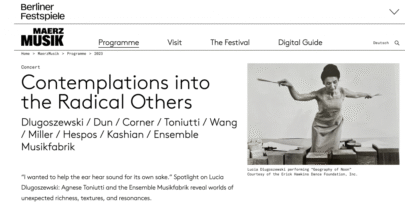
Another step forward in researching the work of composer Lucia Dlugoszewski. This time a four-handed reflection, along with Dr Kate Doyle, on how our collaboration – and collaboration in general between theorists and performers – could lead to a step forward both on stage and in the field of musicology. We will share our insights by speaking at the Dialogues: Analysis and Performance symposium, held October 7–9, 2021, at the University of Toronto’s Faculty of Music. Here is our abstract:
Problem as Possibility: Experimental Notation as Nexus of Concept and Praxis, Theorist and Performer
Kate Doyle (Rutgers University-Newark) and Agnese Toniutti (independent)
What happens when a score becomes a site for dynamic exchange between theorists and performers – where conundrums generate new ideas and forms? We have worked at such a place in dealing with the experimental scores of Lucia Dlugoszewski, who sought innovative ways to notate sound forms from 1950 until her death in 2000. As we sorted through Dlugoszewski’s graphic scores (held at the Library of Congress and the Archives of American Art), it became clear that they hold numerous challenges for performance – pitch arrangements do not match the composer’s descriptions, inconsistencies in graphic signs are frequent, instructions press the performer beyond the limits of even extended techniques. Through our dialogue about these problems, we developed an analysis that considers Dlugoszewski’s notation an attempt to capture what the composer simultaneously regarded as not able to be captured – the nuances of sonority. We began to understand the score(s) as a documentation of logic that is not present as much as a logic that is, as a kind of notation in reverse, as an ideal existing beyond the domain of practical execution. We each produced new forms in response to this analysis that reflect our primary work, but our dialogue continues as an integral aspect of both respective and mutual projects. We propose to perform a concise version of this dialogue as means to openly explore the possibilities of exchange between theorist and performer in the negotiation of concept and praxis in experimental notation.
A summer (often) in recording studio working at two upcoming releases. One is “Ludic Inventions” by British composer Colin Riley. Colin dedicated the piece to me in 2018; it will now serve as the foundational layer for a video production featuring Lituan film-maker Kristijonas Dirse. Eager to discover the next steps in this international collaborative project!
Then a recording of pieces by composers Mieko Shiomi and La Monte Young, for an exciting upcoming Fluxus collection. Another opportunity to further challenge creativity!
A dreamy open-air location surrounded by majestic lime trees will host the recital “Lento trascolorare”, with music by Giancarlo Cardini, Caterina Venturelli, Tan Dun, John Cage and Giacinto Scelsi. First planned on a very special day, the 8th of August (see G.Scelsi, 5 Jan 1905 – 8 Aug 1988), then moved to the 22nd to… follow the sun. An ideal place to resound in quietness.