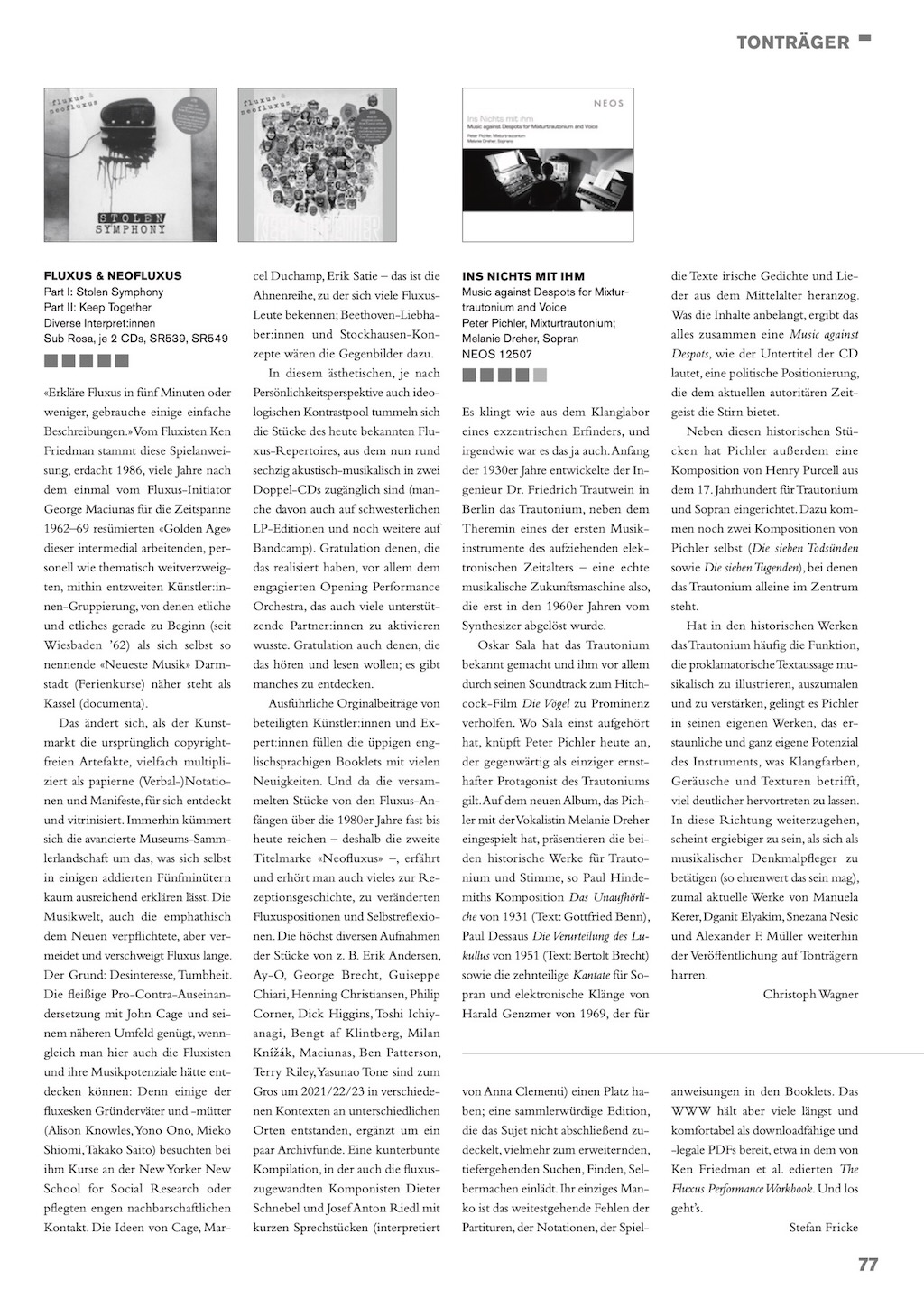
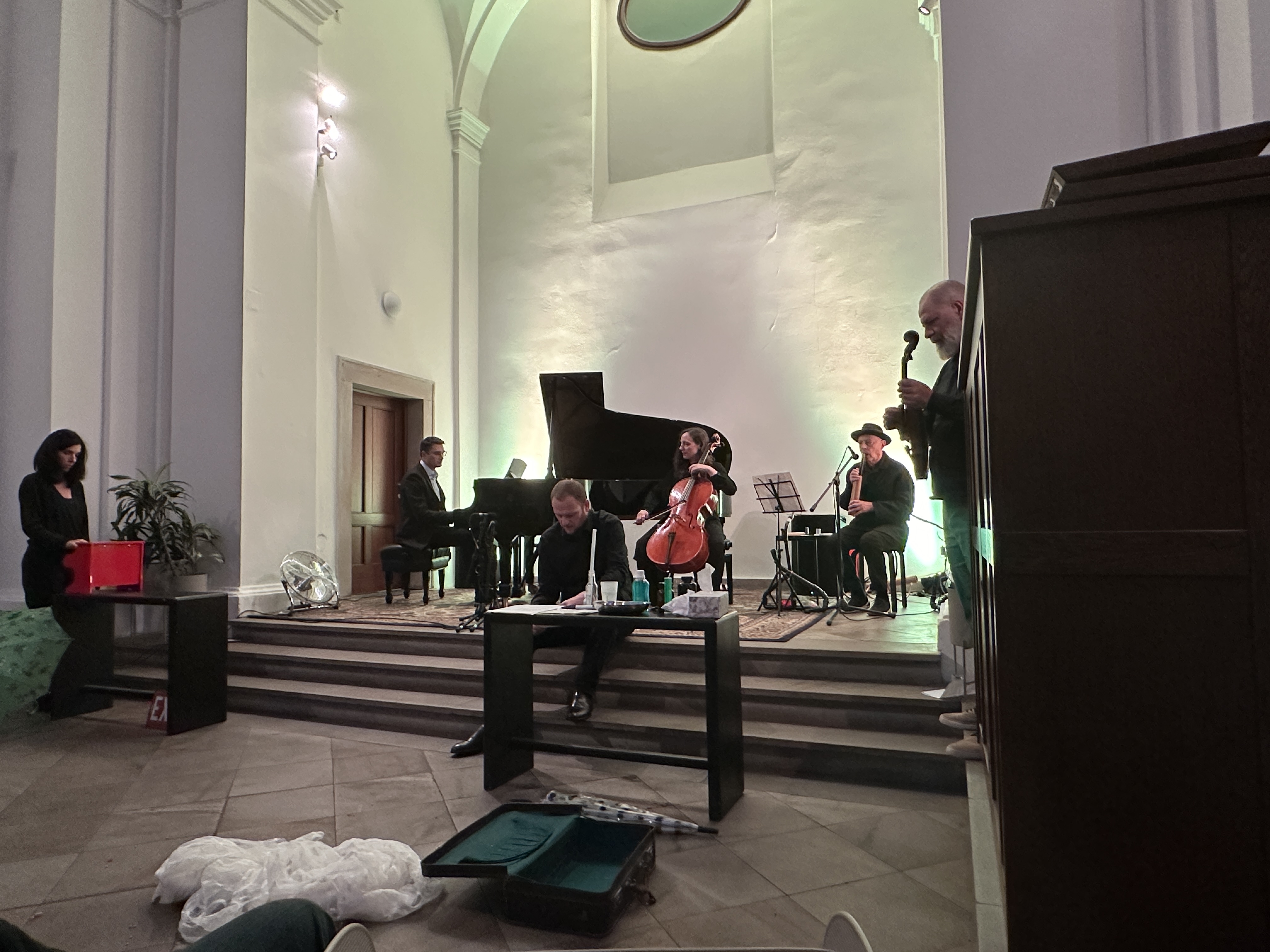
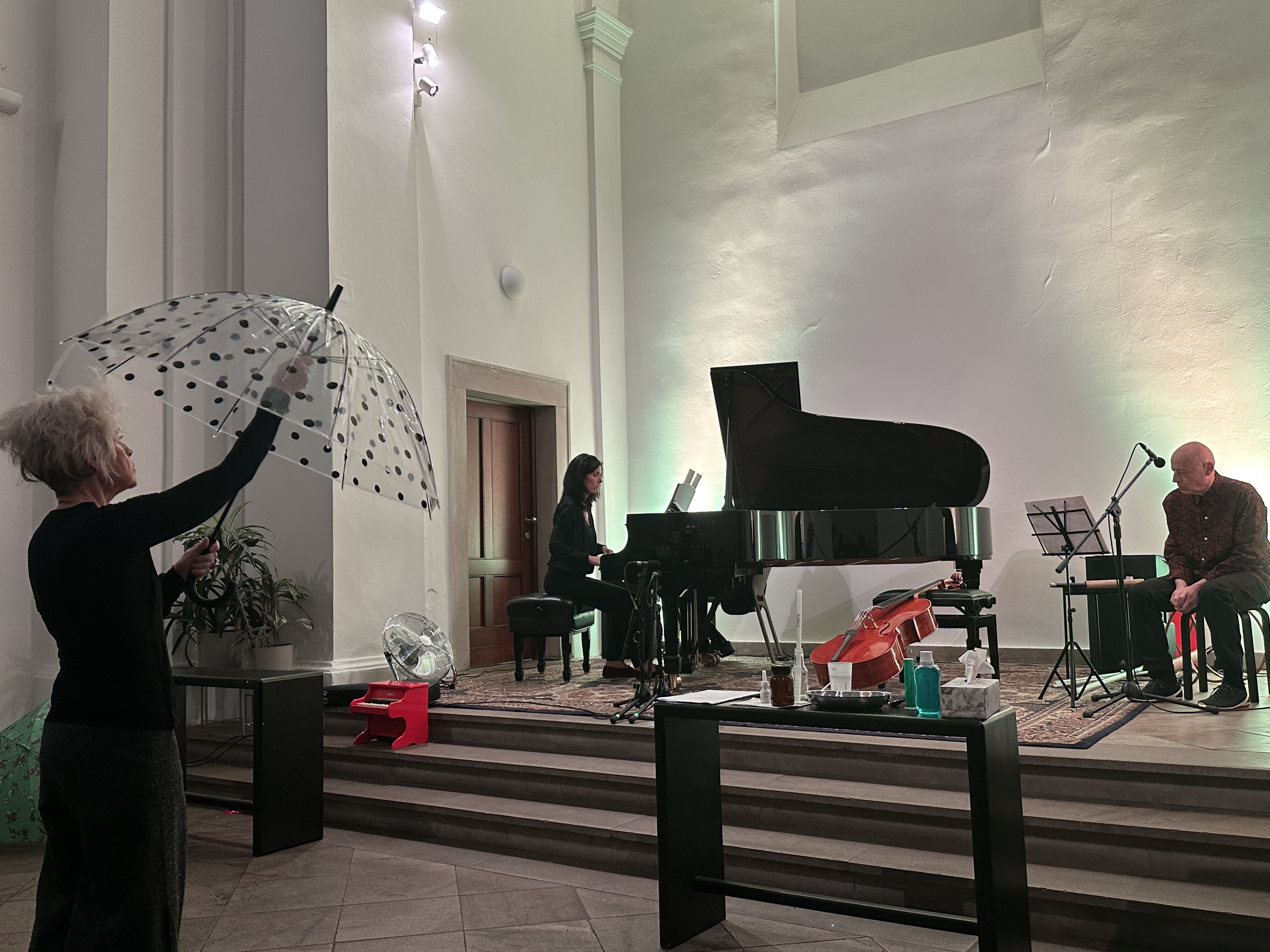
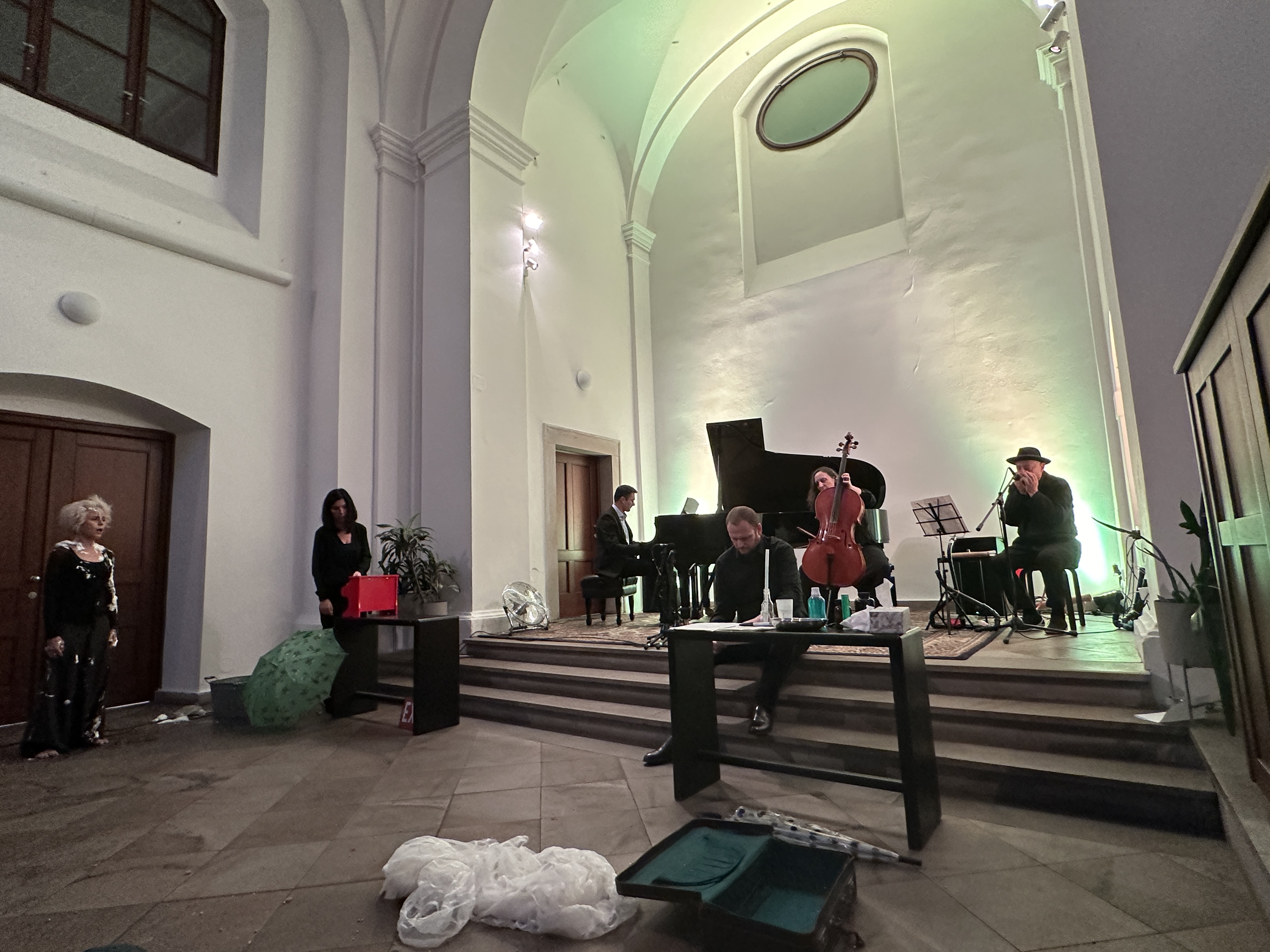
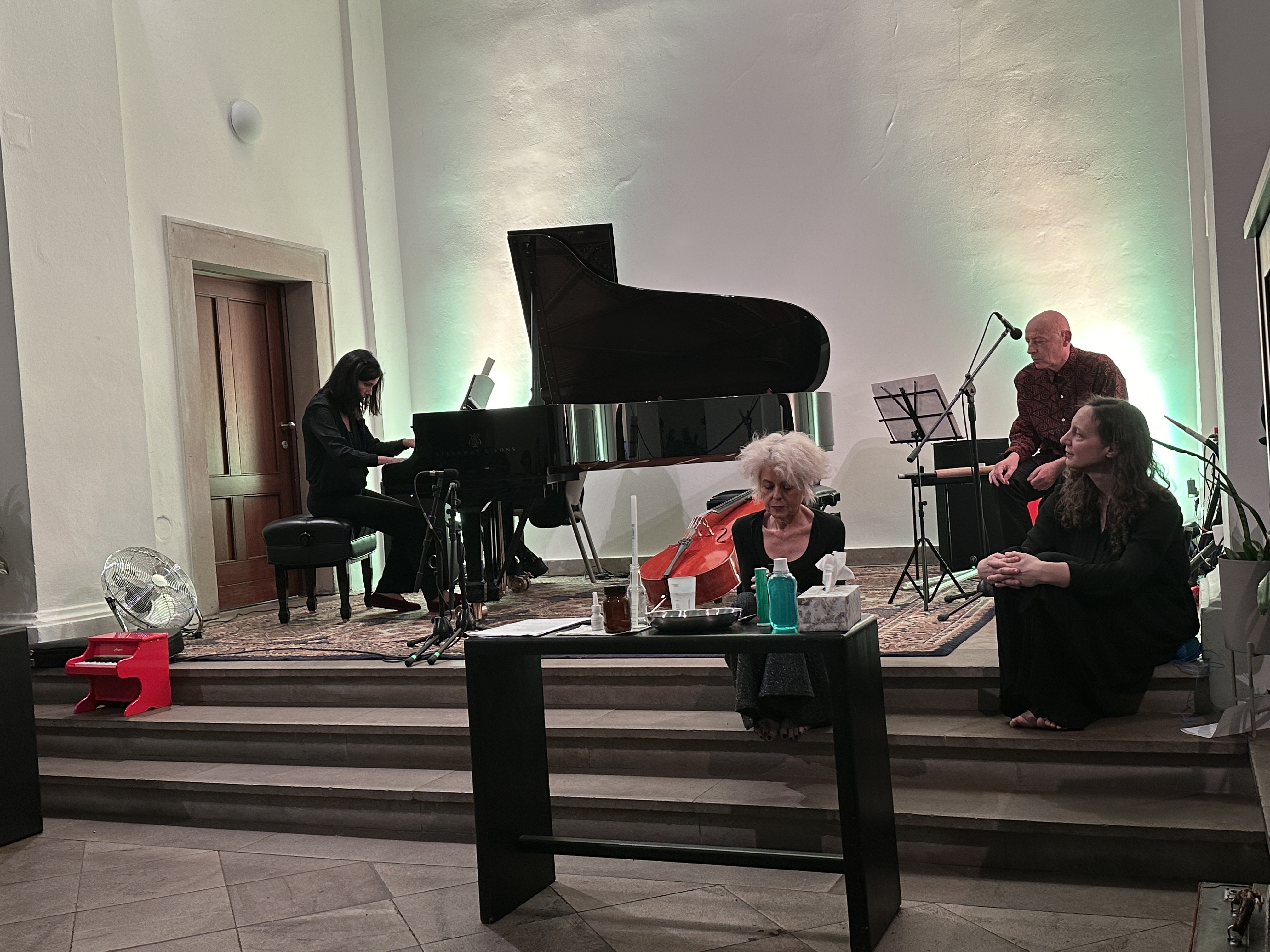
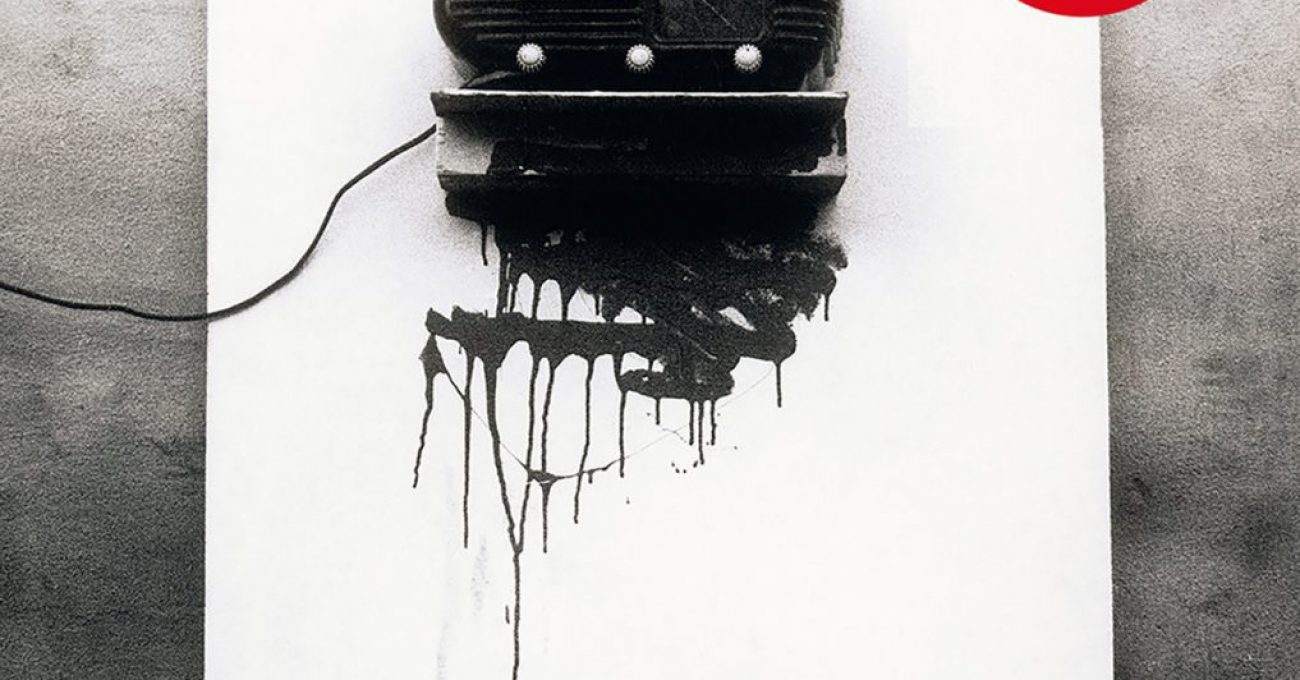
A nice new review out in prestigious Die Neue Zeitschrift für Musik n.2 of this year. Stefan Fricke writes about Sub Rosa release of the two volumes of the Fluxus&NeoFluxus Collection vol.1 and vol.2 :
“[…] Congratulations also to those who want to hear and read this; there is much to discover. A colorful compilation […] a collector’s edition that does not conclusively cover the subject, but rather invites further, more in-depth searching, finding, and doing it yourself. […] Let’s get started.”
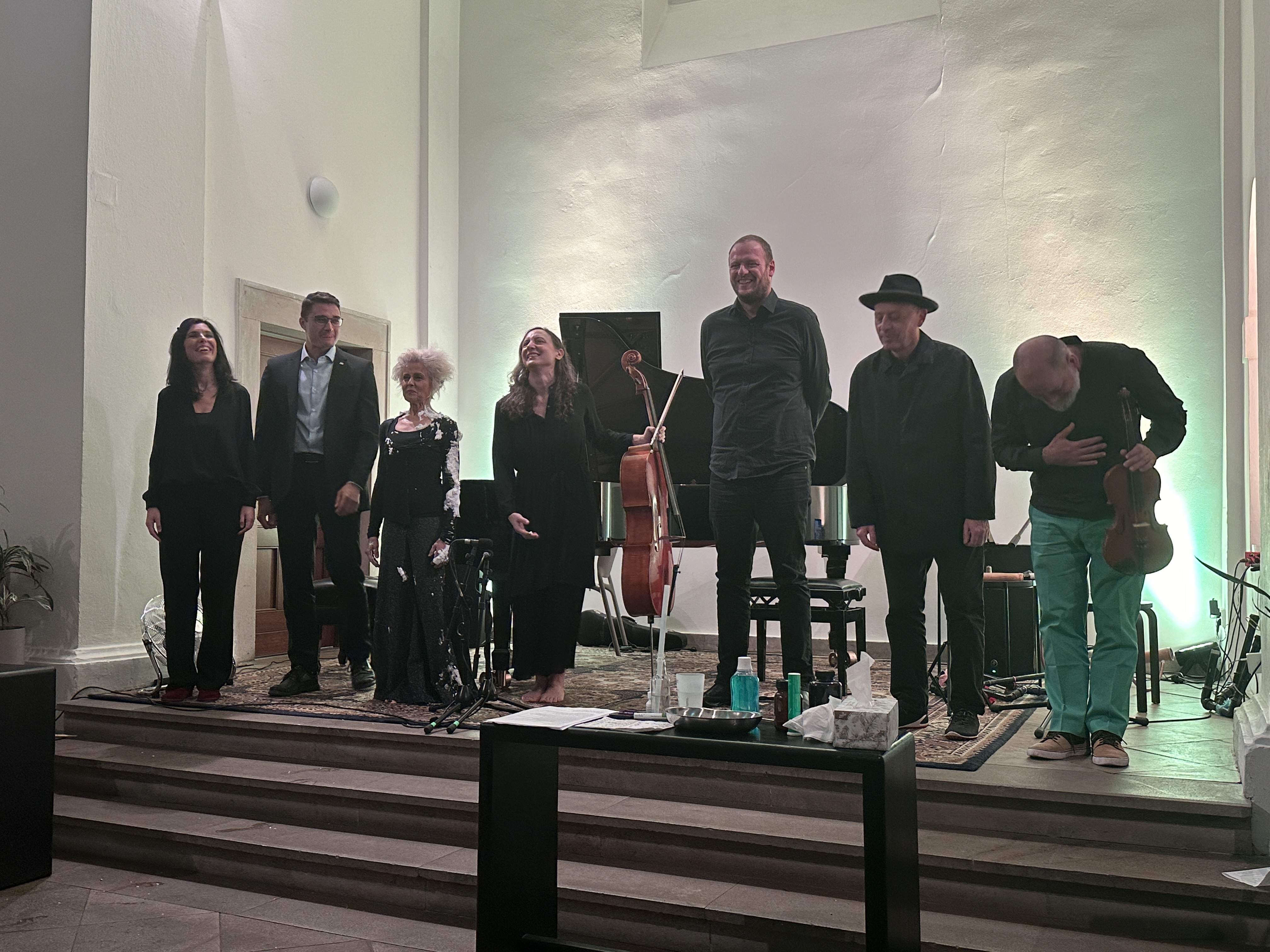
Ready to fly to Prague next week at Žižkov Atrium for LUXURY OF MIND = FLUXUS.
On the 28th November at 19.30
Anna Clementi (Germany, voice), Deborah Walker (Italy, cello), Luciano Chessa (Italy, Dan Bau, violin, organ), Werner Durand (Germany, wind instruments), Miroslav Beinhauer (Czechia, piano), Petr Bakla (Czechia, piano), Petr Ferenc (Czechia, spoken word) and me
will be ready to perform a quite unusual happening/concert with music by
John Cage, Milan Knizák, Henning Christiansen, Philip Corner, George Maciunas, Geoffrey Hendricks, Yoko Ono, Giuseppe Chiari, Terry Riley, Eric Andersen, Dieter Schnebel, Bengt af Klintberg, Mieko Shiomi, Ovvind Fahlström, Sten Hanson, Nam June Paik, La Monte Young.
I bet it will be fun!
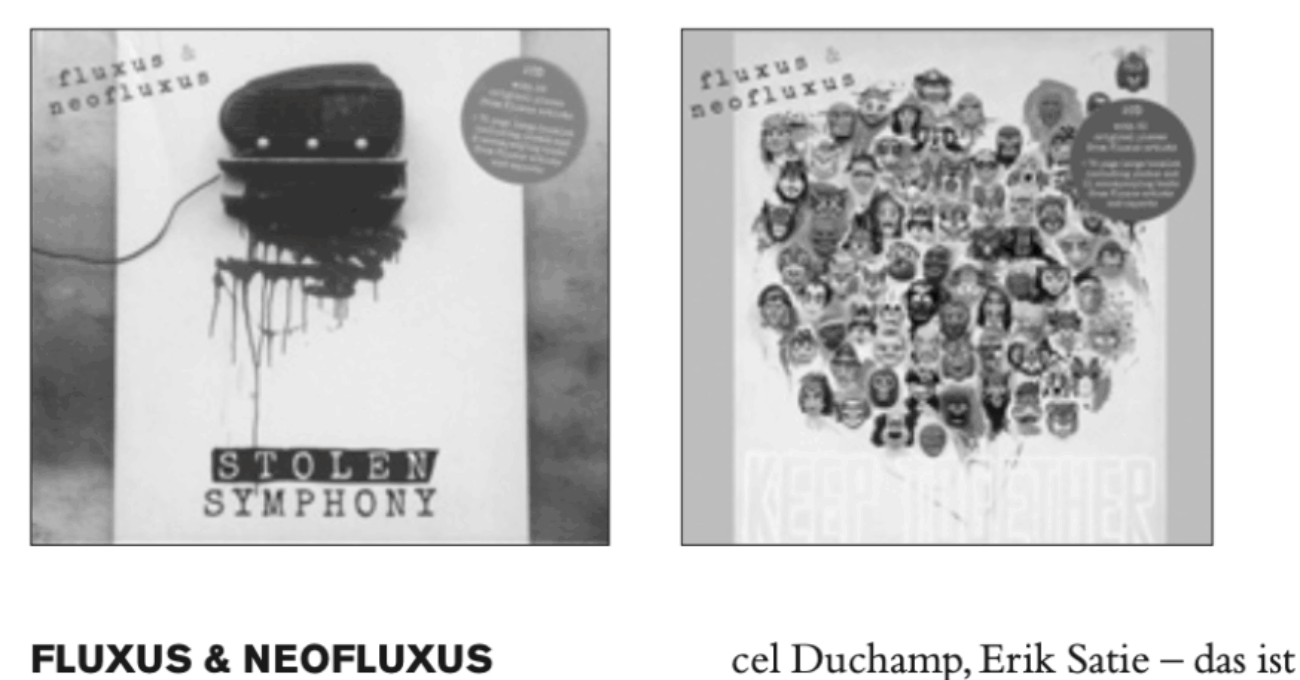
All started from an idea by Petr Studený and Opening Performance Orchestra in Prague, that led to the release of Stolen Symphony, the first volume of Fluxus&NeoFluxus collection, and now, brand new, to the second and final part, Keep together (Sub Rosa label, 2024). As the previous one, it’s a limited edition (400 copies) of double LP or double CD, with a very rich booklet with many texts and essays about Fluxus. But differently from the first, which is sold out, there are still copies available! I played a La Monte Young-inspired piece, and re-released music by Philip Corner and Giancarlo Cardini (also in Neuma Records and Da Vinci Classics). Very happy to be part of this second edition with all the musicians I will soon meet in Prague and many others.
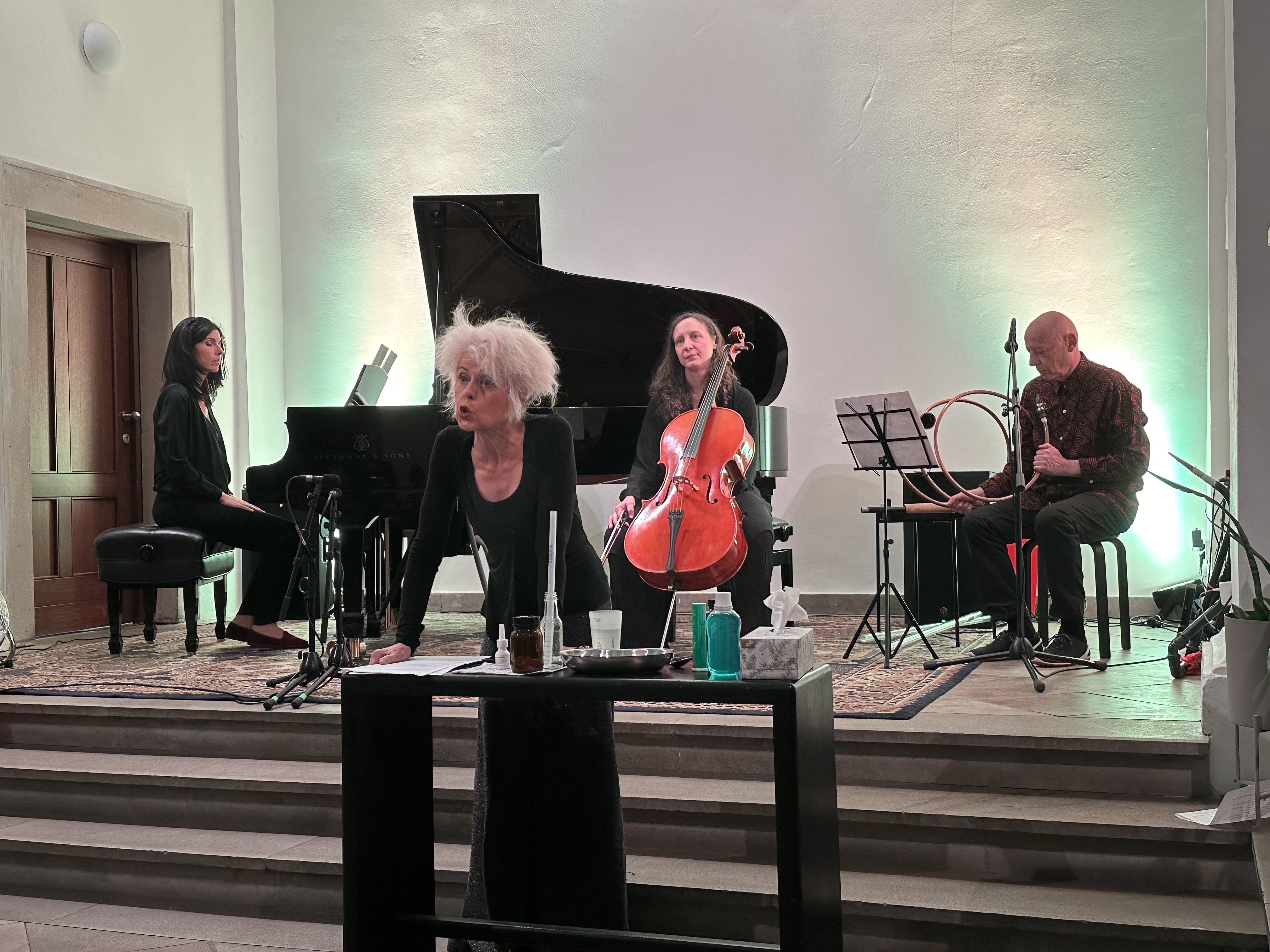
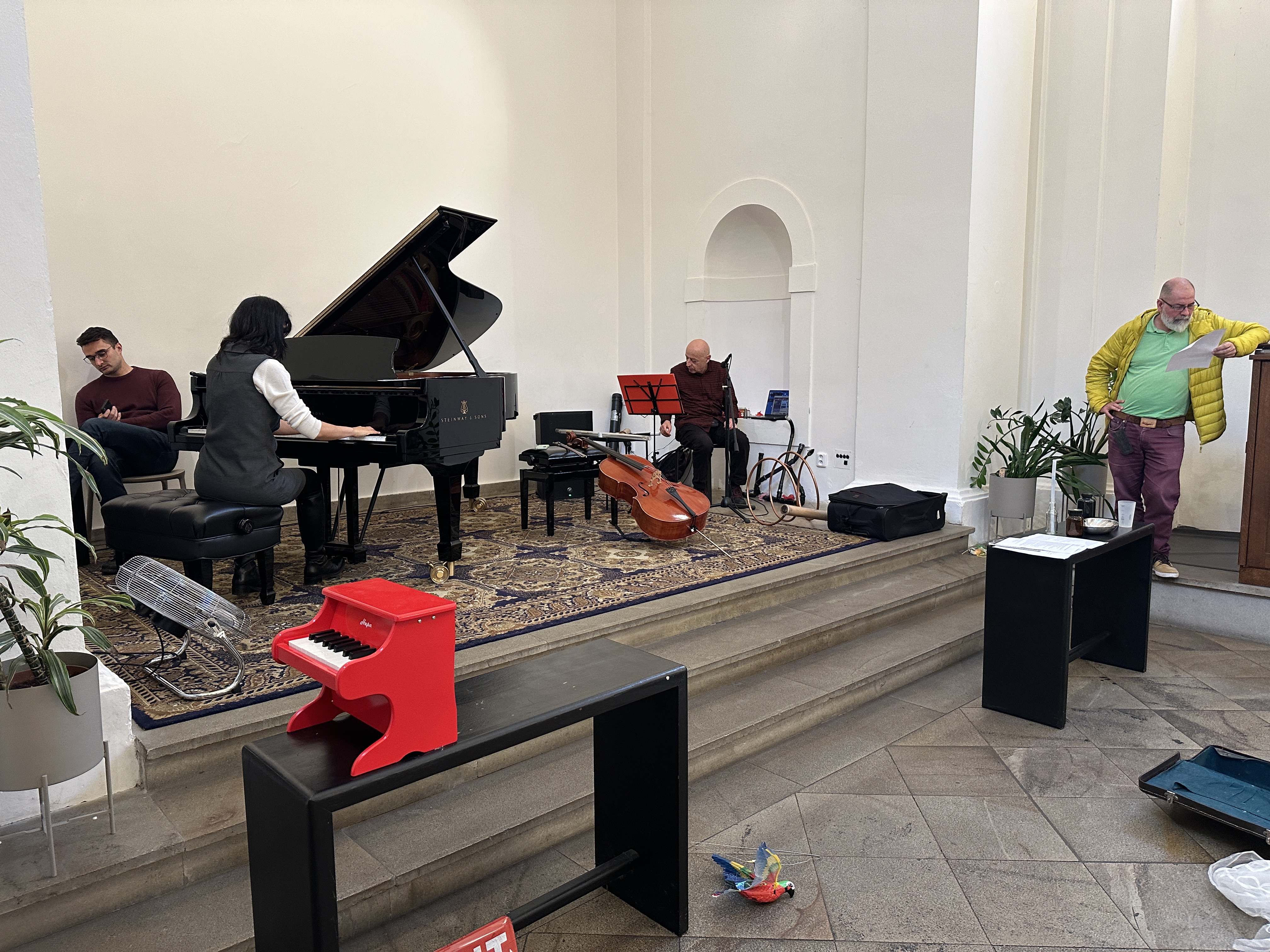
Some photos of the evening – almost three hours of music and performance! – and the rehearsals. Thanks to Petr Studený for the pics.
A couple of very nice reviews came from Germany this month: one on Glissando magazine about MaerzMusik performance in Berlin in March, the other published on the historical Schott music magazine Neue Zeitschrift fuer Musik (founded by Robert Schumann, it dates 1834).
Monika Zykla wrote an extensive review about all the events of MaerzMusik festival 2023 for magazine Glissando. That’s how she refers to Subtle Matters recital: “In the first part of the three-hour-long evening program titled Subtle Matters the Italian pianist and researcher, Agnese Toniutti, delivered a stunning solo piano recital that explored the sonic possibilities of the instrument „beyond its body” as described in the program. One of the highlights was Toniutti’s enthralling performance of Lucia Dlugoszewski’s four-part solo “timbre piano”4 composition, Exacerbated Subtlety Concert (Why Does a Woman Love a Man?) (1997/2000). This piece was juxtaposed with Tan Dun’s C-A-G-E, fingering for piano (1994), an homage to John Cage, and a selection of compositions for real and toy piano by the American composer Philip Corner. As in her solo album released in 2021 under the same title, Toniutti showed exceptional sensitivity and insight in her selection of the pieces. As a result, a fascinating dialogue emerged between Dlugoszewski and Dun’s compositions that further contextualized and situated Dlugoszewski’s music and aesthetics as part of the New York scene. It subtly referenced Dlugoszewski’s ambiguous and changing attitude towards John Cage as its most prominent and central figure which I read as a hint towards the question of why Cage’s silences were louder than the silences of others. Toniutti undertook an extensive body of research so that subtleties like this could surface and be signaled through music. Not to mention the amount of work she put into performing Dlugoszewski’s piece in the first place, despite the score being unavailable, as Toniutti explained in the program note.” You can read the complete article here.
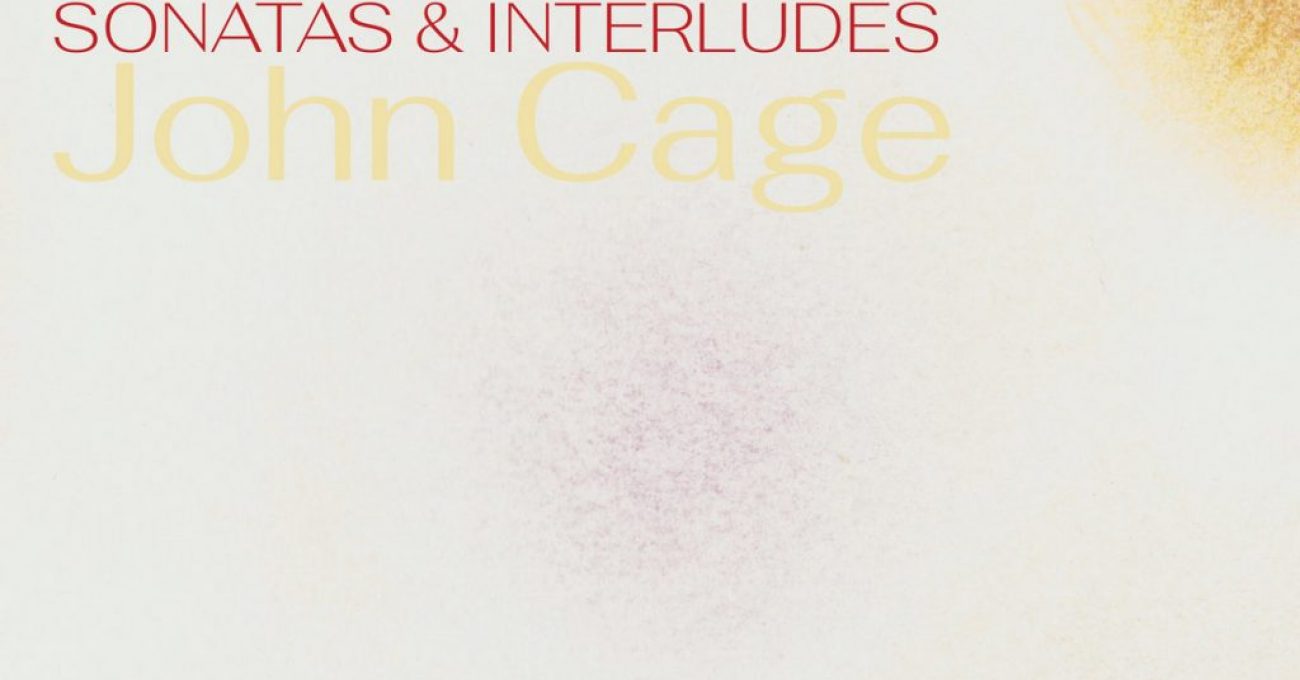
Jakob Böttcher reviewed Sonatas and Interludes for prepared piano by John Cage, released this spring on Neuma Records, on Neue Zeitschrift fuer Musik issue 2/2023. Here is the English translation, and below the screenshot of the original review in German. “Screws and erasers – in view of the unbelievably rich sound palette that unfolds, it is hard to believe that these are the only objects that John Cage opposes to the sublime piano as preparation objects. Even Cage himself noted that the sound result of the preparations can vary greatly depending on the instrument. With her version of the opus magnum for prepared piano, composed in 1946-48, the Italian pianist Agnese Toniutti has succeeded in creating an incredibly high-resolution and subtle recording, both in terms of interpretation and sound. Cage certainly did not call the one-movement miniatures, most of which are barely three minutes long, Sonatas and Interludes without a hint of irony. The symmetrically nested 16 sonatas and four interludes follow in their arrangement and form a stringency that continues in the musical text in the form of idiosyncratically angular rhythms and patterns. Toniutti understands how to implement the often mechanical character of the pieces with emphasis (she herself writes in the booklet that she understands it as her role to implement especially the tone durations as precisely as possible) and yet to recognize and emphasize the humanity, even a cantabile gesture, that they contain. Her fine pianistic agogic delivers an authentic and at the same time organical result. A similar dualism is found on the tonal level. The musical text and the preparation go hand in hand. The preparation evokes the machine-like character, in which the piano mutates into a real sound apparatus through the screws and erasers. On many recordings, the piano is almost unrecognizable behind these drum-like, often wooden sounds. Agnese Toniutti’s preparation takes a different approach and refreshingly does not hide the sound generator; with many notes the piano tones are clearly recognizable. Paradoxical – and ingenious – is the fact that the preparation sounds are not drowned out by this, but can even be experienced all the more intensely. Thus, Toniutti’s piano is uniquely balanced in reproducing the preparations in an exceptionally wide range of colors (the screws are obviously carefully selected and placed) and at the same time combining them with the familiar tones of the concert grand. The keys are always softly struck, even in the most machine-like conditions, despite the considerable dynamic reduction due to the preparation, which – as Toniutti notes in the booklet – often tempts one to play with more weight. The soft attack underpins the tonal fusion of piano tone and preparation sound. The high sound quality of the recording (sound: Marco Melchior) contributes decisively to the tonal brilliance, which portrays the grand piano very directly and yet warmly and spatially. Agnese Toniutti has succeeded in making an excellent recording of the Sonatas and Interludes, in which she coherently and nuancedly balances machine-like and human agogic as well as preparation and piano sound. The sound result is unique.
In the last couple of months two very interesting publications have been published about Fluxus, and I’m very pleased to have given my little contribution.
One is a double CD / LP in limited edition, Fluxus & NeoFluxus / Stolen Symphony (Vol. 1), by Sub Rosa label, enriched with a 72 pages booklet, full of texts, notes, images around Fluxus movement. Petr Studený and his Czech Opening Performance Orchestra had the idea to commission a collection of Fluxus recordings to some musicians devoted to this repertoire: Deborah Walker, Anna Clementi Ohlin, Werner Durand, Luciano Chessa, Miroslav Beinhauer, myself and several others. I contributed with new recordings of pieces by Mieko Shiomi (Direction music for a pianist, for spoken voice, piano and cardboards), Dick Higgins (Emmett Williams’ Ear) and (inspired by) La Monte Young (Composition 1960 #15), and some re-releases by Philip Corner and Giancarlo Cardini. But the entire first part of the collection features also music by Eric Andersen, George Brecht, Ay-O, John Cage, Giuseppe Chiari, Henning Christiansen, Öyvind Fahlström, Ken Friedman, Sten Hanson, Geoffrey Hendricks, Toshi Ichiyanagi, Joe Jones, Bengt af Klintberg, Milan Knizak, Alison Knowles, Larry Miller, George Maciunas, Sara Miyamoto, Nam June Paik, Yoko Ono, Opening Performance Orchestra, Benjamin Patterson, Josef Anton Riedl, Terry Riley, Takako Saito, Tomas Schmit, Dieter Schnebel, Yasunao Tone, Ben Vautier, Yoshi Wada. The release is listed among the ten Best Contemporary Classical on Bandcamp in May 2023, here is the link.
An other collector’s item, but above all a valuable study tool, as far as I am concerned, is the beautiful book/catalogue “FLUXUS 1962-2022 – SIXTY YEARS IN FLUX”, published after the big event/exhibition in Genoa dedicated to the 60th anniversary of the founding of Fluxus (Sept-Nov 2022). In addition to the images documenting the exhibit, which alone would be worth the catalogue by themselves, the book is full of statements, testimonies and interviews by Fluxus artists and scholars. It is edited by Caterina Gualco, who has devoted endless energies to promoting Fluxus movement in Italy since the 70ies, Francesca Serrati and Leo Lecci. Honoured to see the program of my September concert in Genoa at the end of the volume, designed by artist Mauro Panichella as all the other graphics of the event. The book is available at Museo d’arte contemporanea di Villa Croce in Genoa.
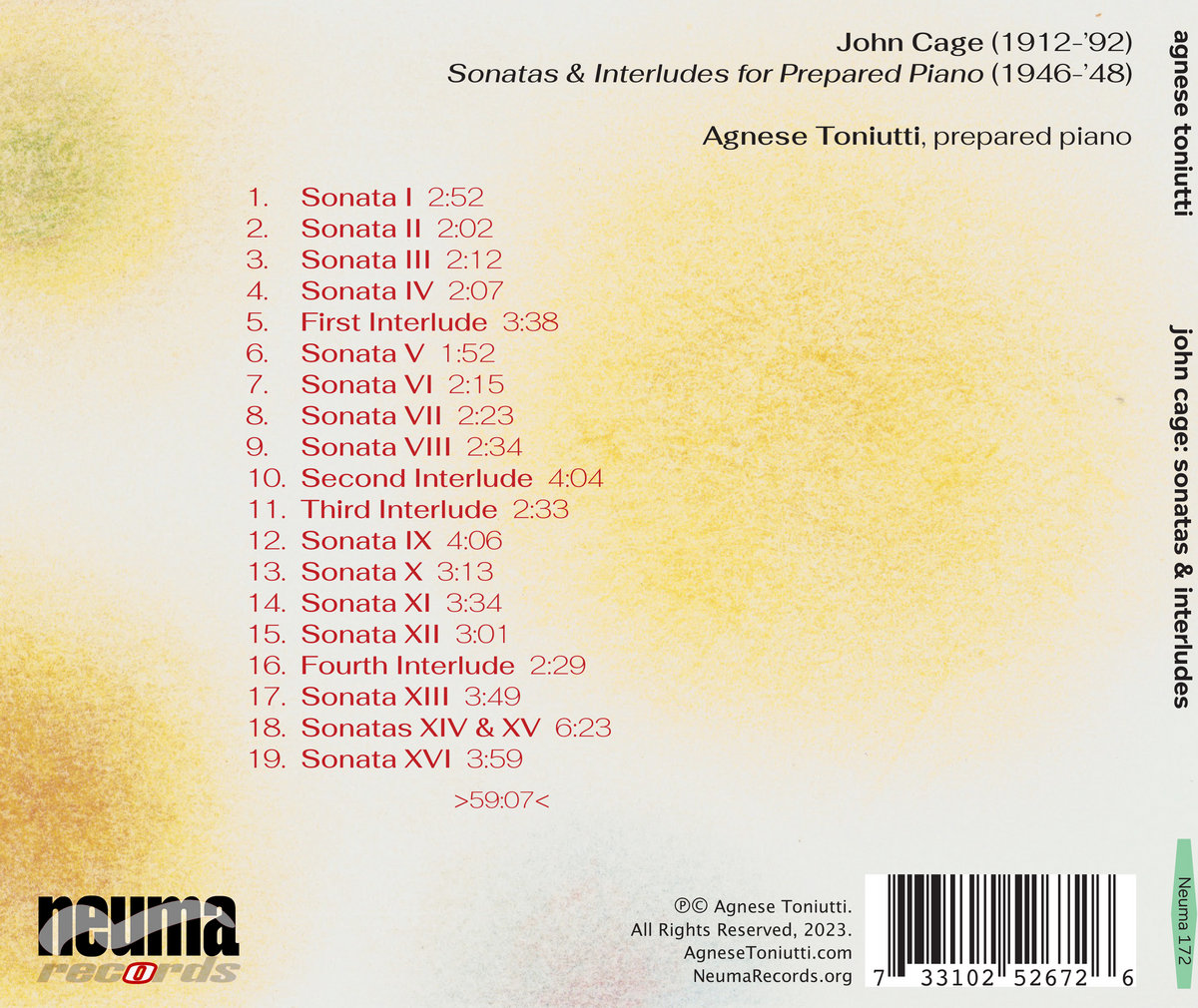
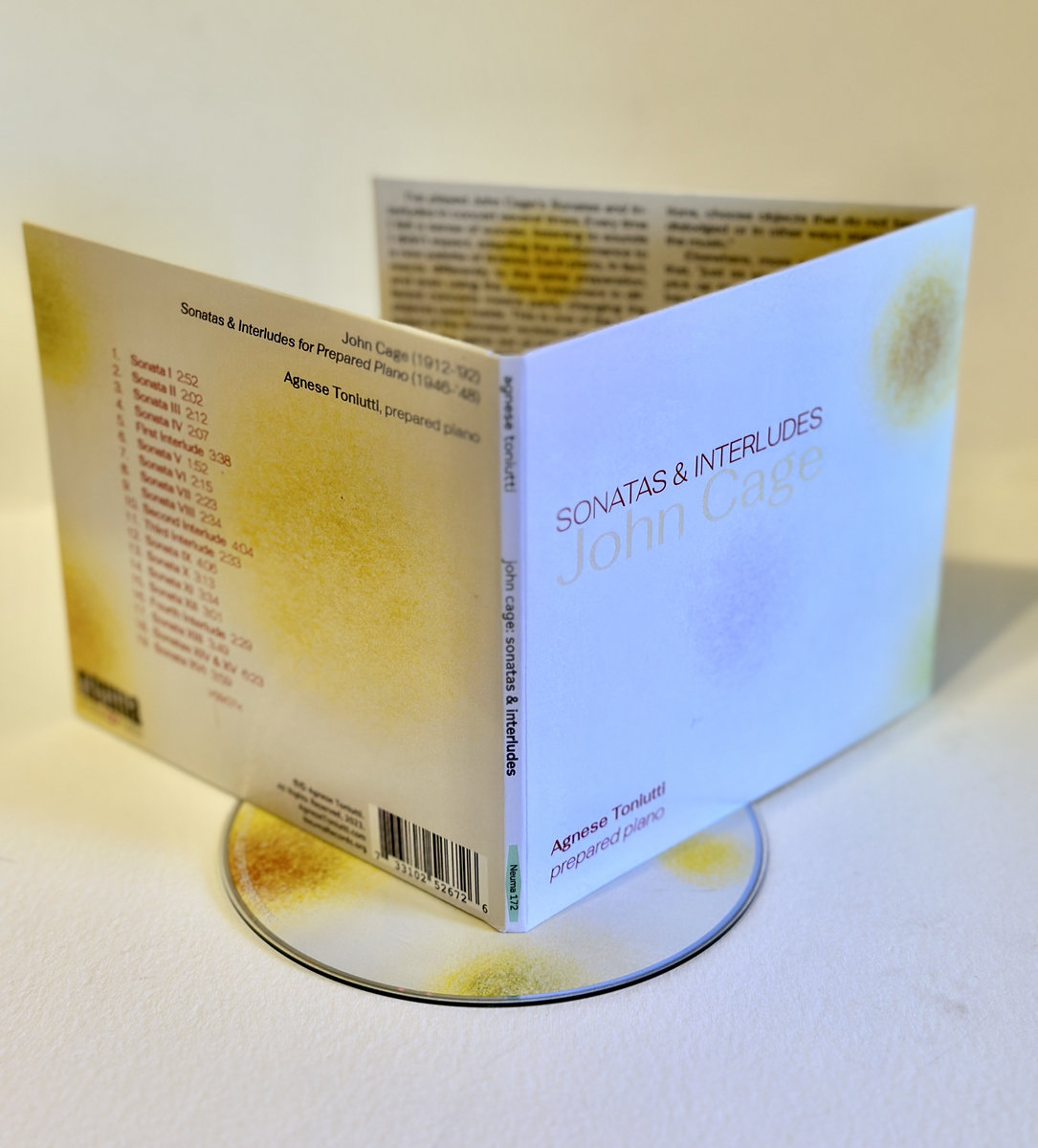
It is a great satisfaction to be able to announce this new Spring release (street date: March 17th, 2023), coming out after many years of performances of such a masterpiece as Sonatas and Interludes for prepared piano by John Cage. This achievement was possible thanks to a great team of professionals: Marco Melchior, always by my side recording, Erdem Helvacioglu, mastering, and Philip Blackburn, director and manager of Neuma Records label.
To have a physical copy come listen to one of my concerts or buy it on Bandcamp or on Neuma Records website (also digital download).
…a fresh look into the seven decades old music that both her playing and her musicological insights make as fresh as if the work had been composed last year.Rafael de Acha, All about the Arts , February 27th, 2023
The prepared piano was one of the legacies of composer John Cage, and this album with Agnese Toniutti gives a tribute to the iconoclastic sound and attitude. Is the listener prepared for the prepared piano? George W.Harris, Jazz Weekly, February 27th, 2023
The sound of the work has something special, different from many other editions of this repertoire… we have reason to believe that Cage would have appreciated this magical playful “humus.” Needless to note Toniutti’s executive gracefulness, which blends with that precision of accent inescapable in the most “antipianistic” pianism of the 20th century, devoid of emphasis, restored to a welcoming, almost meditative dimension. Marco Maria Tosolini, Il Gazzettino, March 8th, 2023
Agnese Toniutti, among the greatest “performers” of contemporary classical music, interprets to perfection this summa of modern culture… And the pianist, in approaching the instrument, opts for the wonder of intonation and the delicacy of timbre. Guido Michelone, Alias – Il Manifesto, March 18th, 2023
Certainly there’s much to admire in the Italian pianist Agnese Toniutti’s centered rhythm, rich palette of dynamic nuances, and her sensitive textural delineation…Toniutti unquestionably conveys the music’s roots in dance, as well as Cage’s subtle humor. Her intelligent, well-written booklet notes discuss both the music and the process of getting it ready for performance.
Jed Distler, Classics Today.com, April 3rd, 2023
This is a very enjoyable recording whether it is to be a collector’s only recording of this music or one that stands most favorably in comparison to previous recordings. If this is to be your first recording of this work or if you simply want to hear another interpretation, you will not be disappointed. This is a wonderful performance. […] Keep your eyes and ears open for Agnese Toniutti, an advocate for and a master of the avant garde.
Allan J.Cronin, New Music Buff, April 14th, 2023
…That is why this interpretation by Toniutti is sensational. We are listening to a Martian instrument; the technologization of the old piano is extreme and detected. Then there is the anti-solemn attitude of this performer who manages to bring to mind the amiability of Cage in the midst of games (also paradoxically evocative of the Baroque) that seem to take place among laboratory machines and not in front of the most matronly and bourgeois of keyboard instruments. Mario Gamba, Alias – Il Manifesto, April 22nd, 2023
From the booklet of Sonatas&Interludes, Neuma Records
Despite we’re definitely living in “interesting times”, as Venice Biennale 2019 seemed to foresee, music finds its way. My new recording Giancarlo Cardini: Lento trascolorare, piano music is finally available on line at Da Vinci Classics website, and from June, 12th on digital distribution (iTunes, Amazon, etc) and in store. On the playlist four unreleased pieces, “Via del Fico, Firenze. Una piccola strada disadorna, silenziosa, quasi immota, arida e bella” (2011), “Tre momenti di sessualità infantile” (2007), “Terza Fantasia, ad Agnese Toniutti” (2018) and a new version of “Foglie d’autunno lentamente trascolorano” (1983, rev. 2018), together with the fascinating “Rituals for the Ryoanji Garden” for piano, gong and voice (2012) and “Una notte d’inverno” (1982) (preview here and below). The booklet offers a writing by Giancarlo Cardini himself about his music. On the cover a picture by Enzo Della Monica taken during one of Cardini’s performances in the 80ies, part of the artist book Bolle di sapone/Soap bubbles (G. Cardini – Bolle di sapone, Centro Di, Firenze 1991). Inside some shots by the photographer Alberto Moretti. The piano is a Steinway & Sons B-211 dated 1890, restored by Steinway Academy technician Lorenzo Cerneaz, with a magnificent sound, rich in resonance. It’s a joy to finally see the first public (virtual but real) appearance of a project about music that I love. Let’s hope these sounds will have a long life, generous as they are in peaceful colours!
“… there is a (contemplative) process absorbed with the rational calmness of those who practice the voluptuousness of critical thinking. […] And Toniutti is really good at returning these impressions and sensations.” Mario Gamba, Alias – Il Manifesto, 16/5/2020
“Beyond time and space. […] spirals of enchanting repetitions that run alongside the silence, of expressive modesty in peace with the world. These Zen meditations progress lightly away from the care of the present, with a placid, ceremonial step, even without ever really advancing towards a specific goal. […] the album is in all respects (Cardini’s) portrait, light, intimate […]” Gregorio Moppi, la Repubblica, 15/6/2020
“Giancarlo Cardini, the unrepeatable moment – Pianist Agnese Toniutti in Lento Trascolorare reads with extraordinary depht piano compositions by the Tuscan composer”. Review and interview by Paolo Carradori , il Giornale della Musica, 2/7/2020, (article in italian)
“… pages […] that the virtuoso pianist Agnese Toniutti expresses enphasizing the lyrical constructivist scattered between note and note.” Guido Michelone, Alias – il Manifesto, 11/07/2020
“Giancarlo Cardini/Agnese Toniutti, Lento trascolorare piano music Cardini entrusted to play some of his composition pianist Agnese Toniutti, who gave evidence of extraordinary accuracy and depht, capable as few others to recognize and enhance the implications and nuances of Cardini’s thought.” Enzo Boddi, Musica Jazz, 12/07/2020 (italian)
“For Cardini’s 80th birthday, a critical contribution and a review of Agnese Toniutti’s cd […] Toniutti is good at grasping the very slow transfigurations, the subtle nuances, highlighting mottled dissonances or sweet consonances, the evocation of nature, the sense of mystery, the rituality of the gesture, returning us in a ‘cardinian sound’, possible only if the the interpreter adheres with participation to a completely personal and vaguely arcane (musical) world like that of Cardini’s music. An excellent example of how it should work.” Renzo Cresti, www.renzocresti.com, 25/07/2020
“[…] it’s up to the interpreter – the talented pianist Agnese Toniutti – to bring out the most minute details and the most hidden expressive nuances, jealously guarded, but still eager to be shared with the listener.” Filippo Focosi, Kathodik, 15/10/2020
Beginning of Autumn dedicated to the music of Giancarlo Cardini, working with the composer himself and recording in studio on a marvellous resounding Steinway B dated 1860, restored by Cerneaz Pianoforti – Official Steinway Dealer. The recording, including three unedited pieces, will be released at the beginning of 2020. Below, the inspiringly silent view from Cardini’s studio, in the Tuscan countryside, and some pics from the recording session (thanks to Luca Piovesan, sound engineer and… photographer.)
The view (and silence) of Tuscan countryside from Cardini’s studio
Playing the marvellous Steinway B dated 1860, restored by Cerneaz Pianoforti…
…and the impressive gong by AltrOnde/Stefano Dalan. Plenty of beautiful sounds!