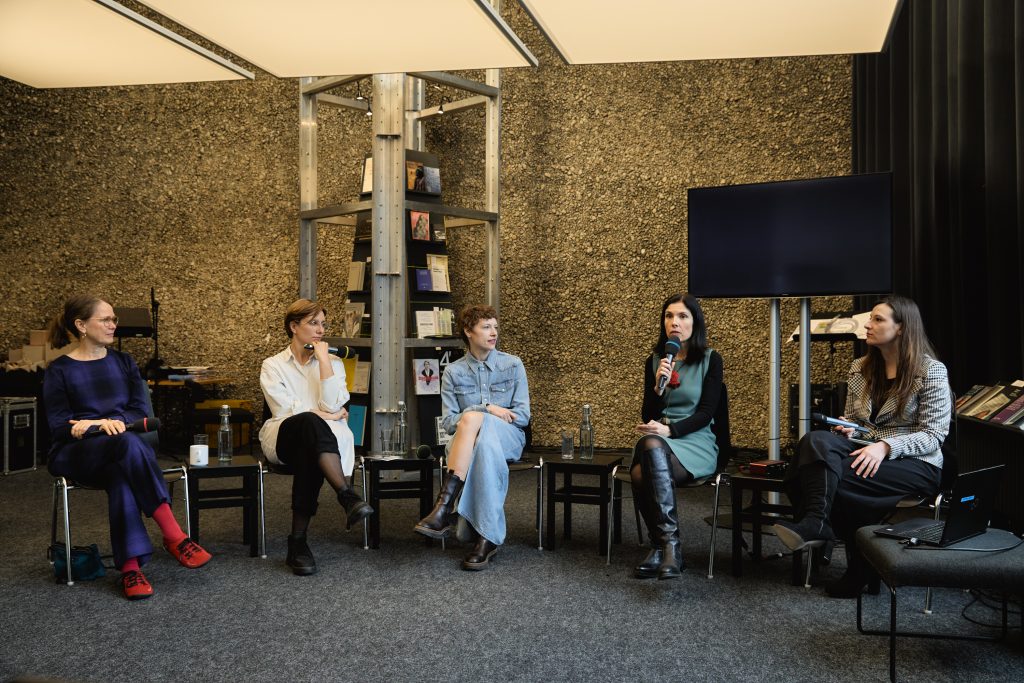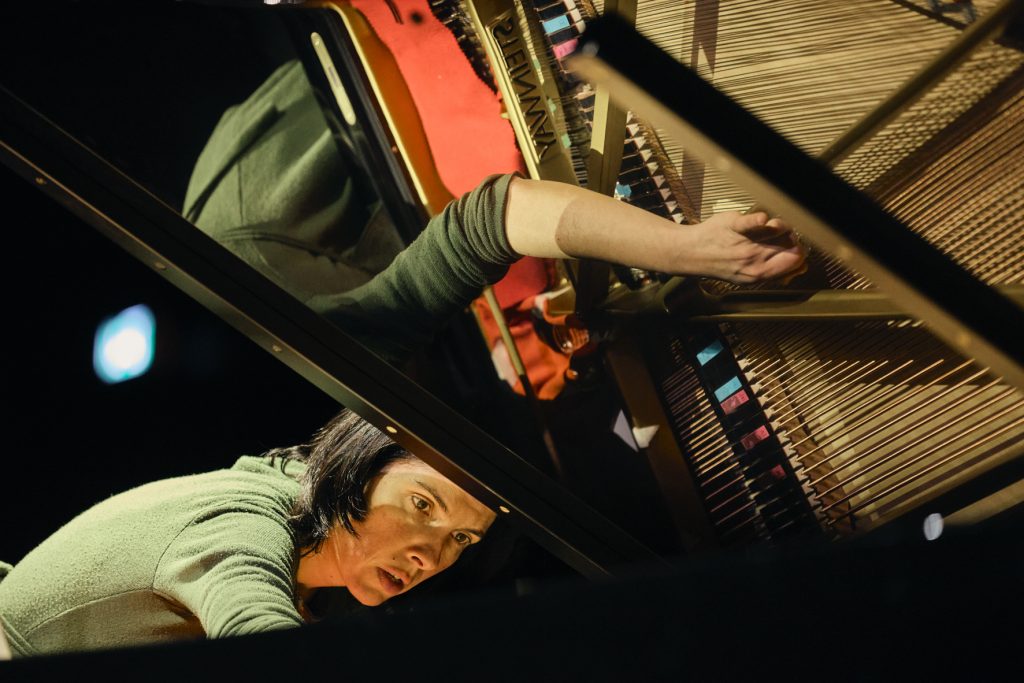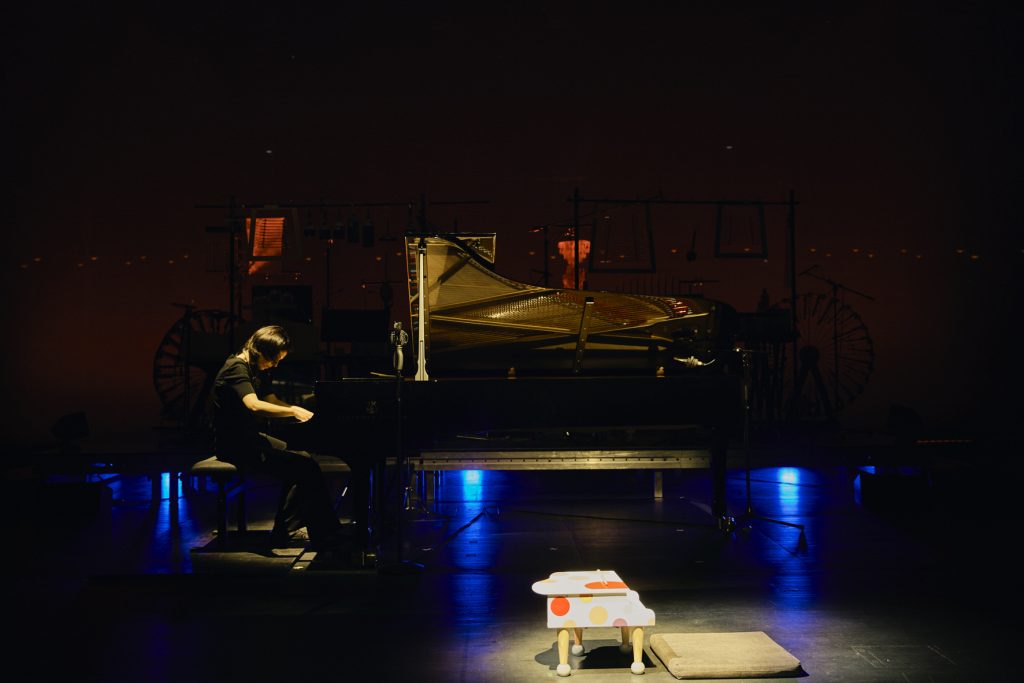

MaerzMusik collaborative project “Contemplations into the Radical Others”, dedicated to composer Lucia Dlugoszewski, was not only a precious occasion to listen to and perform her music. It gave us the opportunity to share the extensive research done so far, and gather together with people equally motivated. The Library spaces hosted several theoretical interventions in the form of talks, gently led by musicologist Monika Zyla and warmly open to the public. After the official presentation of the project, as an introduction to ensemble Musik Fabrik’s concert at Radyal System on the 20th, I’ve been included in the conversation “Ensemble Perspectives on Performing Dlugoszewski’s Music” with hornist Christine Chapman and conductor Lilianna Krych on the 21st March at Berliner Festspiele.
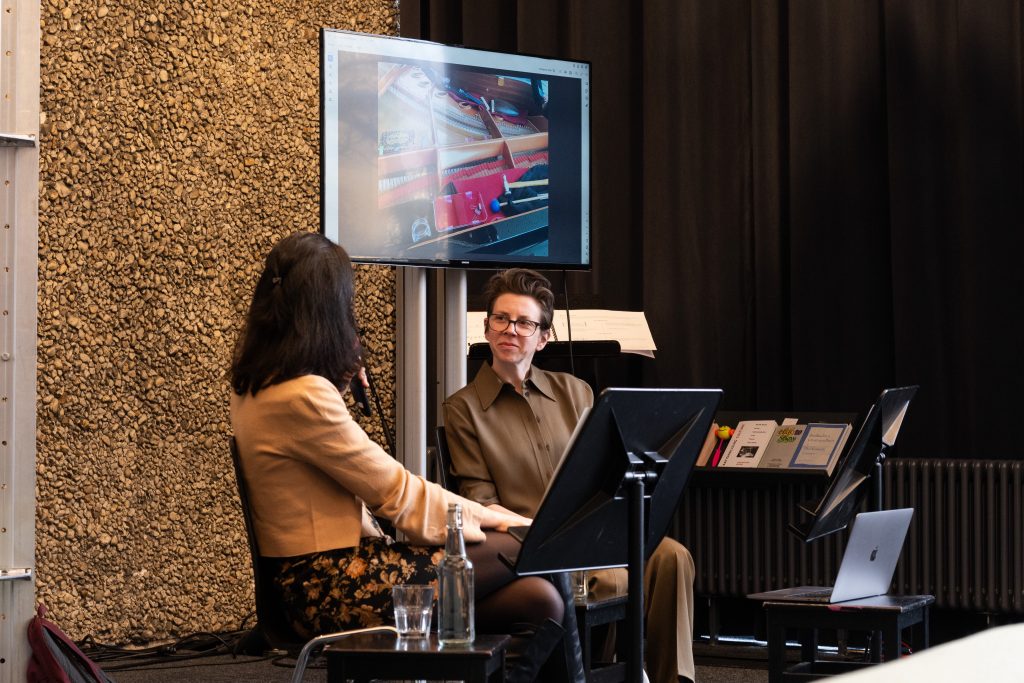
Saturday 23rd was the day of the performative lecture “Problem as Possibility: Dialoguing with Dlugoszewski’s Scores” with musicologist Kate Doyle, PhD.
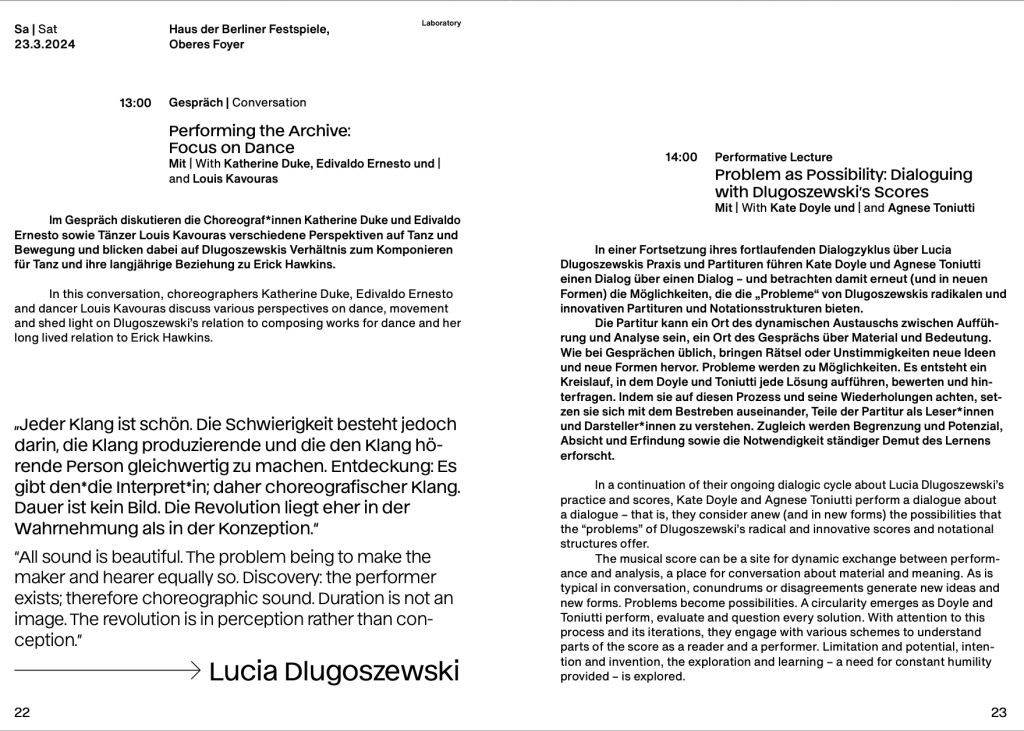
From MaerzMusik Library booklet.
Kate is a very sharp and creative mind with whom I had the pleasure to collaborate from the very beginning in my research on Dlugoszewski. Our time spent in conversation and reflection was and still is a constant opportunity to deepen my knowledge, on the composer’s ouvre and in general. For MaerzMusik Symposium we decided to use our article published in Contemporary Music Review as a starting point for a further dialogue where we could collect the new elements emerged so far. The form of dialogue characterizes our exchange and is particularly fitted to an approach to Dlugoszewski’s work. We did this “in performance”, orchestrating a form with structure and openness, as the composer’s piano works often do. While preparing our intervention, we notated our ideas in a visual form, and Dlugoszewski’s visual maps and notes often came to our mind. Here you can see an extract, published in MaerzMusik Zine as a presentation:
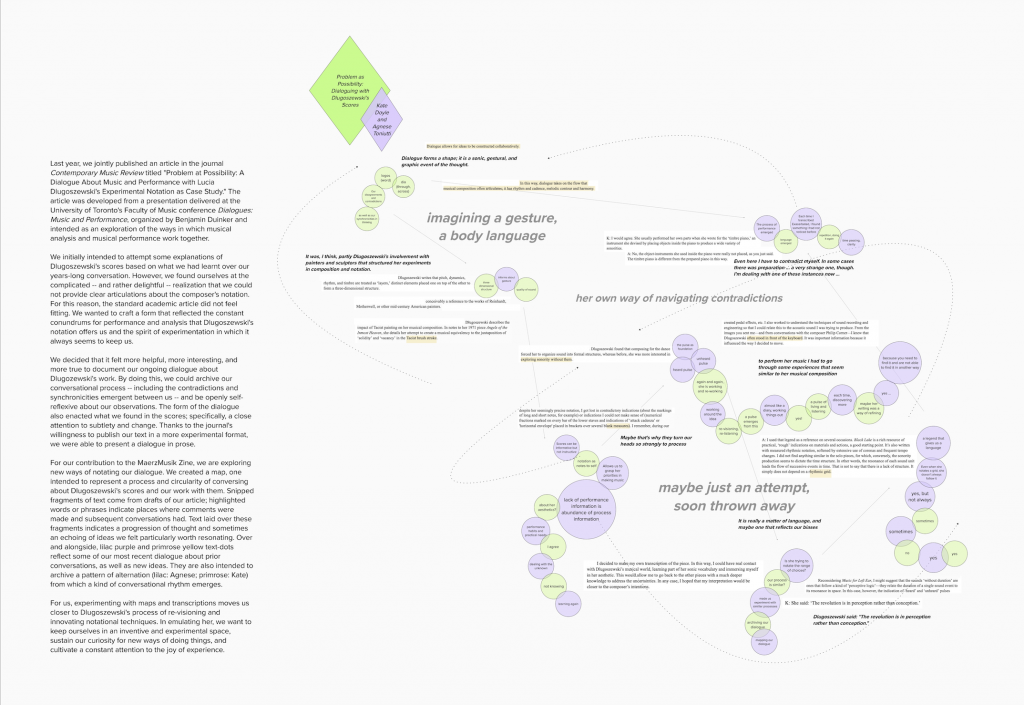
Doyle-Toniutti lecture presentation for MaerzMusik Zine
Once more, our research on Dlugoszewski, instead of giving us certainty of answers, brought us directly into the experience of processes. Which is much more fun.
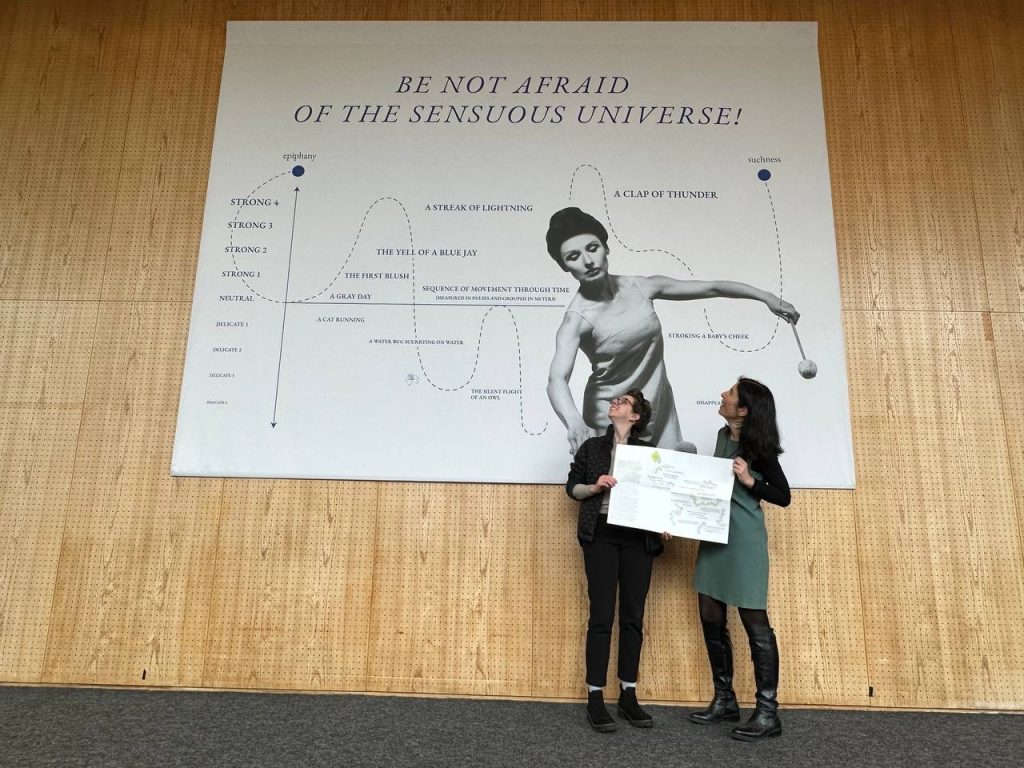
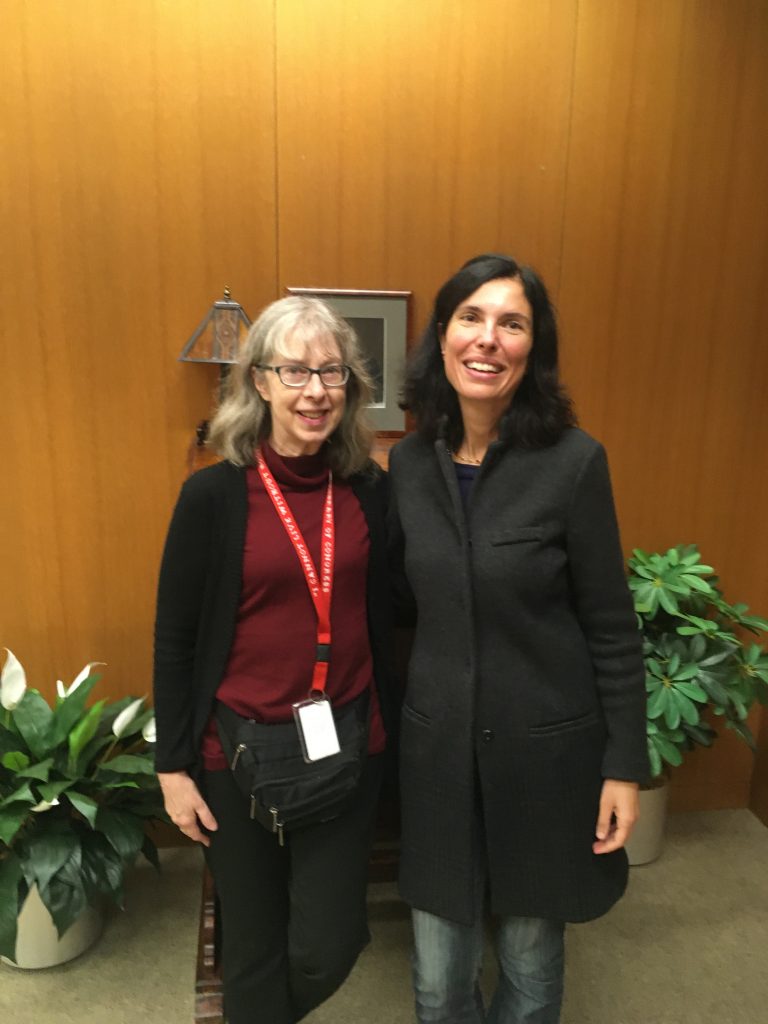
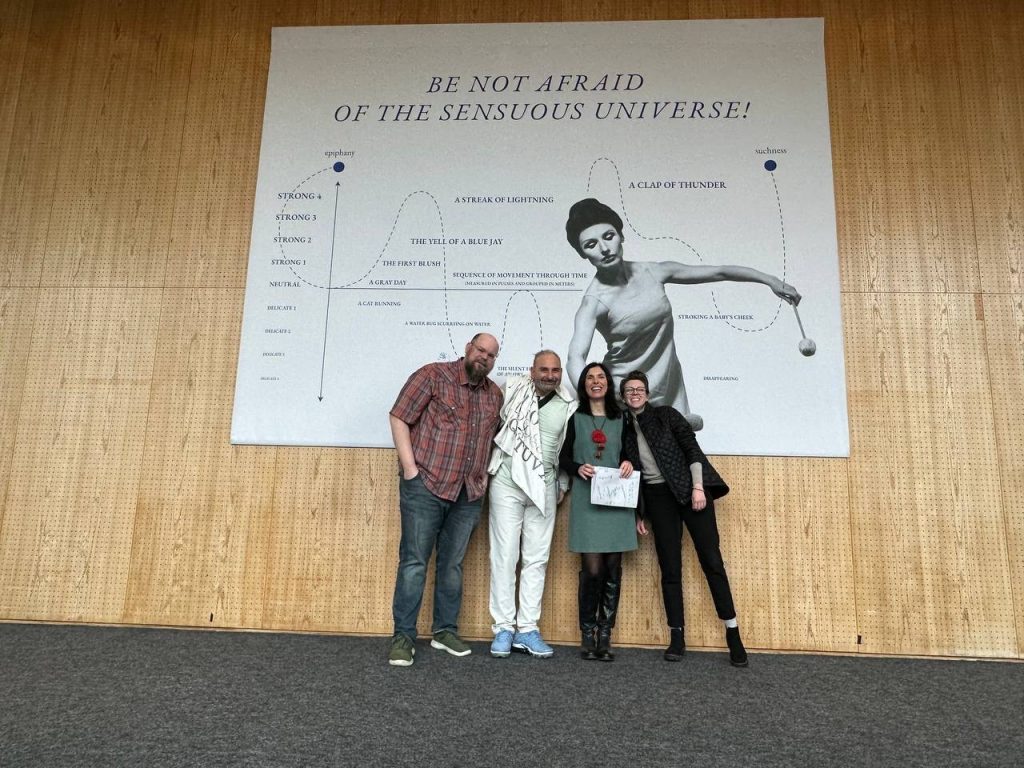
Here are some nice pictures taken under the impressive graphic reproducing Lucia Dlugoszewski’s dynamic scale map (take a look at this). You can see curator and researcher Dustin Hurt, Hawkins archive curator and long standing company member Louis Kavouras and musicologist Kate Doyle. Thanks for the pics to Ly Thien Co Friedrich, our guardian angel of production.
Dancer and choreographer Erick Hawkins and composer Lucia Dlugoszewski met in 1952, soon after the foundation of Hawkins own dance company. Hawkins danced before – first male dancer – in the company of Martha Graham. Hawkins explains in his writings the importance of music – live music – in au pair connection with dance and its “free-flow” movement. I already read all this and was excited to experience it with my hands and eyes working with dancer and choreographer Katherine Duke, former assistant of Lucia Dlugoszewski and actual director of the Hawkins Dance Company in New York. In fact Dlugoszewski, composer in residence of the Dance Company, took over the direction and even choreographic duties after Hawkins’s death in 1994. But, as long-standing Hawkins company dancer and Hawkins archive curator Louis Kavouras pointed out during our stay in Berlin, she was choreographing all the time even before. This was an interesting statement especially in relation with all the materials I saw at the Library of Congress. Maybe Dlugoszewki’s mind set was “in tune” with movement as much as with sound…
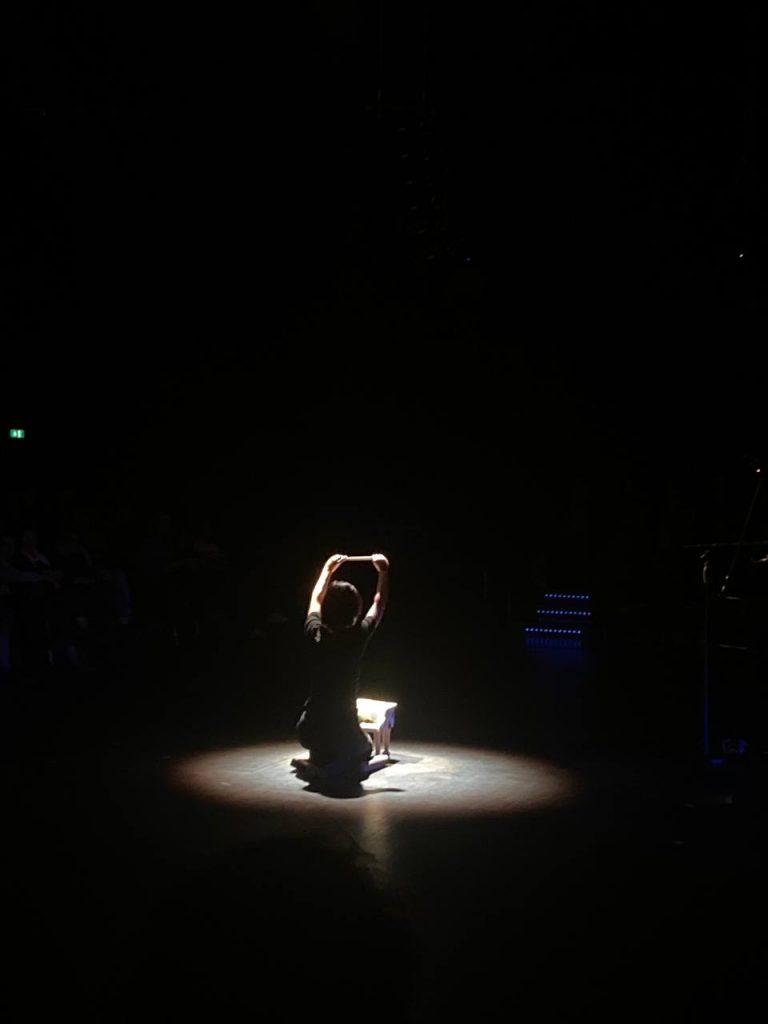
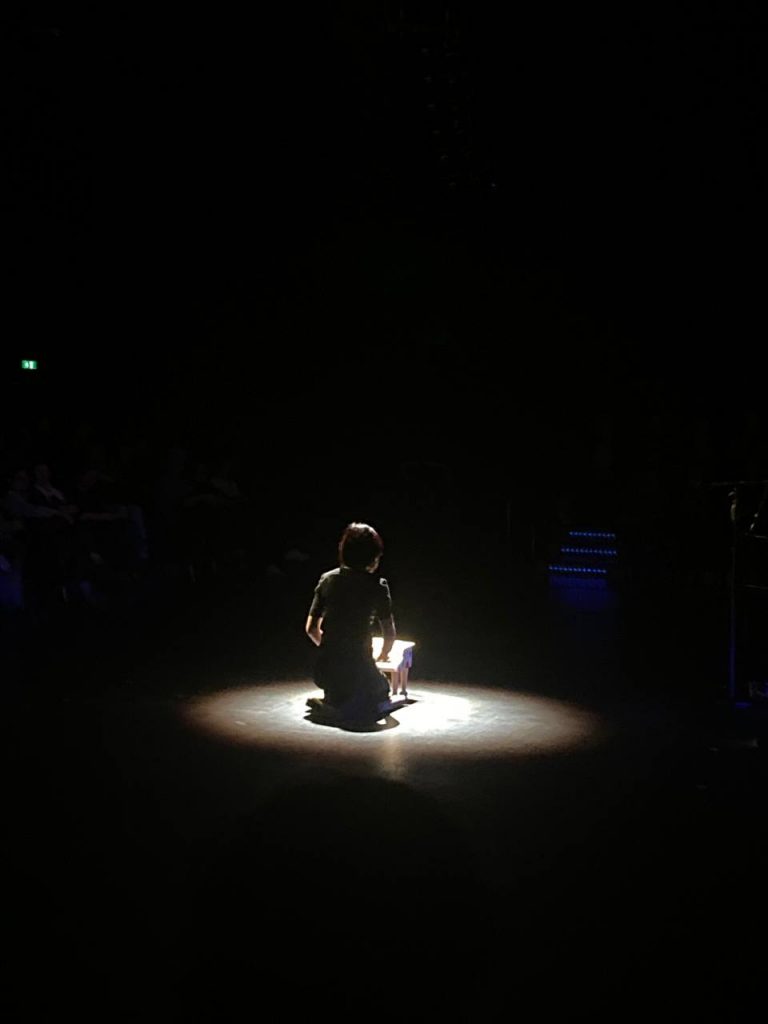
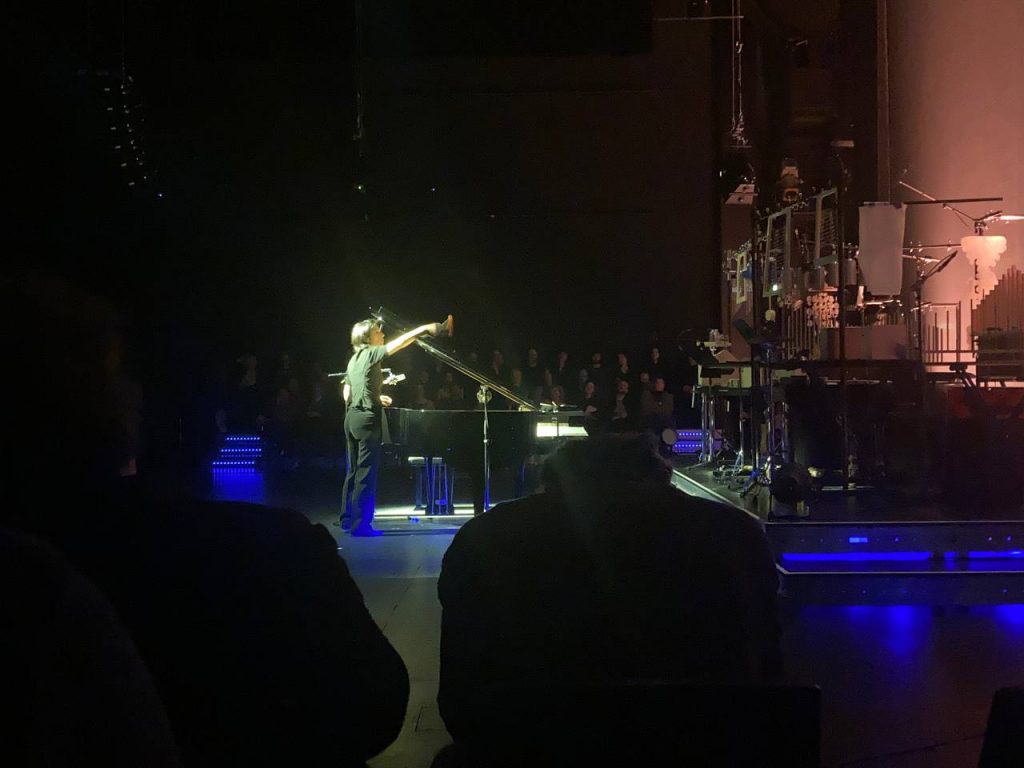
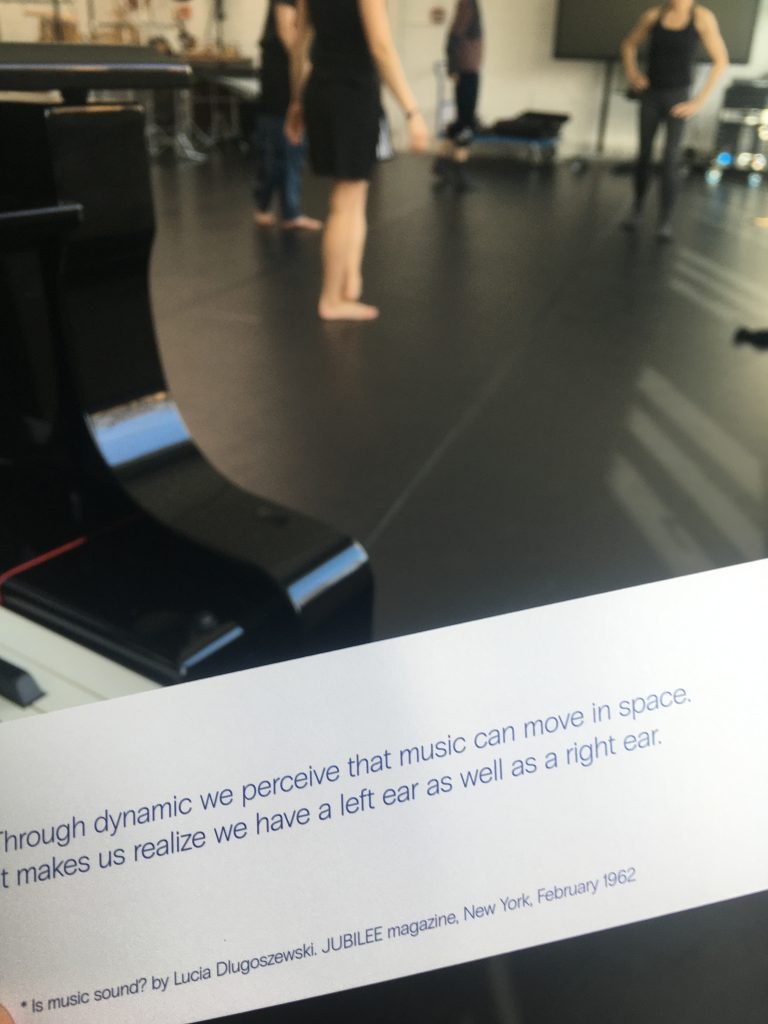
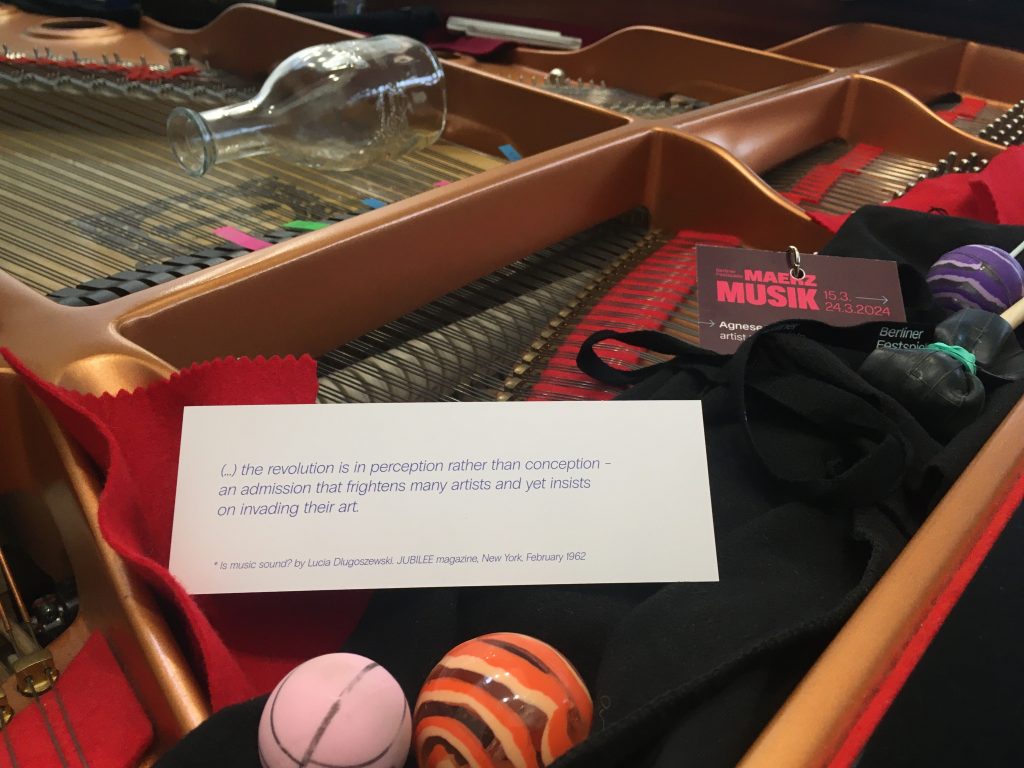
During rehearsals. This is one of the statements quoted by Dlugoszewski’s writings, a nice “cadeau” by MaerzMusik Festival.
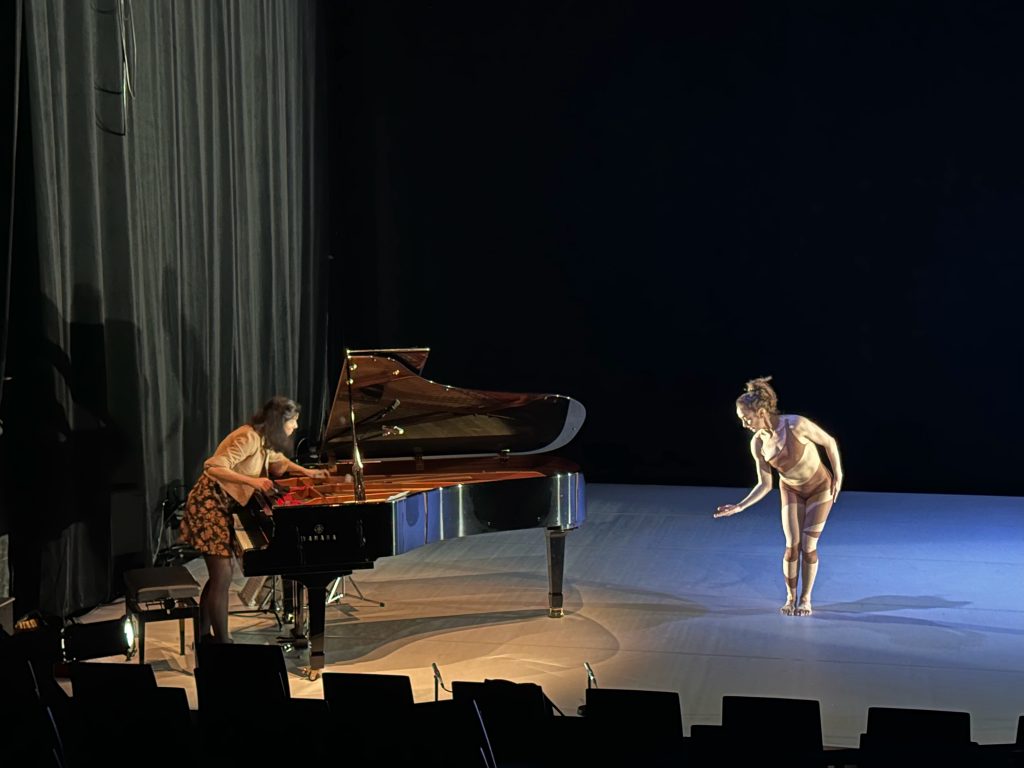
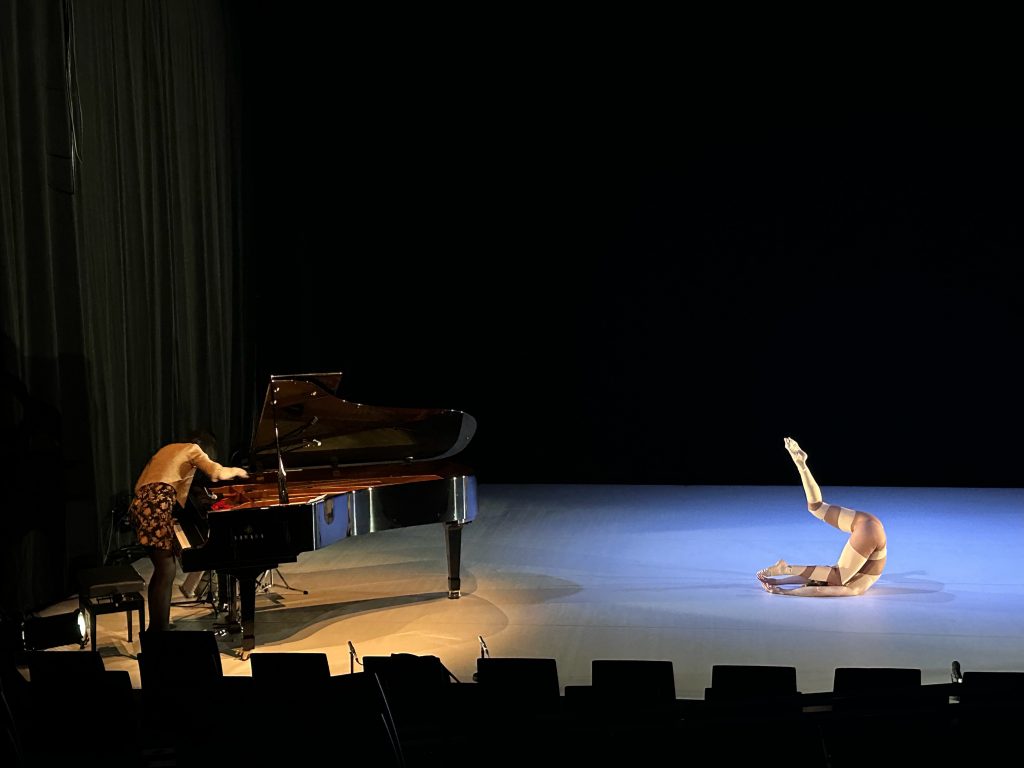
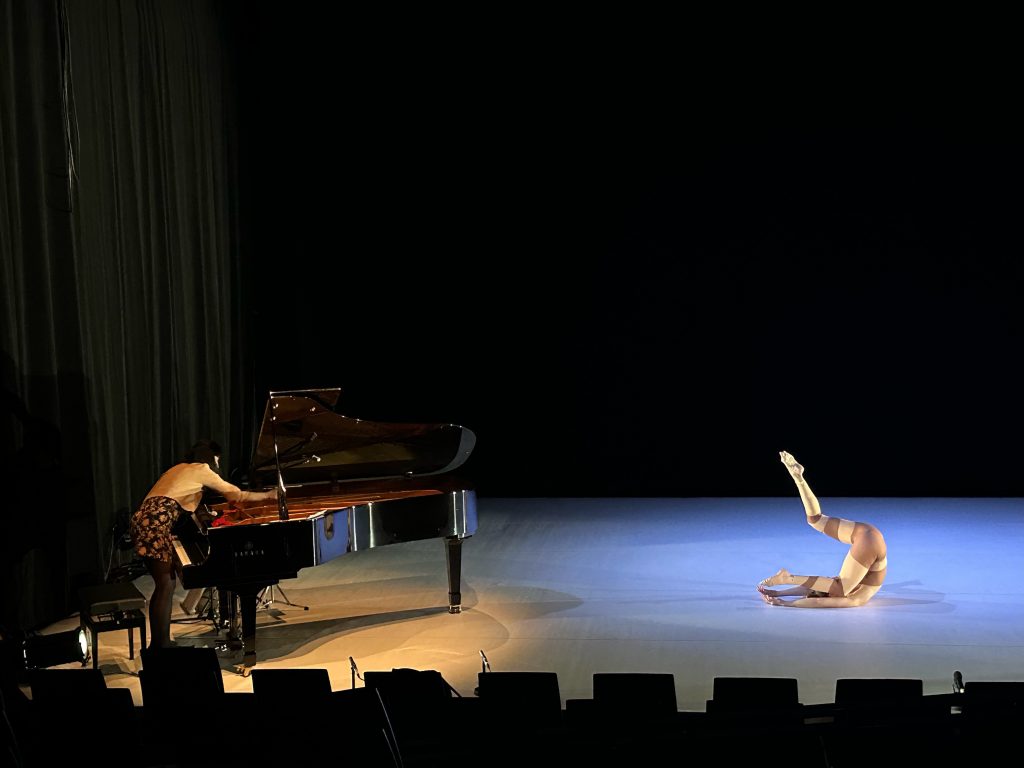
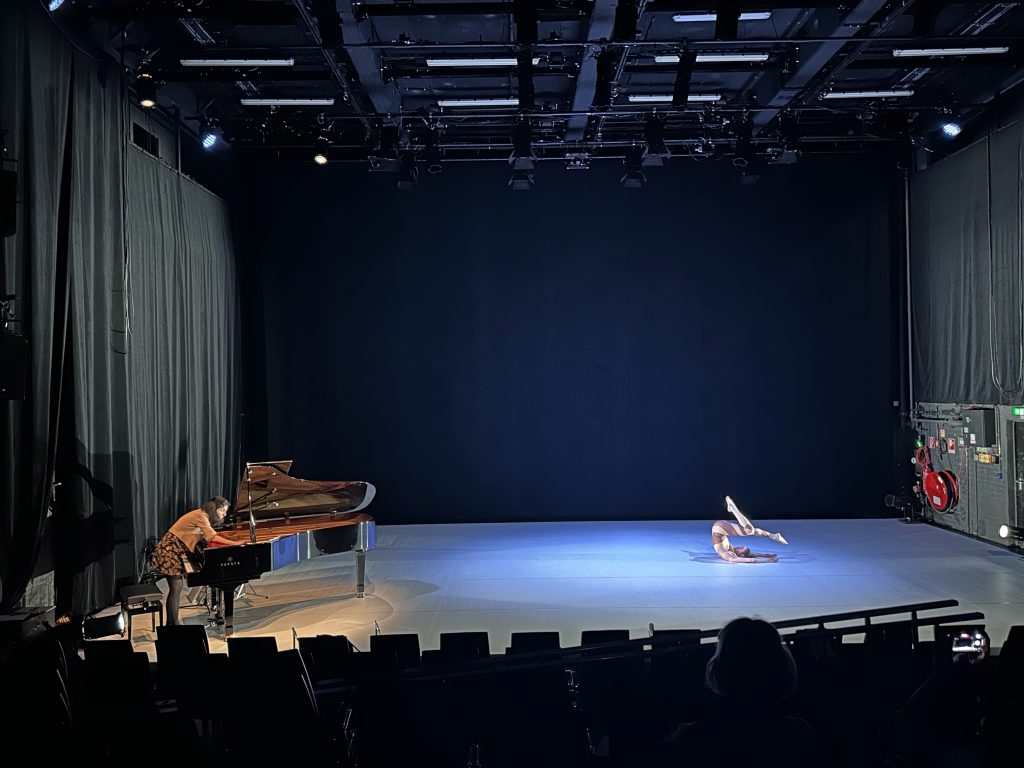
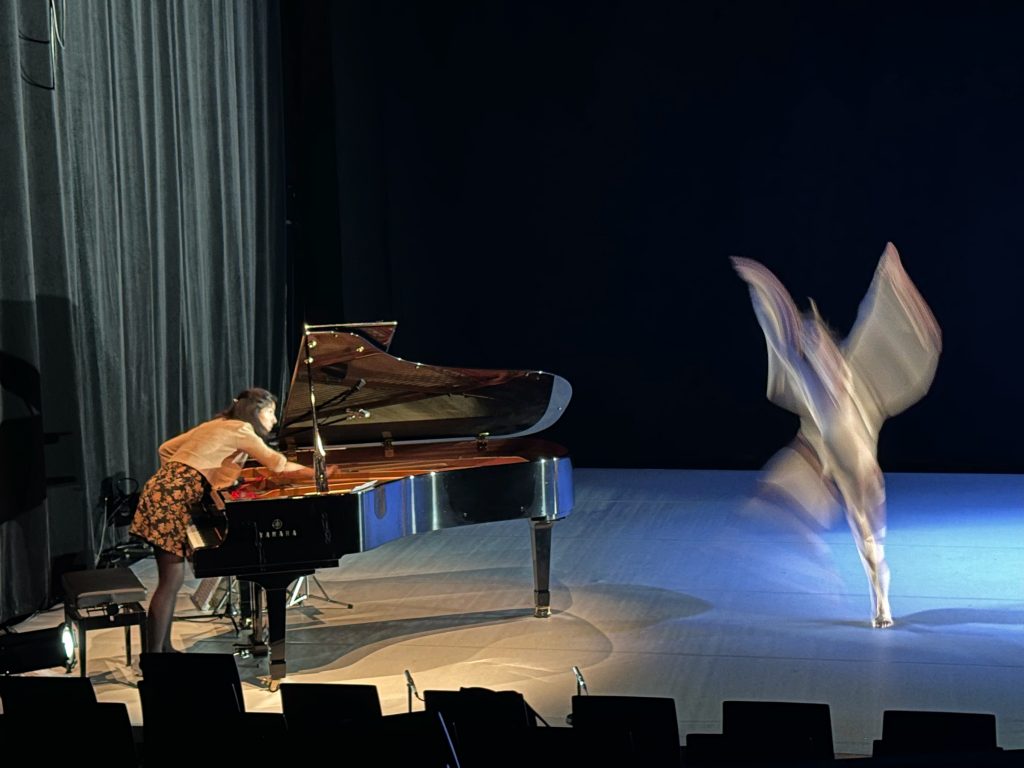
This hypothesis became stronger while rehearsing with the (amazing) dancers selected for the project, Juan Corres, Laia Vancells Pi, Marco Rizzi,Kristina Berger. Kristina was also performing the solo dance “Fountain in the Middle of the Room” with the music of the first two movement of Exacerbated Subtlety Concert for timbre-piano by Dlugoszewski. Here is what Katherine Duke writes about it:
“A Fountain in the Middle of the Room” was for me an intense journey with Lucia who is both the choreographer and the composer of the piece. She had wanted to premiere the solo in 1999 along with her beautiful new dance “Radical Ardent”, a huge work with eleven dancers organised in duets. […] She resumed working on “Fountain” to premiere it in April of 2000 with her epic work “Motherwell Amor”. Unfortunately, we lost Lucia on opening night; she had passed away in her apartment still working on the upcoming performance. The company and musicians performed “Motherwell Amor” that evening; “A Fountain in the Middle of the Room” was not performed as she was the sole musician. Lucia and I had a performance date set for the following month to perform the solo. Needless to say, I was devastated, thrown into wrenching times but forced myself to work on arranging the solo which I premiered on 26 May 2000 in silence and dedicated it to her. As opportunities to perform the solo continued to arise, I searched Lucia’s music to find something that felt connected. Finally, two of the four parts of her “Exacerbated Subtlety Concert (Why does a Woman Love a Man?)” seemed a match. […] For this dance, Lucia and I discussed a revolution of subtlety, the high risk of elegance and a torn non-linear wild elegance of space throughout the delicacy of construction. Lucia daringly embodied that delicate mystical ‘something’ of seeing and hearing for the first time which the haiku poets practice without respite.”
Rehearsing Fountain in the Middle of the Room, Kristina Berger dancer, choreography and music by Lucia Dlugoszewski, Exacerbated Subtlety Concert I and II. Pics by Louis Kavouras
Cantilever (1963) has a different energy, sunny, joyful and sparkling. Dlugoszewski sets the music so that she could keep constant eye-contact with the dancers, and literally follow them “step by step”. Louis Kavouras confirmed this, also telling us that she often corrected dancers in the studio, as she knew the choreography better than them! The rehearsals confirmed my first impression transcribing the piece (see Part I): there is an intimate connection between sound and movement, big or minimal, and a love for small precious details that Dlugoszewski and Hawkins clearly shared. It’s not something flashy, dramatic or showy; the adjectives that come to my mind now that I try to describe it are “simple, beautiful, elegant, subtle”… some of the favourite words used by Dlugoszewski. Looking at the dancers literally embodying these concepts, under the guide of Katherine, left me a huge impression.
…revolution is in perception rather than conception…
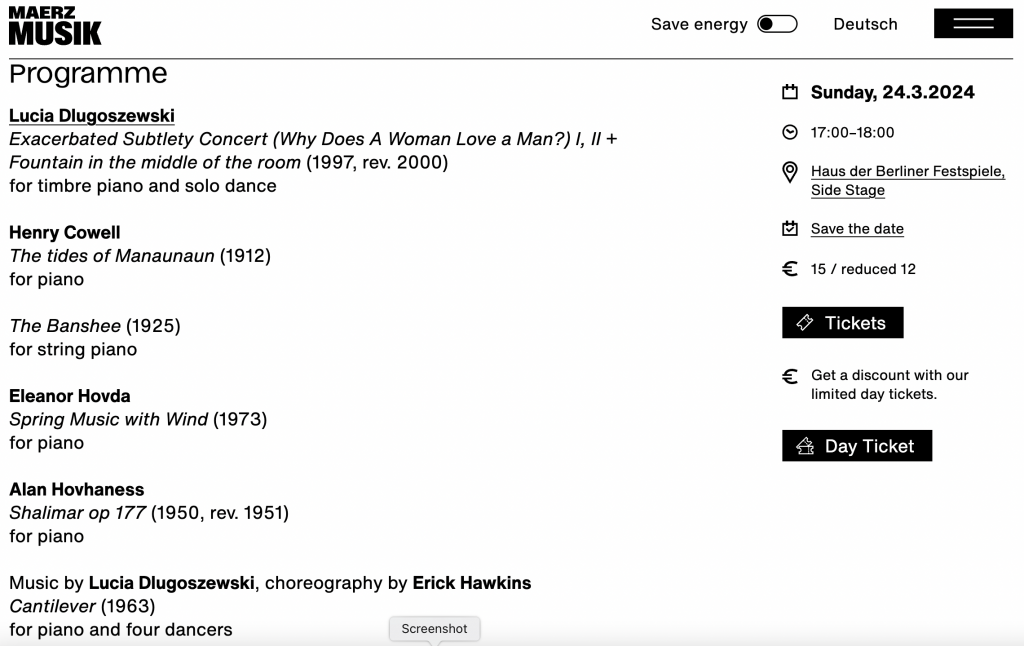
As for the rest of the program, including four piano solo pieces, that’s what I wrote in the booklet:
“[…] Henry Cowell and Alan Hovhaness both received commissions by Erick Hawkins Dance Company, although not for piano solo works. They were both connected to an important figure in Dlugoszewski’s formative early years in New York – though quite cumbersome in the later years: John Cage. Cowell pioneered the exploration of new sound production both on the keyboard and on the inside of the piano, and transmitted his explorative attitude to Cage, one of his students. I can’t think about prepared piano, or even timbre piano, without considering the mysterious sounds and never-before-seen gestures of Cowell’s “The Banshee” (1925). And the outrageous (for the time) clusters of “The Tides of Manaunaun” (1912) opened the field to among other things some of Dlugoszewski’s favourite techniques in “Cantilever”. “Spring Music with Wind” (1973) by Eleanor Hovda is a solo piano piece for extended techniques. Subtle and delicate, connected strongly with breath, gesture and voice, it goes in search of new sounds with lightness. Quoting conductor Jeannine Wagar, “The title, ‘Spring Music with Wind’, suggests the flow of energy and its non-quantifiable shape”, a concept that Hovda often underlines and closely links to the timbre of sound. In this piece she prescribes the use of friction mallets and a curved glass bottle.” Alan Hovhaness’s “Shalimar op. 177” (1950, rev. 1951) belongs to his “Armenian period”. As the son of an Armenian immigrant, he became increas- ingly attracted to Armenian and Eastern music after an academic training. In his own words, “Shalimar” was composed in Kashmir “after visiting the Mogul gardens and many beautiful mountains in the Himalayan regions. The foun- tains no longer gush forth their music and beauty in the Shalimar gardens, but the memory of their sound and visual wonder among the great Chenar trees, with steep, rugged mountains rising in the background, was in my imagination and I summed up the lost scenes during the days of Mogul grandeur. The form of the Suite, with its interludes for borders, suggests that carpet-like design of Mogul gardens.”
Friends in the audienceLooking at KristinaHere she isCowellHovdaHovhanessCantilever: Marco, Juan, LaiaCantilever: Marco and JuanCantilever: Kristina, Juan, LaiaAll of us with Katherine Duke
This year’s MaerzMusik Festival in Berlin involved me both as a performer and as a researcher. I came home full of impressions, new knowledge and human encounters, a wealth of inputs that I am slowly metabolizing.
This was the second year of a collaborative project, “Contemplations into the Radical Others”, dedicated to composer Lucia Dlugoszewski and strongly desired by Maerz Musik artistic director Kamila Metwaly. While the previous year I had the chance to present my previous work in performance – my research on Dlugoszewski begins in 2017 – this year I had the opportunity to go further.
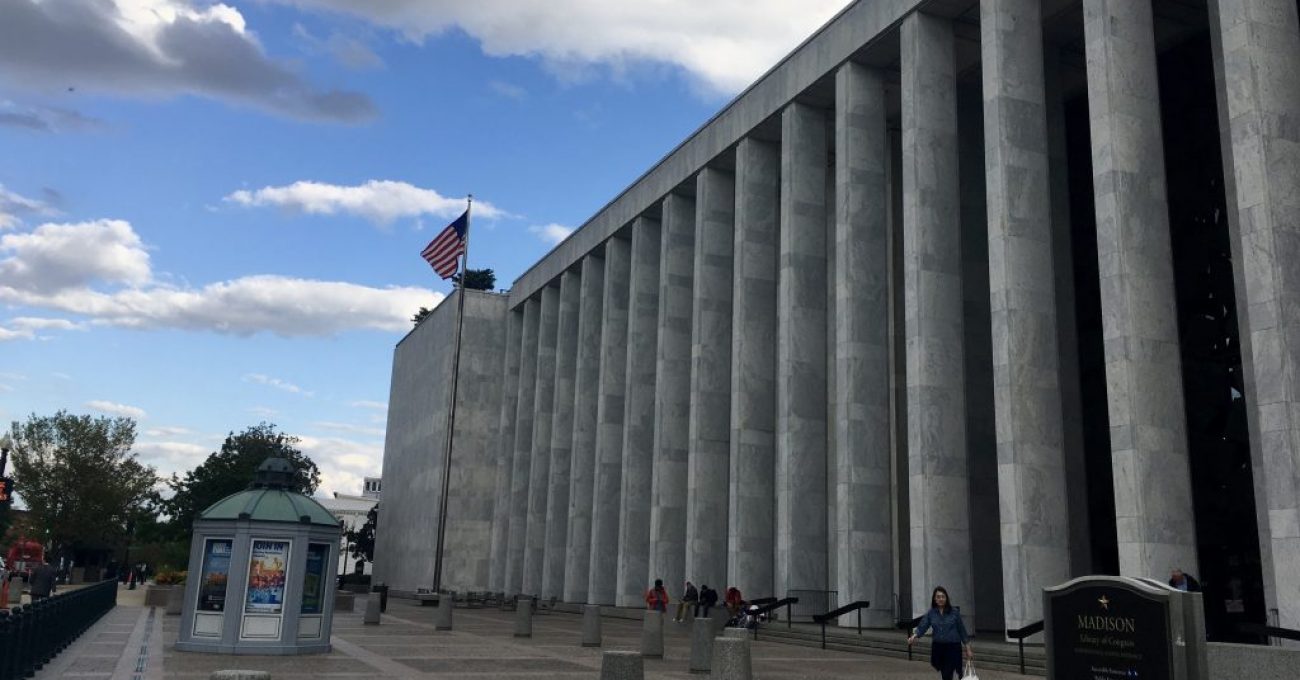
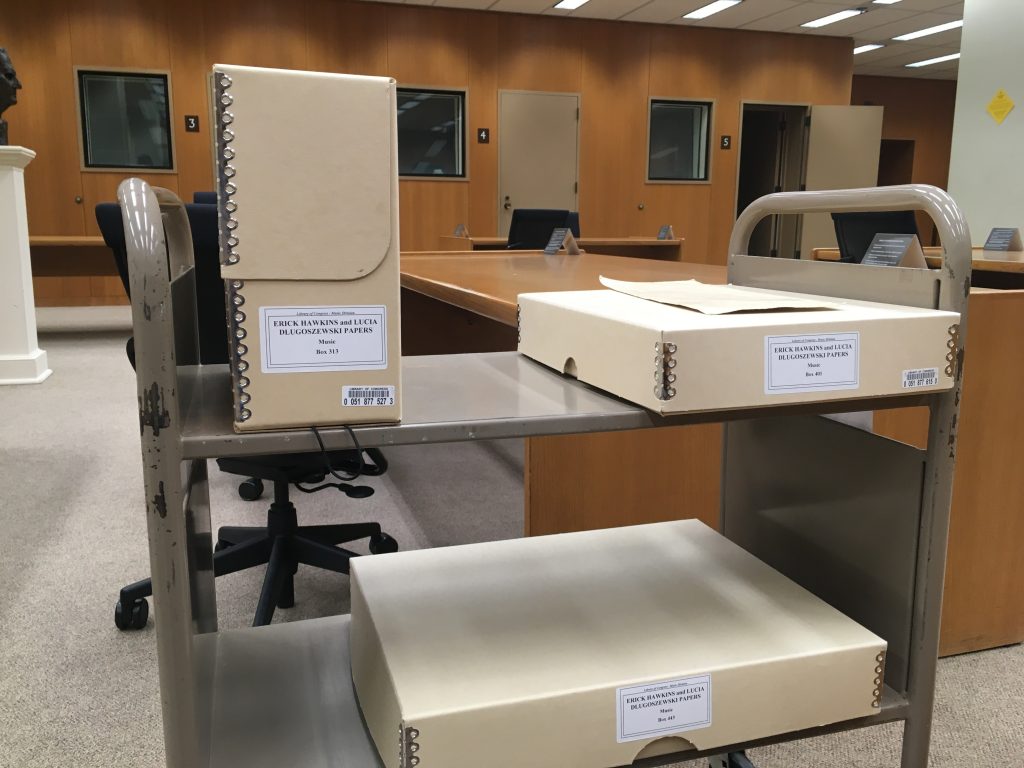
In October 23 my research trip in Washington DC, USA, at the Library of Congress, had been illuminating in several aspects. The Dlugoszewski/Hawkins archive is huge and I gave priority to searching for materials related to two pieces, Exacerbated Subtlety Concert and Cantilever. At the time of my recording (Subtle Matters, Neuma Records, 2021) I spent a long time in transcribing Exacerbated Subtlety Concert from a recording by Dlugoszewski. No score was available, infact. This was my first encounter with the timbre-piano Dlugoszewski invented in the Fifties. Since then, and the last time after checking the Library of Congress documentation, I reworked the transcription 4 times, trying to get closer to the original idea and way of performance. This unusual path to discover the piece and the instrument, first through the sound, then through notation, has been an incomparable way to access the composer’s creative process. And fruitful, also: besides the performances and recording, it started a wonderful collaboration with scholar Kate Doyle, PhD, a musicologist who’s also a creator in her own field. I will speak about this in the second part.
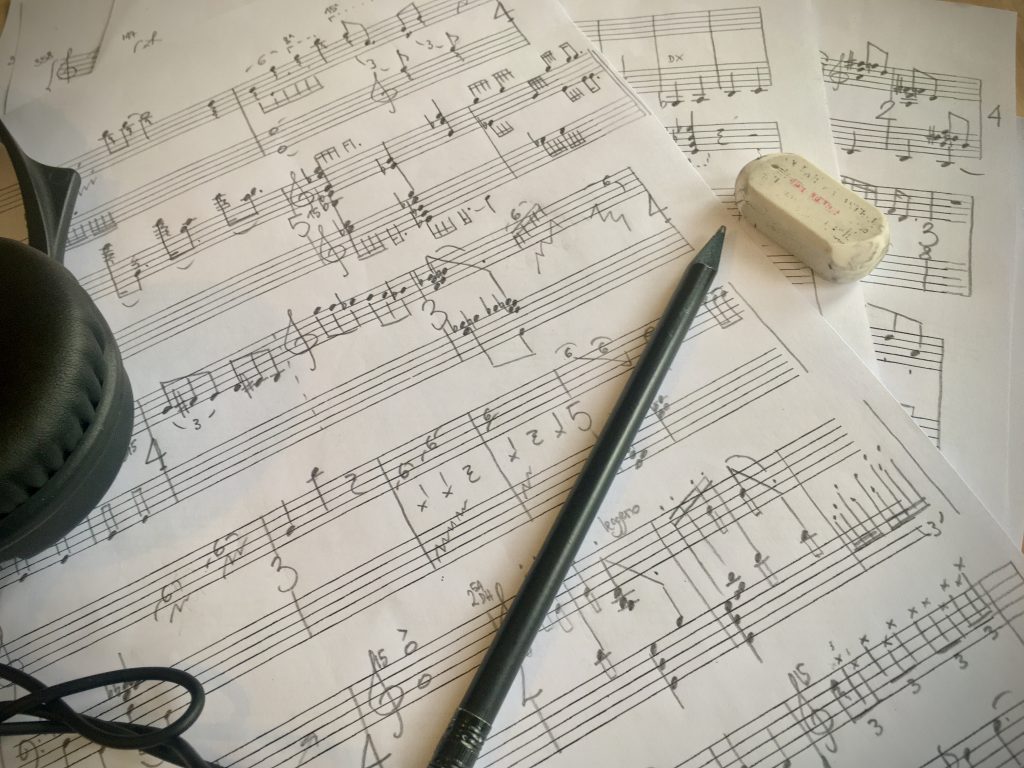
Old style transcription of Cantilever: pencils work pretty well…
Cantilever (1963) is a piano solo piece expanded in an ensemble version in 1968. It was written for a choreography by Erick Hawkins, and performed many times both in the piano solo version or in ensemble. I expected to find plenty of material at the Library of Congress. The fact is that Dlugoszewski, when it is the case of timbre-piano or piano parts, didn’t spend time in writing a regular score. She was the performer, and the music was stored in her head and hands. So I transcribed the piece listening to three different recordings, two of them from early on and one of a performance from 1999. This, too, was an interesting work that put on the table a lot of questions and made me clearer about her compositional process and the very practical issues related in connecting with dance.
The coreographer and dancer Erick Hawkins was a strong advocate of live music on stage; while collaborating closely with Dlugoszewski, he also commissioned from early on a number of works to other composers. Among them, Cowell and Hovhaness. I chose some solo piano pieces by Henry Cowell and Alan Hovhaness that seemed to me related to Dlugoszeski’s ones, to movement and dance. Eleanor Hovda‘s solo piano piece was a beautiful discover, very connected with the rest of the programme. Using extended techniques, she creates her unique world of lightness and amazement, with sounds produced by friction mallets, breath, voice sound, and a bottle. Researching about her, I found out that Hovda and Dlugoszewski met and write eachother regularly. The younger Hovda writes in a letter to Lucia “how often I give thank to you for your influence on my life and art.”
So, the music program seemed ready. Now it should meet with movement. Because, yes, this was an other exciting opportunity to explore at MaerzMusik: the connection between Dlugoszewski’s music to the other art always present in her life, dance.
Looking forward an intense week of research just starting today at Library of Congress in Washington D.C. (USA). After many years I will finally be able to see and read some of Lucia Dlugoszewski‘s scores. This in-depht study will be very important for further develop my knowledge of the composer’s aesthetic and repertoire, and will also lead to the next performance for 2024 MaerzMusik Festival in Berlin. Grateful for this fantastic opportunity!
Below some pics of the week’s highlights
Finally trying Dlugoszewski’s original timbre-piano objects!!with Dr Libby Smigel, the Dance curator at Library of Congress, Music DivisionVery first three boxes of Dlugoszewski’s papers… how excited!Monumental, green, sunny Washington DC
A couple of very nice reviews came from Germany this month: one on Glissando magazine about MaerzMusik performance in Berlin in March, the other published on the historical Schott music magazine Neue Zeitschrift fuer Musik (founded by Robert Schumann, it dates 1834).
Monika Zykla wrote an extensive review about all the events of MaerzMusik festival 2023 for magazine Glissando. That’s how she refers to Subtle Matters recital: “In the first part of the three-hour-long evening program titled Subtle Matters the Italian pianist and researcher, Agnese Toniutti, delivered a stunning solo piano recital that explored the sonic possibilities of the instrument „beyond its body” as described in the program. One of the highlights was Toniutti’s enthralling performance of Lucia Dlugoszewski’s four-part solo “timbre piano”4 composition, Exacerbated Subtlety Concert (Why Does a Woman Love a Man?) (1997/2000). This piece was juxtaposed with Tan Dun’s C-A-G-E, fingering for piano (1994), an homage to John Cage, and a selection of compositions for real and toy piano by the American composer Philip Corner. As in her solo album released in 2021 under the same title, Toniutti showed exceptional sensitivity and insight in her selection of the pieces. As a result, a fascinating dialogue emerged between Dlugoszewski and Dun’s compositions that further contextualized and situated Dlugoszewski’s music and aesthetics as part of the New York scene. It subtly referenced Dlugoszewski’s ambiguous and changing attitude towards John Cage as its most prominent and central figure which I read as a hint towards the question of why Cage’s silences were louder than the silences of others. Toniutti undertook an extensive body of research so that subtleties like this could surface and be signaled through music. Not to mention the amount of work she put into performing Dlugoszewski’s piece in the first place, despite the score being unavailable, as Toniutti explained in the program note.” You can read the complete article here.
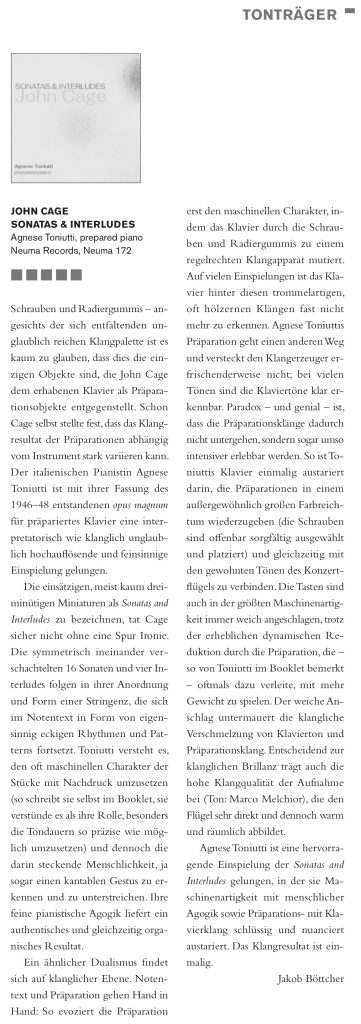
Jakob Böttcher reviewed Sonatas and Interludes for prepared piano by John Cage, released this spring on Neuma Records, on Neue Zeitschrift fuer Musik issue 2/2023. Here is the English translation, and below the screenshot of the original review in German. “Screws and erasers – in view of the unbelievably rich sound palette that unfolds, it is hard to believe that these are the only objects that John Cage opposes to the sublime piano as preparation objects. Even Cage himself noted that the sound result of the preparations can vary greatly depending on the instrument. With her version of the opus magnum for prepared piano, composed in 1946-48, the Italian pianist Agnese Toniutti has succeeded in creating an incredibly high-resolution and subtle recording, both in terms of interpretation and sound. Cage certainly did not call the one-movement miniatures, most of which are barely three minutes long, Sonatas and Interludes without a hint of irony. The symmetrically nested 16 sonatas and four interludes follow in their arrangement and form a stringency that continues in the musical text in the form of idiosyncratically angular rhythms and patterns. Toniutti understands how to implement the often mechanical character of the pieces with emphasis (she herself writes in the booklet that she understands it as her role to implement especially the tone durations as precisely as possible) and yet to recognize and emphasize the humanity, even a cantabile gesture, that they contain. Her fine pianistic agogic delivers an authentic and at the same time organical result. A similar dualism is found on the tonal level. The musical text and the preparation go hand in hand. The preparation evokes the machine-like character, in which the piano mutates into a real sound apparatus through the screws and erasers. On many recordings, the piano is almost unrecognizable behind these drum-like, often wooden sounds. Agnese Toniutti’s preparation takes a different approach and refreshingly does not hide the sound generator; with many notes the piano tones are clearly recognizable. Paradoxical – and ingenious – is the fact that the preparation sounds are not drowned out by this, but can even be experienced all the more intensely. Thus, Toniutti’s piano is uniquely balanced in reproducing the preparations in an exceptionally wide range of colors (the screws are obviously carefully selected and placed) and at the same time combining them with the familiar tones of the concert grand. The keys are always softly struck, even in the most machine-like conditions, despite the considerable dynamic reduction due to the preparation, which – as Toniutti notes in the booklet – often tempts one to play with more weight. The soft attack underpins the tonal fusion of piano tone and preparation sound. The high sound quality of the recording (sound: Marco Melchior) contributes decisively to the tonal brilliance, which portrays the grand piano very directly and yet warmly and spatially. Agnese Toniutti has succeeded in making an excellent recording of the Sonatas and Interludes, in which she coherently and nuancedly balances machine-like and human agogic as well as preparation and piano sound. The sound result is unique.
More about Lucia Dlugoszewski’s timbre-piano: it just has been published an article written in collaboration with Kate Doyle, PhD, for Contemporary Music Review Special Issue: Engaging Analysis and Performance. Kate is assistant Professor of Music in the Department of Arts, Culture & Media at Rutgers University—Newark, and I had the pleasure of collaborating with her for several years now about the work of Dlugoszewski. This is our more recent production after partecipating to Toronto Symposium and to the American Musicological Society Annual Meeting. The title of the paper is Problem as Possibility: A Dialogue about Performance and Analysis with Lucia Dlugoszewski’s Experimental Notation as Case Study (https://doi.org/10.1080/07494467.2023.2193090). Here is the abstract:
The musical score can be a site for dynamic exchange between performance and analysis, a place for conversation about material and meaning. As is typical in conversation, conundrums or disagreements generate new ideas and new forms; problems become possibilities. Such is the case in navigating the scores of Lucia Dlugoszewski, who sought radical ways to produce and notate sound forms from around 1950 until her death in 2000. This article is not intended to serve as a survey of Dlugoszewski’s work but to document an exploration of the role that dialogue plays when performing and analysing musical repertoires. Its two authors will perform an excerpt of an ongoing dialogue about the challenges of navigating Dlugoszewski’s innovative scores. A circularity emerges as every potential solution is performed, evaluated, and questioned anew; through this cycle, analysis and performance become a unified, continual process. A thesis emerges from the dialogue: Dlugoszewski’s scores are a documentation of logic that is not present as much as one that is, a kind of notation in reverse, an ideal realised through performance at the edge of practical execution.
Der Freitag and Die junge Welt also wrote about March Subtle Matters recital in Berlin at MaerzMusik Festival (music by Dlugoszewski, Corner, Dun). Quoting Der Freitag in the words of Michael Jäger, …the program announced “sound worlds full of unexpected textures and resonances,” and it was not an over-promise… In the compositions of Lucia Dlugoszewski (1925-2000), Tan Dun (*1957) and Philip Corner (*1933), playing not only on the keys but even more so on the strings under an open piano has always been the main move. We have heard it before, but in the compositions presented here (Tan Dun’s bears the name C-A-G-E, fingering for piano [1994], which refers not only to a sequence of notes, but also to that great initiator, and thus implicitly puts Cage on the same plane as B-A-C-H), the strings are often used like a zither, and sound almost like a zither, sometimes melodious, sometimes “sublimely” chaotic, both then occasionally doubled by the keys – a piano, so to speak, in dialogue with itself. As if communicating with [the] unconscious…
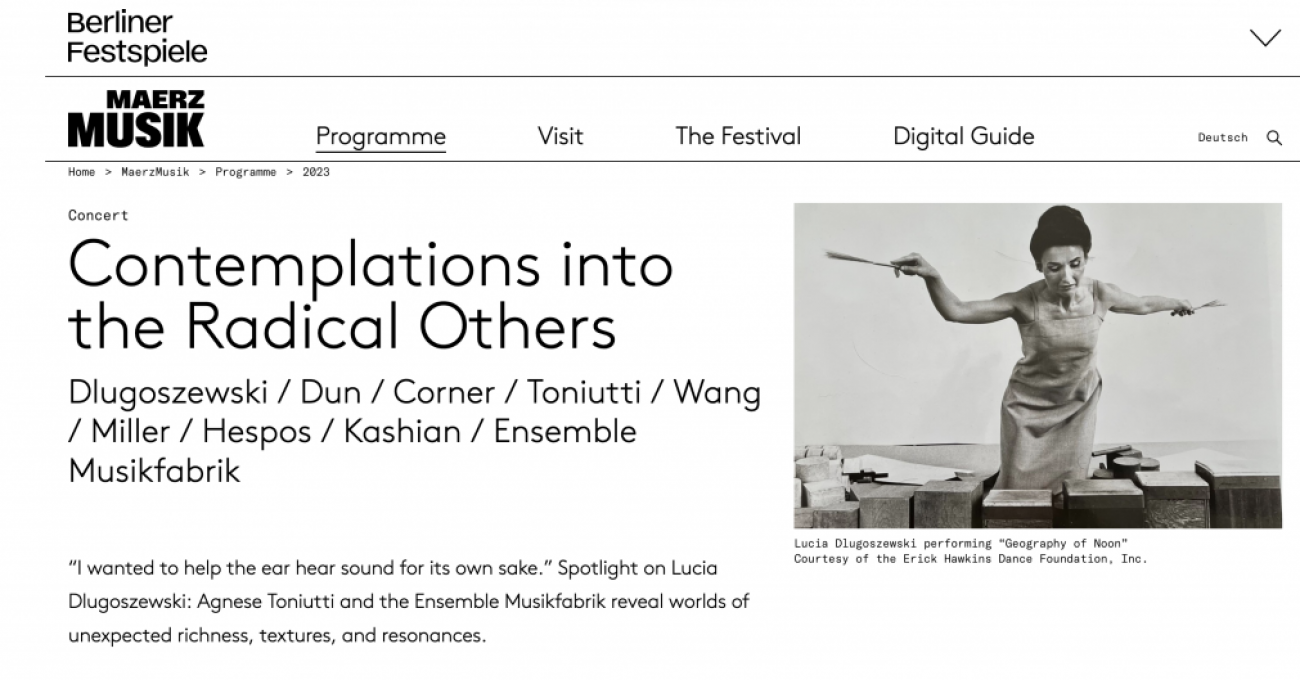
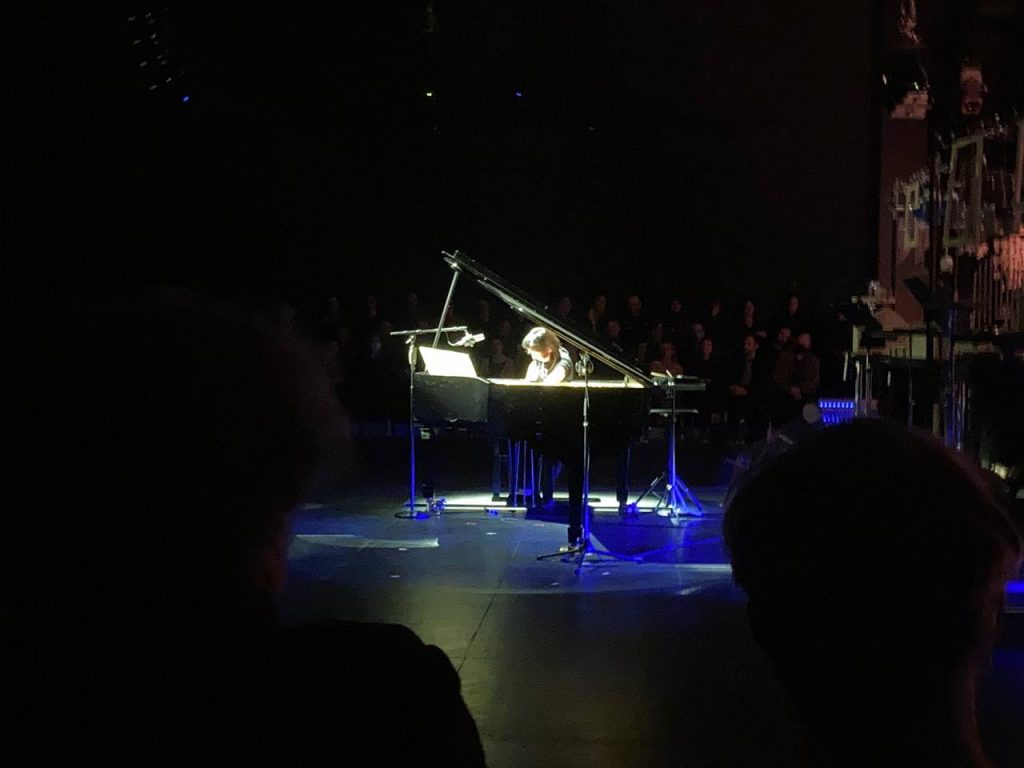
Very excited to take part to MaerzMusik Festival – Berliner Festspiele in Berlin! On March, 24th I will play “Subtle Matters”, with music by Lucia Dlugoszewski, Philip Corner and Tan Dun, following my 2021 release by Neuma Records and adding a premiere of Philip Corner. The recital is part of “Contemplations into the Radical Others”, a long-term project by Maerz Musik focussing on composer Lucia Dlugoszewski in cooperation with the Erick Hawkins Dance Company, Ensemble Musikfabrik and many others. Here you can find the program of the evening, featuring me and Ensemble Musikfabrik, here you have the whole program of the festival, and here there’s an interesting review about Dlugoszewski‘s life and work.